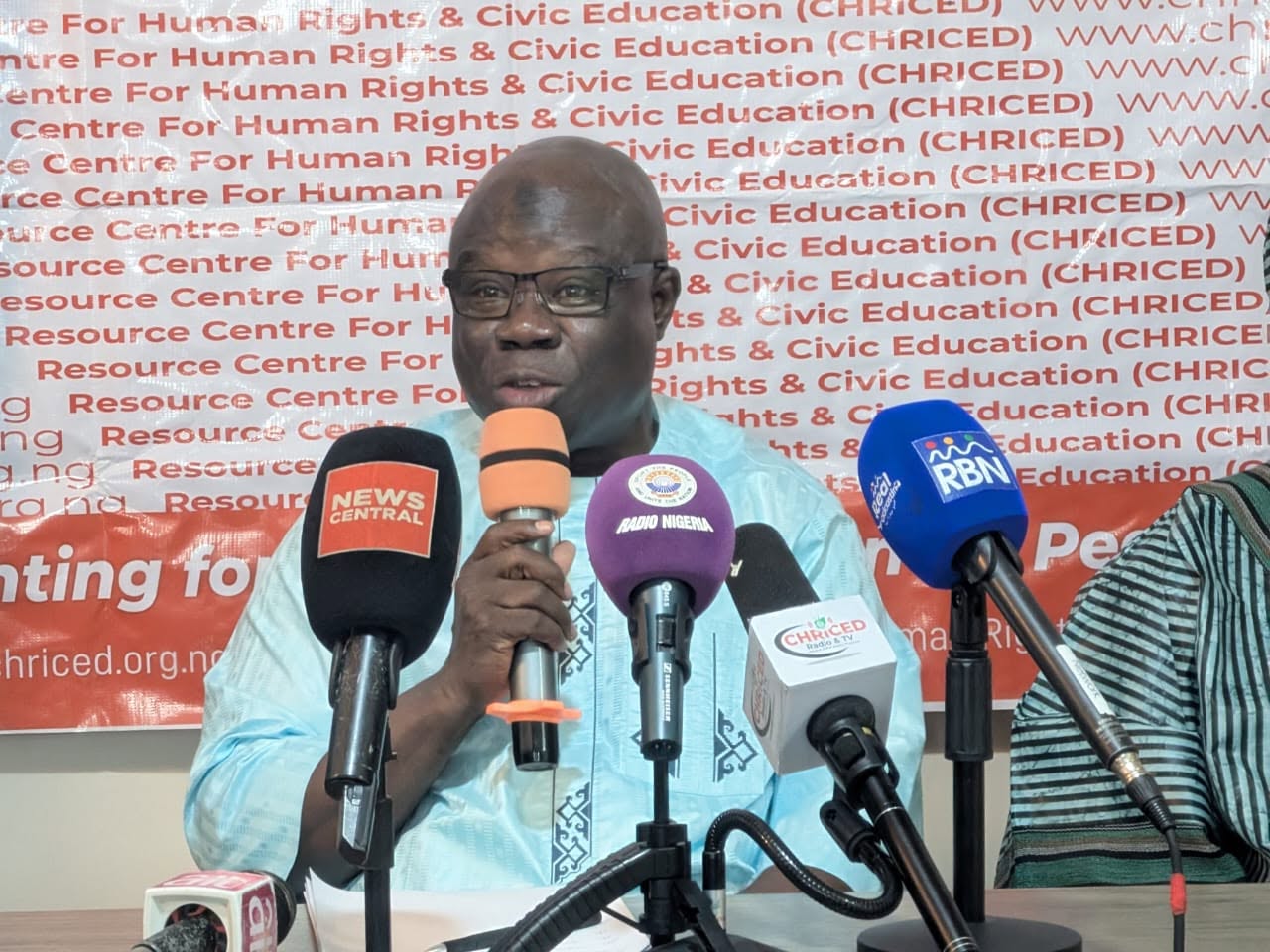

The Resource Centre for Human Rights and Civic Education (CHRICED) has raised concerns over the possible appointment of university professors, vice-chancellors and senior lecturers with recent partisan political involvement as Returning and Collation Officers for the 2027 general elections.
CHRICED made its position known in a statement issued Tuesday in Abuja, following reports that more than 600 senior academics from public universities across Northern Nigeria attended a political meeting in Kaduna where they endorsed President Bola Ahmed Tinubu’s bid for a second term in the 2027 presidential election.
The meeting was reportedly convened by Ibrahim Masari, Special Adviser to the President on Political Matters, and held behind closed doors at the Umaru Musa Yar’Adua Centre in Kaduna. Reports said the academics reviewed issues concerning the Tinubu administration, including education, infrastructure, agriculture and investment, before expressing support for the President’s second-term bid.
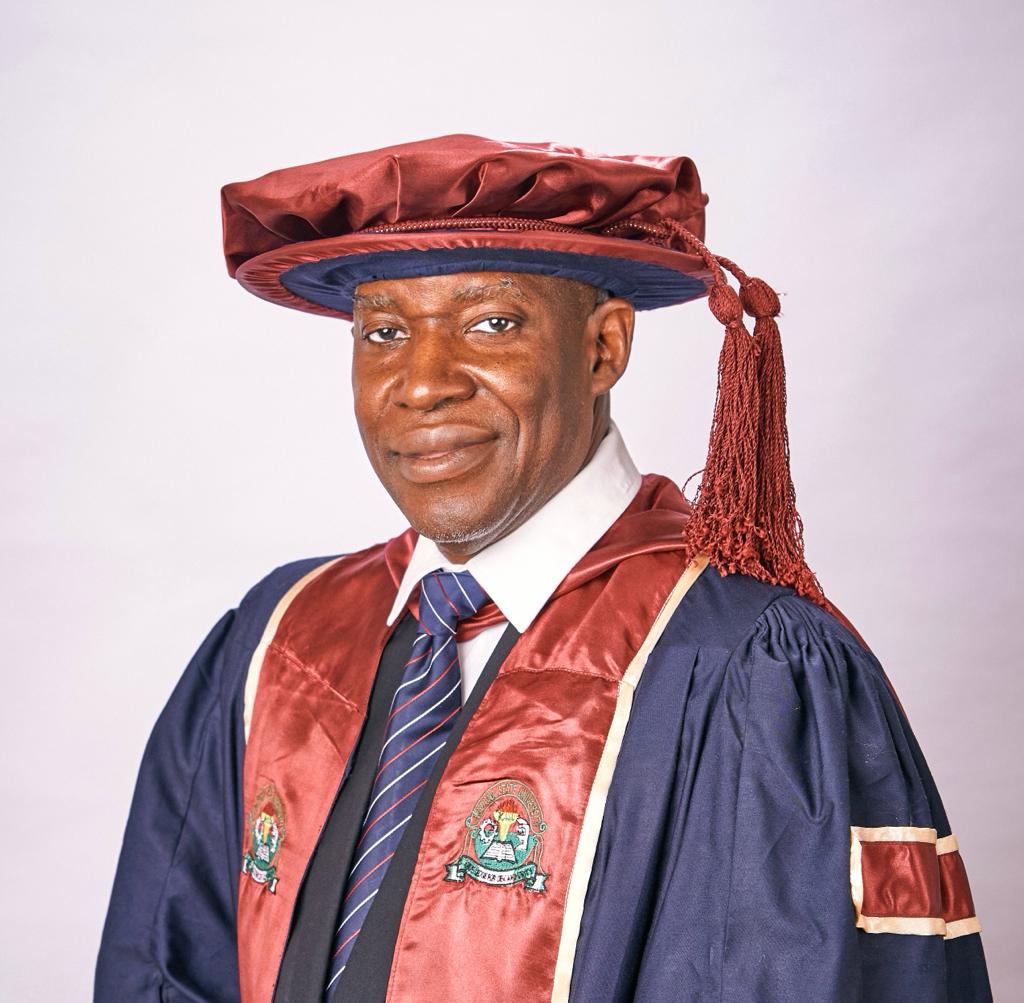
Professor Abdullahi Musa, Vice-Chancellor of Kaduna State University, who reportedly read the communiqué, later explained that the academics examined available data before making their recommendation. He also maintained that individual academics remained entitled to hold different political opinions.
The development has generated concern among civil society organisations and political stakeholders because university lecturers have frequently been engaged by the Independent National Electoral Commission (INEC) to perform sensitive election duties.
CHRICED stressed that its concern was not about the right of academics to participate in politics. Like other citizens, lecturers have the right to support candidates and participate in political activities.
The organisation’s concern is whether an academic who has recently taken a public partisan position should subsequently be appointed to manage, collate or declare election results involving the candidate or political interest they supported.
According to CHRICED, even where an electoral officer performs his or her duties honestly, previous political involvement could create questions about neutrality and affect public confidence in the electoral process.
Why Returning and Collation Officers Matter
INEC assigns Returning and Collation Officers important responsibilities in the management of election results. Officers operate at different levels, including Registration Area, Local Government Area, Federal Constituency, Senatorial District and State levels.
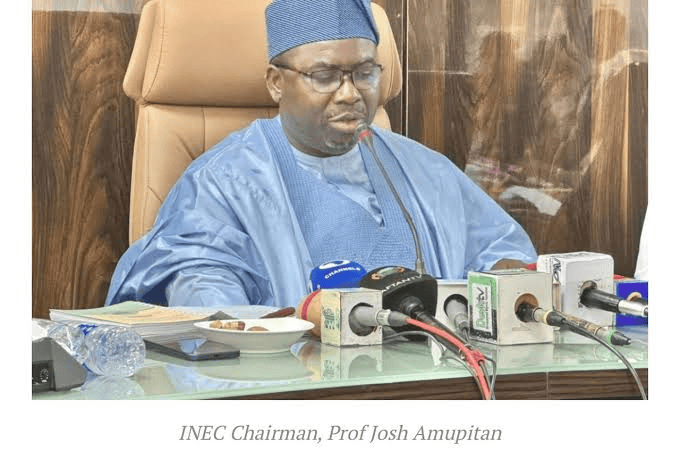
For presidential elections, results pass through several stages of collation before State Collation Officers transmit results to the Chief Electoral Commissioner, who is also the Chairman of INEC and Chief Returning Officer for the presidential election.
CHRICED therefore argued that the selection of individuals for these positions should be guided by clear and transparent standards designed to prevent potential conflicts of interest.
The organisation also pointed to previous cases involving university academics who served as electoral officials and were later convicted over election-related offences.
Professor Peter Ogban, who served as Returning Officer during the 2019 Akwa Ibom North-West senatorial election, was convicted by an Akwa Ibom State High Court in 2021 and sentenced to three years in prison for manipulating and falsifying election results. The Court of Appeal upheld the conviction and sentence in April 2025.
In another case, Professor Ignatius Uduk of the University of Uyo, who served as a Collation/Returning Officer during the 2019 general elections in Essien Udim State Constituency, was sentenced to three years in prison in February 2025 after being convicted of publishing false election results and perjury. He was acquitted of the charge of announcing false election results.
CHRICED said these cases should not be interpreted as evidence that academics are inherently dishonest or unsuitable for electoral assignments. Instead, it said they demonstrate the need for stronger safeguards and transparent selection procedures when individuals are entrusted with sensitive electoral responsibilities.
CHRICED’s Recommendations
CHRICED said the involvement of politically exposed academics in sensitive election duties could create doubts about the neutrality of the electoral process, even where no wrongdoing occurs.
It called on INEC to clearly explain the criteria it will use to select Returning and Collation Officers for the 2027 elections.
The organisation also asked INEC to consider excluding politically exposed academics from sensitive result-management positions where recent political activities could create a reasonable appearance of conflict of interest.
It proposed uniform nationwide standards and transparent conflict-of-interest guidelines requiring prospective electoral officers to disclose recent political endorsements, campaign roles, political appointments and other significant partisan engagements.
- NANS Backs NCDC 20 Year Development Plan
- CISLAC Launches Four Year Citizen Engagement Project
- ActionAid Outraged Over Nigeria’s Mounting Debt
- NDLEA Uncovers Methamphetamine Laboratory In Ebonyi State
- Skyewise Foundation Brings Smiles to Abuja Students
CHRICED further called on civil society organisations, media organisations and election stakeholders to monitor the recruitment and deployment of electoral officials.
It urged international election-monitoring bodies, including the United Nations, European Union Election Observation Mission, Commonwealth Observer Group, African Union and ECOWAS, to pay attention to how electoral officials are selected and deployed.
The organisation also cautioned that political participation by individual academics should not be presented as the official position of their universities or academic institutions.
A Debate Over Political Rights and Electoral Neutrality
CHRICED maintained that supporting a political candidate and serving as a neutral electoral officer are separate responsibilities that should be treated differently.
Its position is similar to concerns recently raised by the African Democratic Congress (ADC), which also called on INEC to review its use of politically exposed academics as Returning and Collation Officers for the 2027 elections.
However, the reported Kaduna meeting has also received a different explanation from some academics involved. Professor Abdullahi Musa said the gathering provided an opportunity for academics to examine available data and make recommendations based on their assessment, while individual academics remained free to hold different political views.
The debate therefore centres not on whether academics have the right to participate in politics, but on whether recent political involvement should affect their eligibility for sensitive electoral responsibilities.
CHRICED said protecting electoral integrity requires more than preventing the manipulation of results. It also requires ensuring that those responsible for collating and declaring results are publicly perceived as independent and impartial.
As preparations for the 2027 general elections continue, the issue is likely to remain relevant to INEC, political parties, universities, civil society organisations, election observers and other stakeholders.
CHRICED urged INEC to address potential conflicts of interest before the elections rather than waiting for disputes to emerge, saying Nigerians should have confidence both in the electoral process and in the individuals entrusted with handling election results.