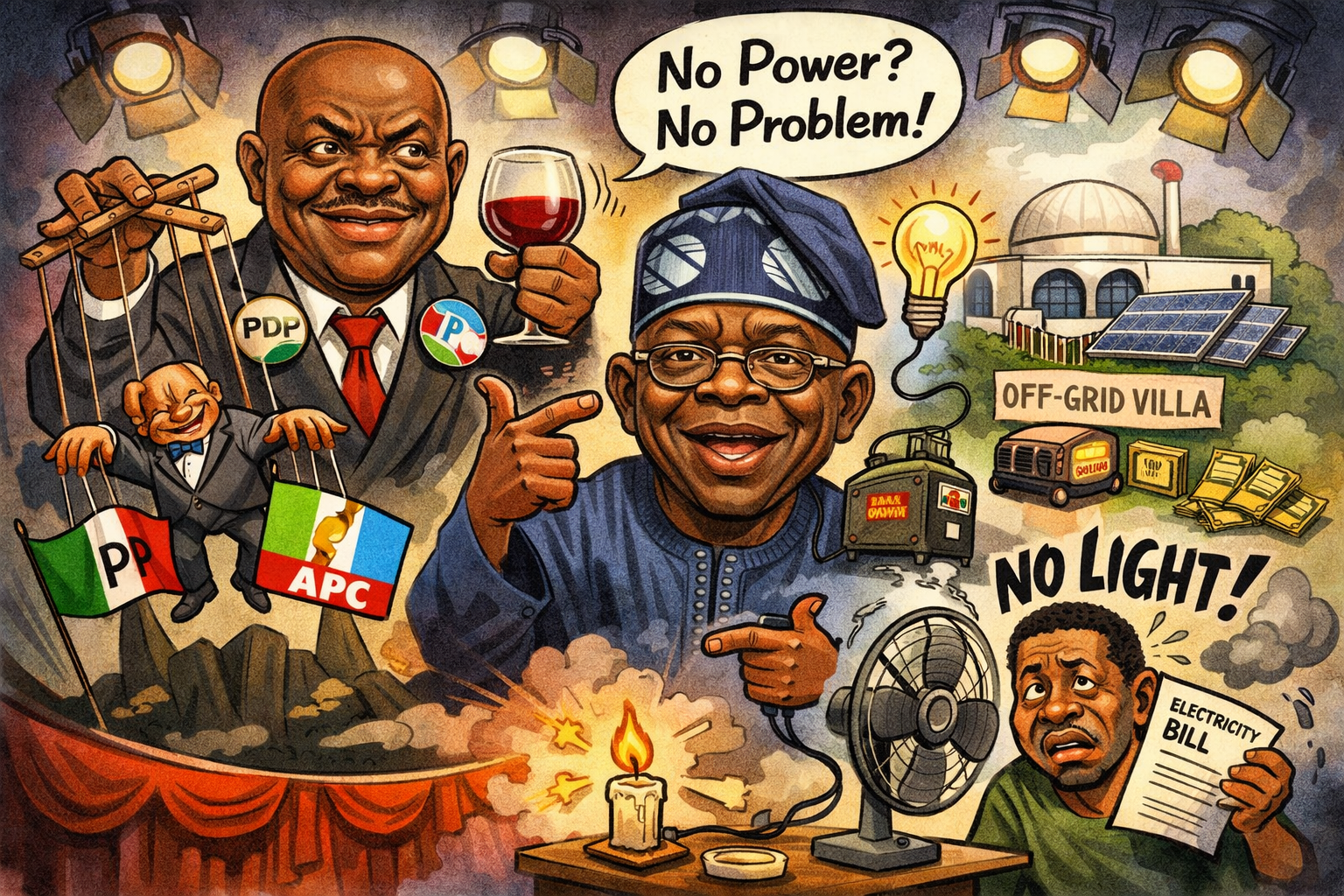

If Nigeria were a reality show being scripted by the best of hands, then Nyesom Wike would be that character you can’t quite place, hero in one episode, villain in the next, and comic relief in between. He would sit comfortably in the People’s Democratic Party war room, passionately plotting how to deliver electoral victories, for the All Progressives Congress, and brand it a “Rainbow Coalition,” because nothing sells contradiction like a good metaphor.
In last night’s episode, viewers would be treated to a masterclass in political hospitality: PDP delegates welcomed with fine wine and strategic ambiguity, barely 24 hours after APC delegates had vacated the same chairs, perhaps still warm with bipartisan intentions. The scriptwriters, clearly overachieving, would ensure the camera zooms in on handshakes that mean everything and nothing at the same time.
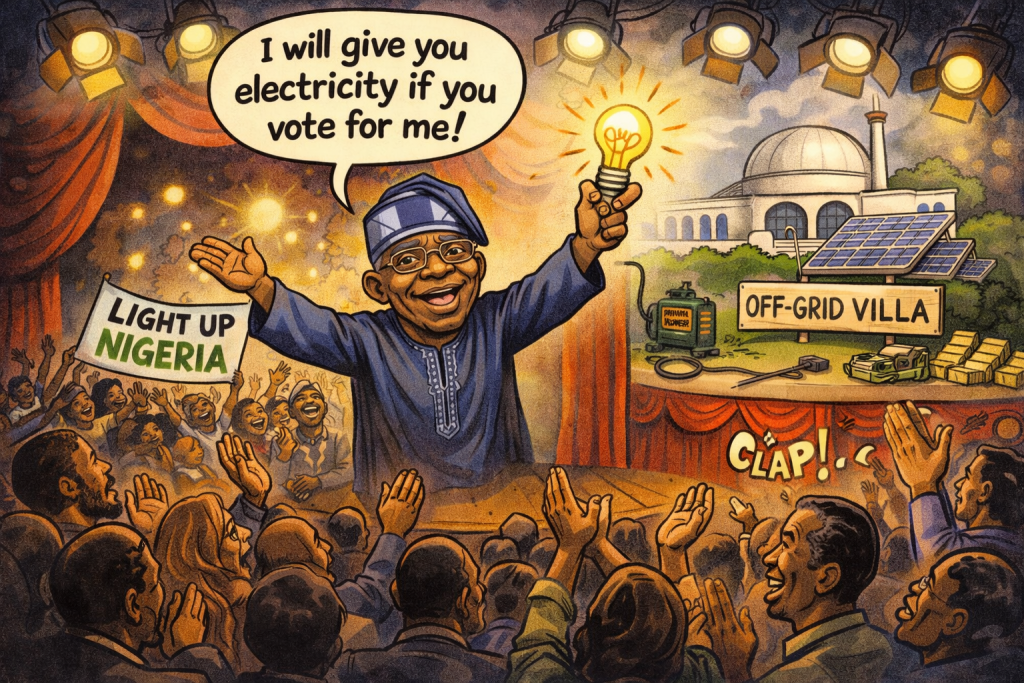
If Nigeria were a reality show being scripted by international award-winning experts, the president, yes, Bola Ahmed Tinubu himself, would deliver a campaign speech so compelling it earns a standing ovation and a sequel. “Give me your votes,” he would say, “and I will give you electricity. If I don’t, don’t reelect me.”
The audience would cheer, not because they believe him, but because they recognise good theatre when they see it. Fast forward one season, and the plot twist lands: instead of lighting up the nation, the presidency quietly installs a private power solution for the Aso Rock Presidential Villa.
The budget? Let’s just say it’s the kind of figure that could electrify hope, renewed hope, if not the grid. The producers would call it “character development.” Viewers might call it something less printable.
But the beauty of this imagined show is its commitment to absurd realism. No storyline is too far-fetched, no irony too thick. Ministers would defect without moving, opposition leaders would oppose themselves, and press conferences would double as stand-up comedy sets, minus the laughter track. Nigerians would defend their oppressors so long as they shared same religion or ethnicity.
In this Nigeria Reality Show Universe, the citizens are the live audience. They clap when prompted, gasp on cue, and occasionally vote to keep their favourite characters in the house, even when those characters have long forgotten the script they promised to follow. The voting lines are always open, but the outcomes feel pre-edited.
And yet, like every successful reality show, the producers understand one thing: controversy sells. So they keep raising the stakes. Today it’s coalition gymnastics; tomorrow it might be economic magic tricks or fuel at ₦5000 per litre; watch closely as your purchasing power disappears without leaving the stage.
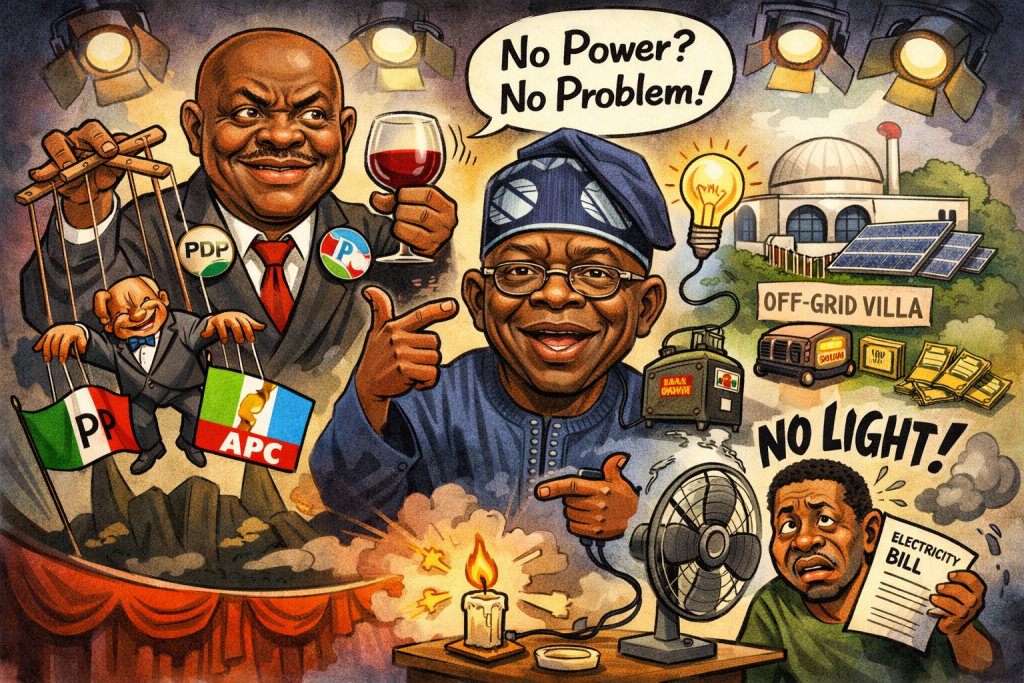
Still, somewhere in the chaos, a stubborn subplot refuses to die: the quiet insistence of Nigerians that governance is not entertainment, that electricity is not a campaign punchline, and that coalitions should mean coherence, not confusion.
If this were truly scripted by the best hands, perhaps the final season would look different. Less drama, more delivery. Fewer plot twists, more power supply for Renewed Hope to make some sense. But then again, where would the ratings come from?
Data Boys!