
N78.8BN SOCIAL PROTECTION FUNDS FACE FRESH PROBE
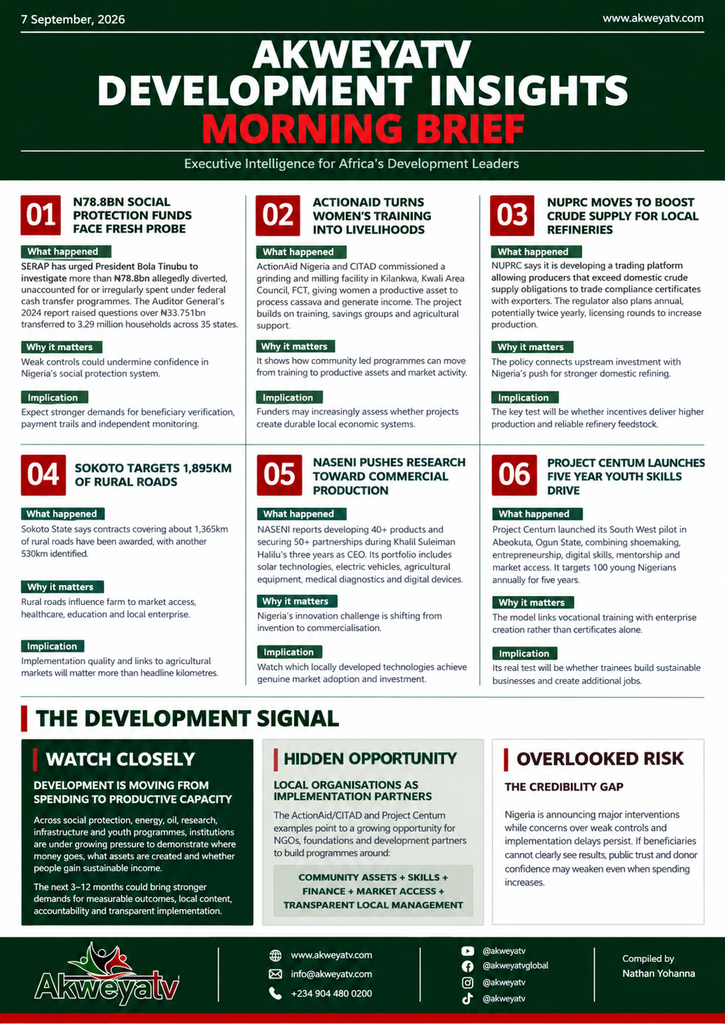
What happened: SERAP has urged President Bola Tinubu to investigate more than ₦78.8bn allegedly diverted, unaccounted for or irregularly spent under federal cash-transfer programmes. The Auditor-General’s 2024 report raised questions over ₦33.751bn transferred to 3.29 million households across 35 states.
Why it matters: Weak controls could undermine confidence in Nigeria’s social-protection system.
Implication: Expect stronger demands for beneficiary verification, payment trails and independent monitoring.
ACTIONAID TURNS WOMEN’S TRAINING INTO LIVELIHOODS
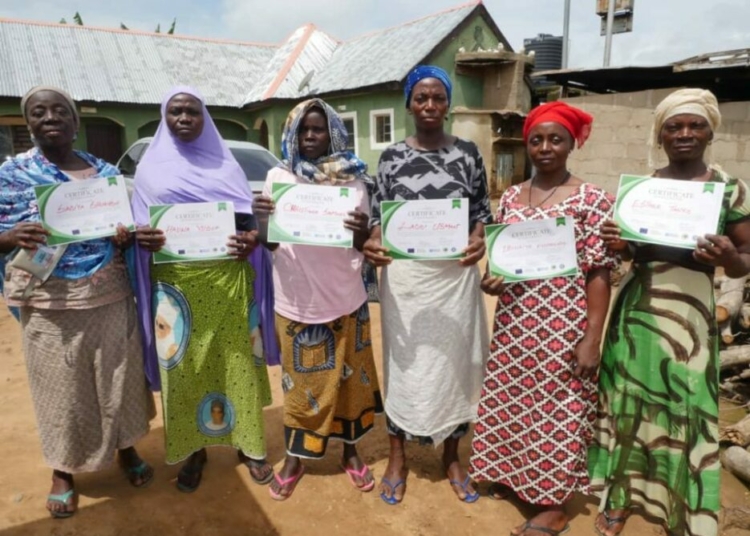
What happened: ActionAid Nigeria and CITAD commissioned a grinding and milling facility in Kilankwa, Kwali Area Council, FCT, giving women a productive asset to process cassava and generate income. The project builds on training, savings groups and agricultural support.
Why it matters: It shows how community-led programmes can move from training to productive assets and market activity.
Implication: Funders may increasingly assess whether projects create durable local economic systems.
NUPRC MOVES TO BOOST CRUDE SUPPLY FOR LOCAL REFINERIES

What happened: NUPRC says it is developing a trading platform allowing producers that exceed domestic crude-supply obligations to trade compliance certificates with exporters. The regulator also plans annual, potentially twice-yearly, licensing rounds to increase production.
Why it matters: The policy connects upstream investment with Nigeria’s push for stronger domestic refining.
Implication: The key test will be whether incentives deliver higher production and reliable refinery feedstock.
SOKOTO TARGETS 1,895KM OF RURAL ROADS
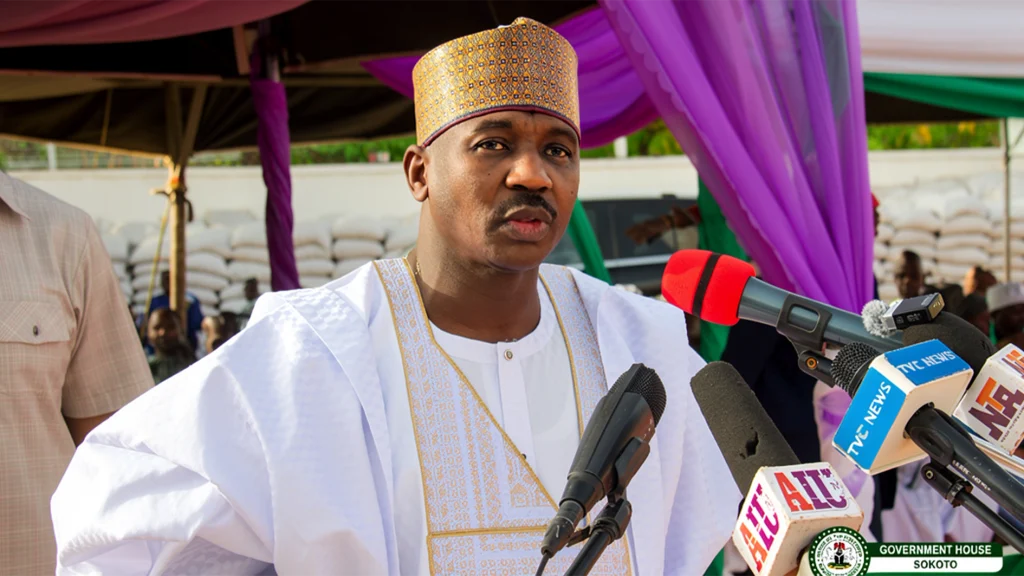
What happened: Sokoto State says contracts covering about 1,365km of rural roads have been awarded, with another 530km identified.
Why it matters: Rural roads influence farm-to-market access, healthcare, education and local enterprise.
Implication: Implementation quality and links to agricultural markets will matter more than headline kilometres.
NASENI PUSHES RESEARCH TOWARD COMMERCIAL PRODUCTION

What happened: NASENI reports developing 40+ products and securing 50+ partnerships during Khalil Suleiman Halilu’s three years as CEO. Its portfolio includes solar technologies, electric vehicles, agricultural equipment, medical diagnostics and digital devices.
Why it matters: Nigeria’s innovation challenge is shifting from invention to commercialisation.
Implication: Watch which locally developed technologies achieve genuine market adoption and investment.
PROJECT CENTUM LAUNCHES FIVE-YEAR YOUTH SKILLS DRIVE
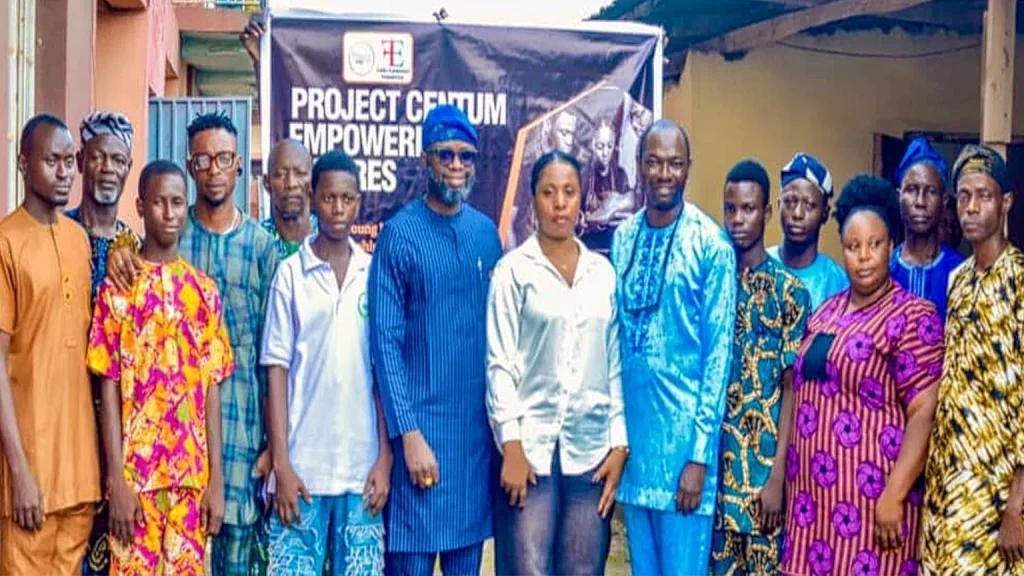
What happened: Project Centum launched its South-West pilot in Abeokuta, Ogun State, combining shoemaking, entrepreneurship, digital skills, mentorship and market access. It targets 100 young Nigerians annually for five years.
Why it matters: The model links vocational training with enterprise creation rather than certificates alone.
Implication: Its real test will be whether trainees build sustainable businesses and create additional jobs.
WATCH CLOSELY
DEVELOPMENT IS MOVING FROM SPENDING TO PRODUCTIVE CAPACITY
Across social protection, energy, oil, research, infrastructure and youth programmes, institutions are under growing pressure to demonstrate where money goes, what assets are created and whether people gain sustainable income.
The next 3–12 months could bring stronger demands for measurable outcomes, local content, accountability and transparent implementation.
HIDDEN OPPORTUNITY
LOCAL ORGANISATIONS AS IMPLEMENTATION PARTNERS
The ActionAid/CITAD and Project Centum examples point to a growing opportunity for NGOs, foundations and development partners to build programmes around:
COMMUNITY ASSETS + SKILLS + FINANCE + MARKET ACCESS + TRANSPARENT LOCAL MANAGEMENT
OVERLOOKED RISK
THE CREDIBILITY GAP
Nigeria is announcing major interventions while concerns over weak controls and implementation delays persist. If beneficiaries cannot clearly see results, public trust and donor confidence may weaken even when spending increases.