


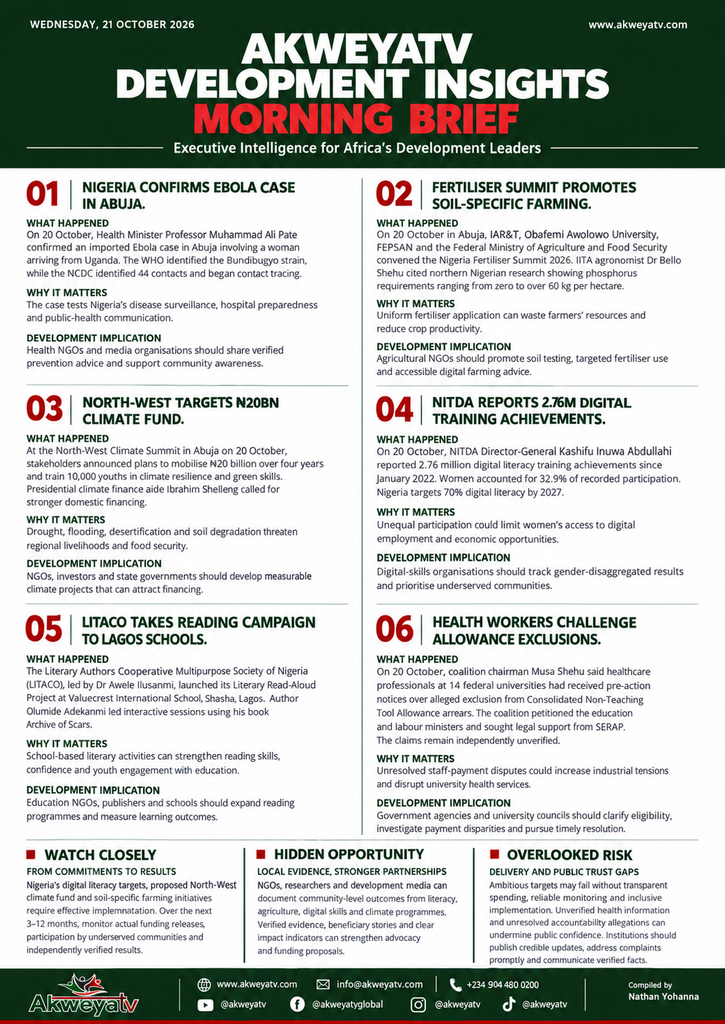
Nigeria Confirms Ebola Case in Abuja
What happened: On 20 October, Health Minister Professor Muhammad Ali Pate confirmed an imported Ebola case in Abuja involving a woman who arrived from Uganda. The NCDC identified 44 contacts and began contact tracing. The WHO identified the Bundibugyo strain.
Why it matters: The case tests Nigeria’s disease surveillance, hospital preparedness and public-health communication.
Implication: Health NGOs and media organisations should share verified prevention advice and support community awareness.
Fertiliser Summit Promotes Soil-Specific Farming
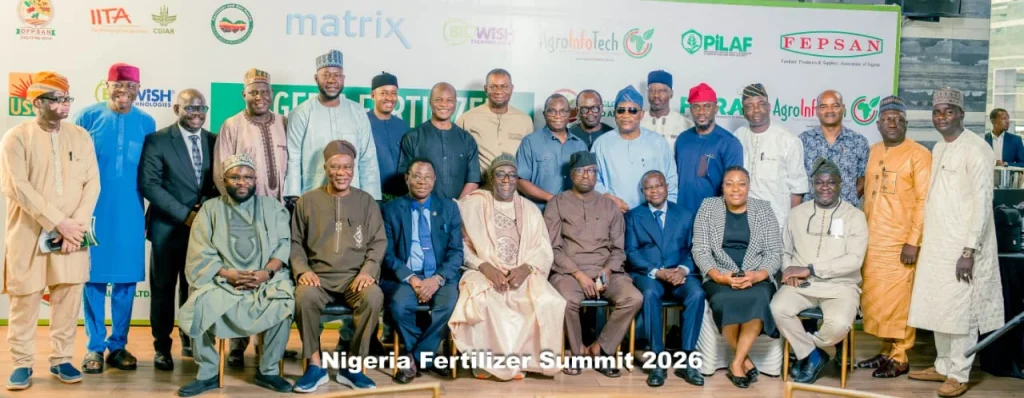
What happened: On 20 October in Abuja, IAR&T, Obafemi Awolowo University, FEPSAN and the Federal Ministry of Agriculture and Food Security convened the Nigeria Fertiliser Summit 2026. IITA agronomist Dr Bello Shehu cited northern Nigerian research showing phosphorus requirements ranging from zero to over 60kg per hectare.
Why it matters: Uniform fertiliser application can waste farmers’ resources and reduce crop productivity.
Implication: Agricultural NGOs should promote soil testing, targeted fertiliser use and accessible digital farming advice.
North-West Targets ₦20bn Climate Fund
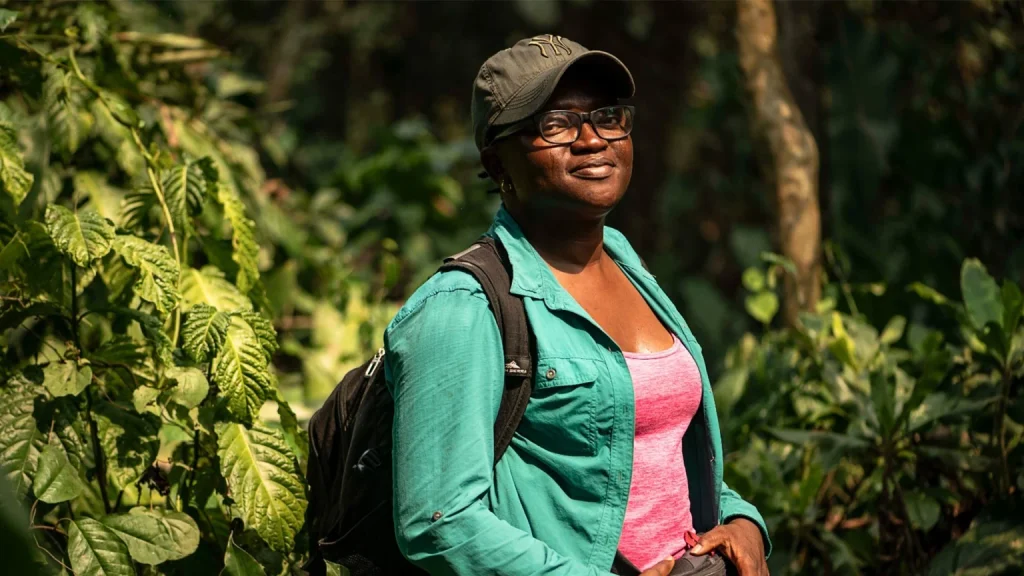
What happened: At the North-West Climate Summit in Abuja on 20 October, stakeholders announced plans to mobilise ₦20 billion over four years and train 10,000 youths in climate resilience and green skills. Presidential climate finance aide Ibrahim Shelleng called for stronger domestic financing.
Why it matters: Drought, flooding, desertification and soil degradation threaten regional livelihoods and food security.
Implication: NGOs, investors and state governments should develop measurable climate projects that can attract financing.
NITDA Reports 2.76 Million Digital Training Achievements
What happened: On 20 October, NITDA Director-General Kashifu Inuwa Abdullahi reported 2.76 million digital literacy training achievements since January 2022. Women accounted for 32.9% of recorded participation. Nigeria targets 70% digital literacy by 2027.
Why it matters: Unequal participation could limit women’s access to digital employment and economic opportunities.
- Nigeria Revisits Ebola Lessons as New Case Emerges
- Lawyers Bring Child Rights Lessons Into Rivers Schools
- DEVELOPMENT INSIGHTS MORNING BRIEF, 21 October 2026
- Federal Government Confirms Ebola Case In Abuja
- LITACO Takes Reading Campaign to Lagos Secondary Schools
Implication: Digital-skills organisations should track gender-disaggregated results and prioritise underserved communities.
LITACO Takes Reading Campaign to Lagos Schools
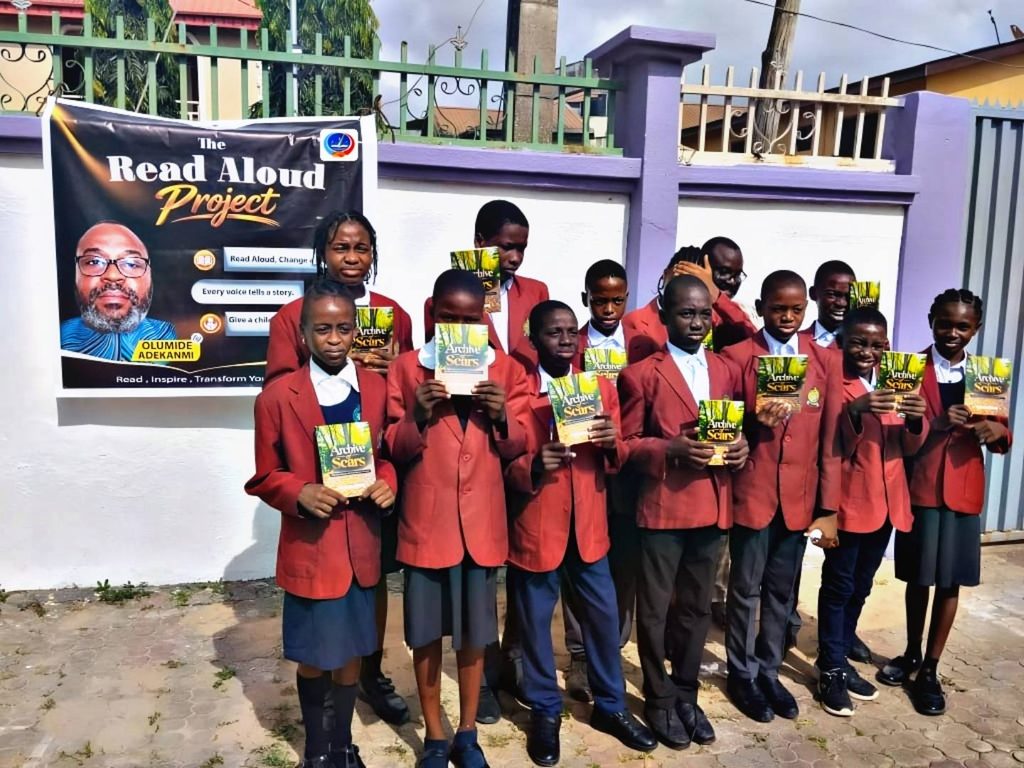
What happened: The Literary Authors Cooperative Multipurpose Society of Nigeria (LITACO), led by Dr Awele Ilusanmi, launched its Literary Read-Aloud Project at Valuecrest International School, Shasha, Lagos. Author Olumide Adekanmi led interactive sessions using his book Archive of Scars.
Why it matters: School-based literary activities can strengthen reading skills, confidence and youth engagement with education.
Implication: Education NGOs, publishers and schools should expand reading programmes and measure learning outcomes.
University Health Workers Challenge Allowance Exclusions
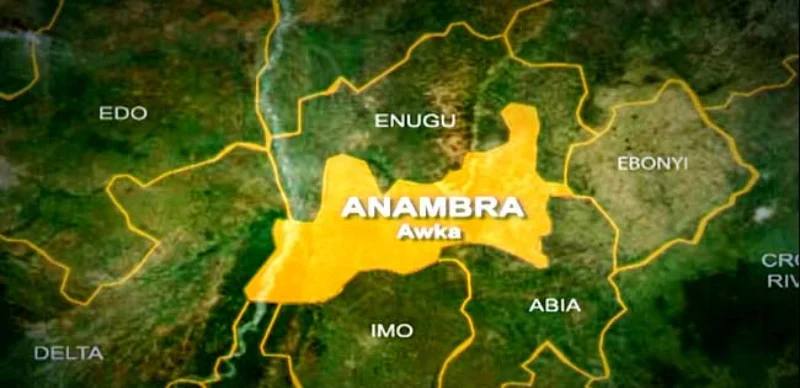
What happened: On 20 October, coalition chairman Musa Shehu said healthcare professionals at 14 federal universities had received pre-action notices over alleged exclusion from Consolidated Non-Teaching Tool Allowance arrears. The coalition petitioned the education and labour ministers and sought legal support from SERAP. The claims remain independently unverified.
Why it matters: Unresolved staff-payment disputes could increase industrial tensions and disrupt university health services.
Implication: Government agencies and university councils should clarify eligibility, investigate payment disparities and pursue timely resolution.
WATCH CLOSELY — From Commitments to Results
Nigeria’s digital literacy targets, proposed North-West climate fund and soil-specific farming initiatives all require effective implementation. Over the next 3–12 months, monitor actual funding releases, participation by underserved communities and independently verified results.
HIDDEN OPPORTUNITY — Local Evidence, Stronger Partnerships
NGOs, researchers and development media can partner to document community-level outcomes from literacy, agriculture, digital skills and climate programmes. Verified evidence, beneficiary stories and clear impact indicators can strengthen advocacy and funding proposals.
OVERLOOKED RISK — Delivery and Public Trust Gaps
Ambitious targets may fail to improve lives without transparent spending, reliable monitoring and inclusive implementation. Separately, unverified health information and unresolved accountability allegations can undermine public confidence. Institutions should publish credible updates, address complaints promptly and communicate verified facts.
Compiled by Nathan Yohanna
For more inquiries:
Website: www.akweyatv.com
Email: info@akweyatv.com
Phone number: +234 904 480 0200
YouTube: @akweyatv
Facebook: @akweyatvglobal
Instagram: @akweyatv
TikTok: @akweyatv



