

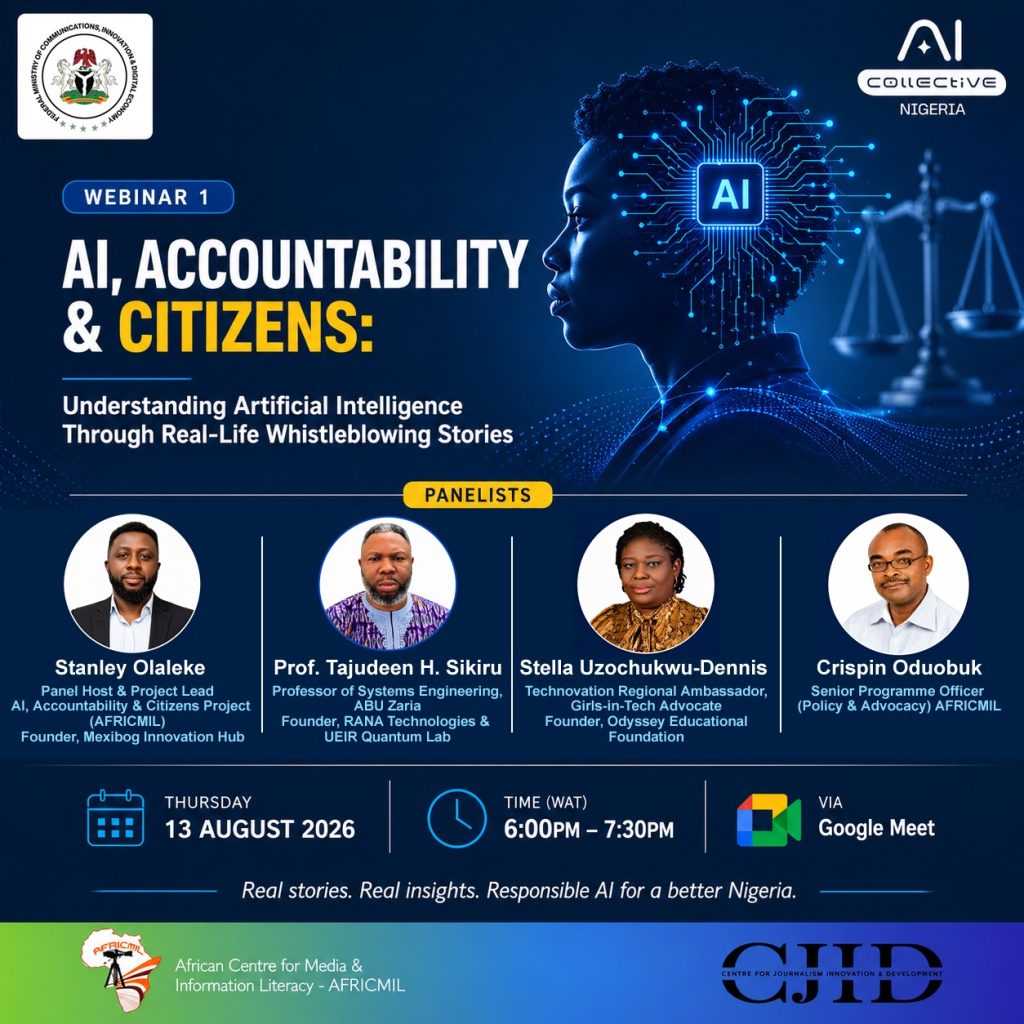
Artificial intelligence (AI) can help citizens, journalists and civil society organisations strengthen accountability by making it easier to analyse large volumes of information, identify suspicious patterns and monitor government activities, experts said during a webinar organised by the African Center for Media and Information Literacy (AFRICMIL) on Thursday, August 13, 2026.
The virtual webinar, titled “AI Accountability and Citizens: Understanding AI Through Real-Life Whistleblowing Stories,” was held via Google Meet from 6:00 p.m. to 7:30 p.m. and featured Crisping Oduobuk, Stella Uzochukwu Denis, Tajudeen Sikiru and Stanley Olaleke. The session examined how AI can support accountability and whistleblowing while also creating concerns around misinformation, privacy, identity protection, liability and human responsibility.
The discussion was aimed at helping citizens and accountability actors understand how AI can be used as a tool for identifying possible wrongdoing without treating its output as unquestionable evidence.

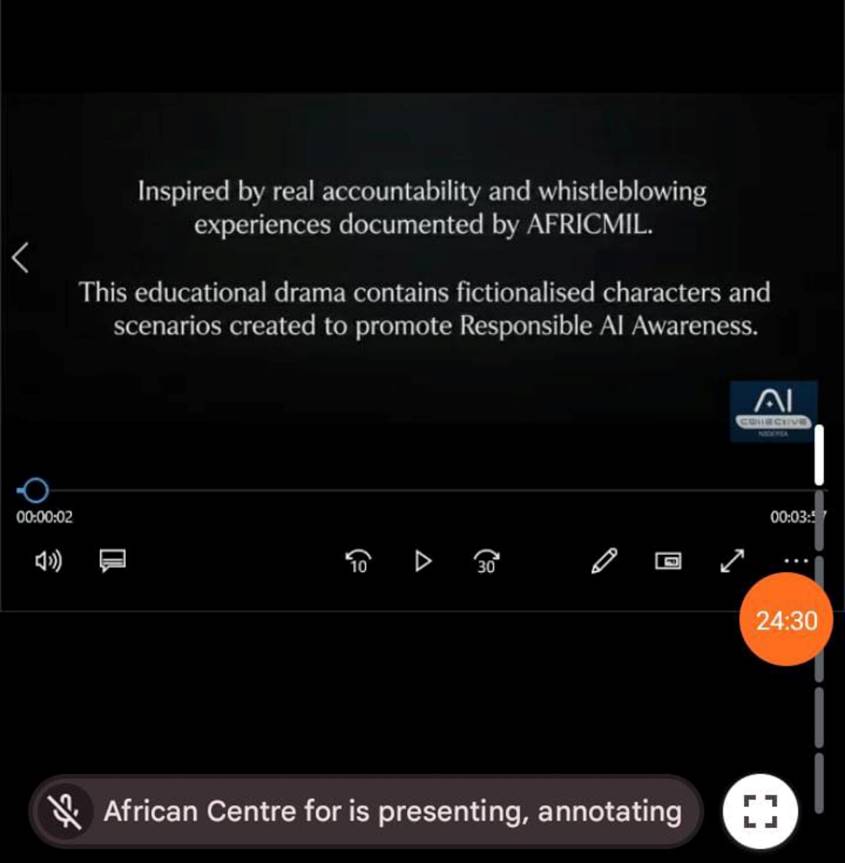
Opening title from the “Protected Identity” educational drama presented during the webinar. The drama is fictionalised and was created to promote responsible AI awareness.
AI as an Accountability Tool
Speaking on the opportunities AI creates for citizens, journalists and civil society organisations, Crisping Oduobuk said one of the major changes brought by AI was the easier availability and use of information.
Oduobuk compared the development with the period when people depended heavily on libraries and reference materials such as encyclopedias to obtain information.
According to him, AI has made large amounts of information more accessible and can help users analyse information that would previously have required considerable time and resources.
“AI can help citizens analyse large amounts of public information. It can help journalists identify patterns, inconsistencies, events,” Oduobuk said during the webinar.
He explained that journalists and civil society organisations could use AI to examine procurement documents and other public records that may be too numerous for individuals or small research teams to analyse manually.
He said the technology could help researchers “zero in” on the information they are looking for, making it easier to monitor government activities, policies and public spending.
However, Oduobuk stressed that AI should support investigations rather than replace human judgement.
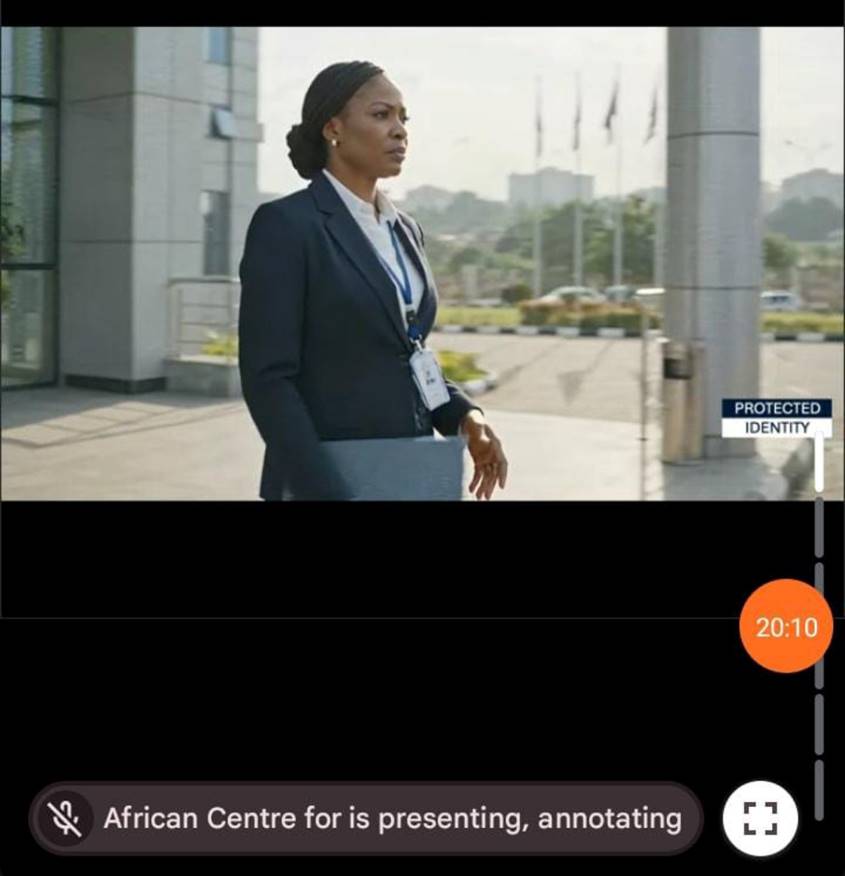
Still from the “Protected Identity” educational drama presented during the webinar.
AI and Large Datasets
The ability of AI to identify patterns in large datasets was also highlighted during the discussion.
One of the speakers explained that tasks which could take individuals or teams days, weeks or even months to examine could potentially be completed much faster with AI-assisted analysis.
A practical example given during the webinar involved a whistleblower with access to a large amount of budgetary or financial information. According to the explanation, AI could analyse the data and identify unusual patterns, allowing human investigators to focus on areas that may require further examination.
For instance, an unusual payment to a company could be flagged as something worth investigating. The speaker, however, emphasised that identifying an unusual pattern does not automatically establish that wrongdoing has occurred.
A human investigator must verify the information and determine whether there is credible evidence of wrongdoing before making an accusation or reporting the matter in the public interest.
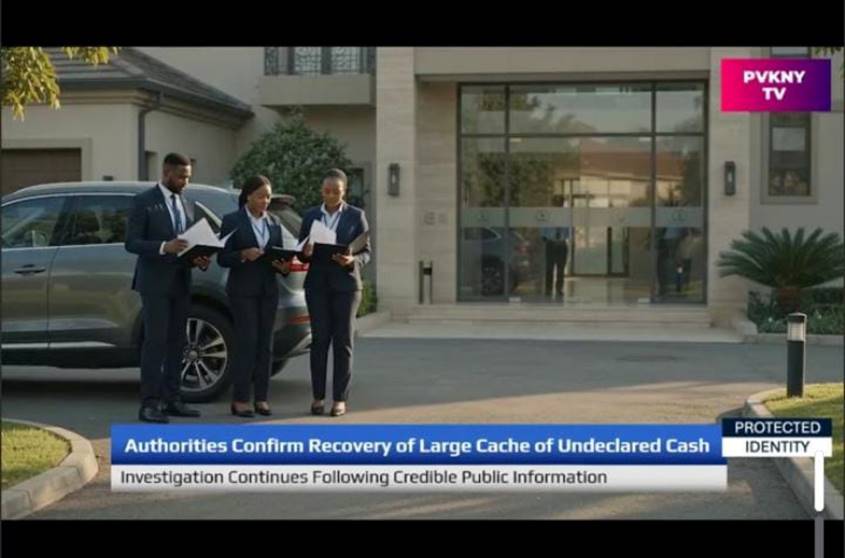
Still from the educational drama showing a fictionalised accountability investigation.
- AI Can Strengthen Accountability, But Human Oversight Remains Essential, Experts Say
- EXPERTS URGE RESPONSIBLE AI USE, STRONGER WHISTLEBLOWER PROTECTION
- Benue Journalists Get Training on Tackling SGBV
- DEVELOPMENT INSIGHTS MORNING BRIEF, 14 AUGUST 2026
- 9,500 Pharmacists Leave Nigeria Over Poor Pay, Working Conditions
The Problem of AI Hallucination
The experts also warned participants about AI hallucination, where an AI system generates information that appears convincing but is inaccurate or fabricated.
During the webinar, participants were advised to be cautious when using AI and to verify information before relying on it, especially when the information could be used as evidence against an individual or institution.
A practical method discussed was instructing an AI system to provide an answer only when it knows the answer and to admit when it does not have sufficient information.
Stella Uzochukwu Denis reinforced the importance of human judgement, noting that although AI has made many tasks easier, users should not accept its responses without checking them.
She explained that users still need to apply their own knowledge and technical understanding to determine whether an AI-generated response is actually reliable.
Her contribution reinforced the panel’s broader message that AI should be used as an assistant rather than an unquestionable authority.

Visual from the “Protected Identity” educational drama presented during the webinar.
Who Is Responsible When AI Makes a Mistake?
The webinar also raised questions about liability when AI is used in professional and legal situations.
Participants questioned who should be held responsible when AI-assisted decisions contribute to problems such as a breach of contract.
The discussion established that AI itself cannot simply be treated as a human actor capable of bearing responsibility. Instead, responsibility remains connected to the people who use the technology and make decisions based on its output.
The point further reinforced the speakers’ argument that the increasing use of AI does not remove human responsibility.
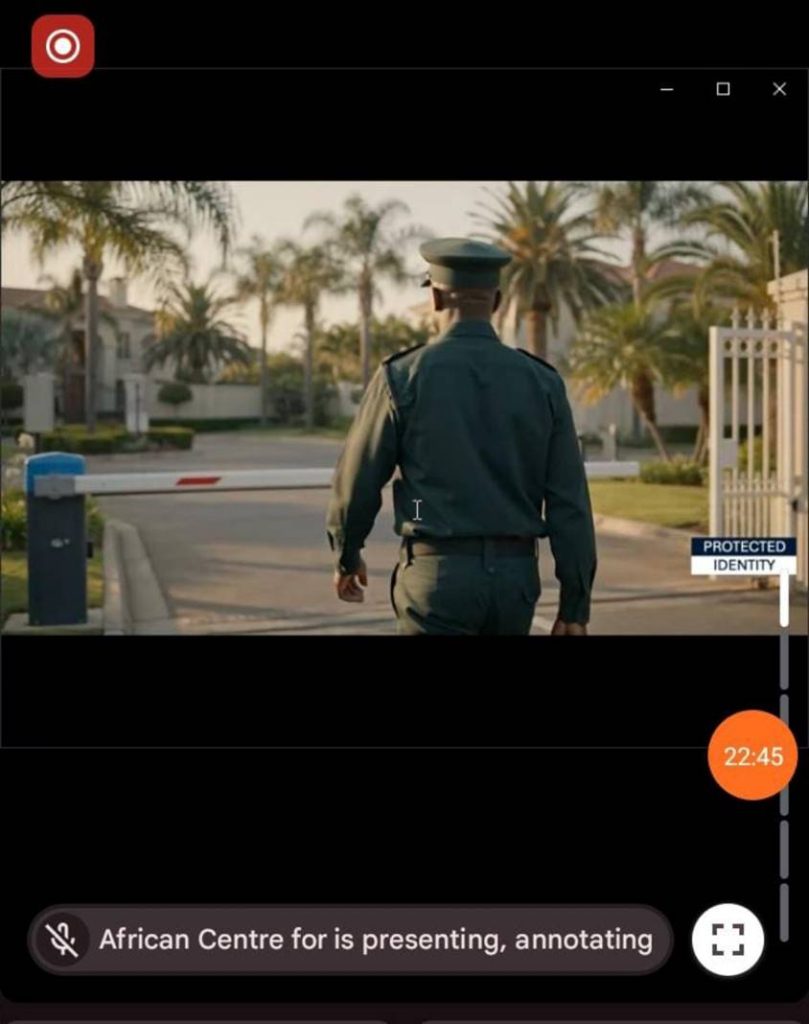
Still from the fictionalised educational drama used to illustrate accountability themes.
Protecting Whistleblowers
Whistleblower protection was another major issue discussed during the webinar.
Oduobuk explained that whistleblowing carries significant risks because individuals who expose corruption or other forms of wrongdoing may face retaliation.
He stressed that protecting the identity of whistleblowers is therefore essential, particularly when individuals provide information in the public interest.
“Protecting the identity of a whistleblower who has volunteered to bring information forward in the interest of the public is essential,” Oduobuk said.
The webinar also featured a cinematic video titled “Protected Identity,” which reimagined a whistleblowing scenario in the age of AI.
The video explored how AI could potentially recognise patterns associated with suspicious activity while also highlighting the importance of protecting the identity of the person who provides the information.
The discussion therefore examined whether technology could make whistleblowing safer while recognising that it could also introduce new risks.
The speakers described technology as a double-edged sword and argued that privacy and identity protection should increasingly be incorporated into the design of technological systems.
Still from “Protected Identity,” illustrating the whistleblower-protection theme.
AI, Ethics and the Future
The conversation eventually moved beyond the immediate uses of AI to examine the ethical implications of developing increasingly sophisticated technology.
One of the speakers described the current development of AI as part of a broader technological transition and paradigm shift.
The discussion emphasised that those developing AI systems must consider not only what the technology can do but also the ethical and social consequences of its deployment.
For citizens, journalists and civil society organisations, AI presents an opportunity to work with information more quickly and efficiently. It can help reduce the time required to search through documents, analyse data, identify patterns and support investigations.
But the webinar repeatedly emphasised that technology cannot replace human judgement.
AI can identify a possible problem, but people must determine whether the information is accurate, whether it constitutes evidence of wrongdoing and whether acting on it is in the public interest.
The central message from the webinar was that AI can strengthen accountability when used responsibly, but humans must remain responsible for the information they accept, the decisions they make and the actions they take with AI.

Closing visual from the “Protected Identity” presentation.
Editorial note: The images are stills/screenshots from the educational drama presented during the webinar. The opening slide identifies the drama as fictionalised and inspired by documented accountability and whistleblowing experiences.



