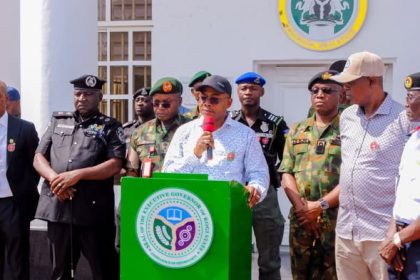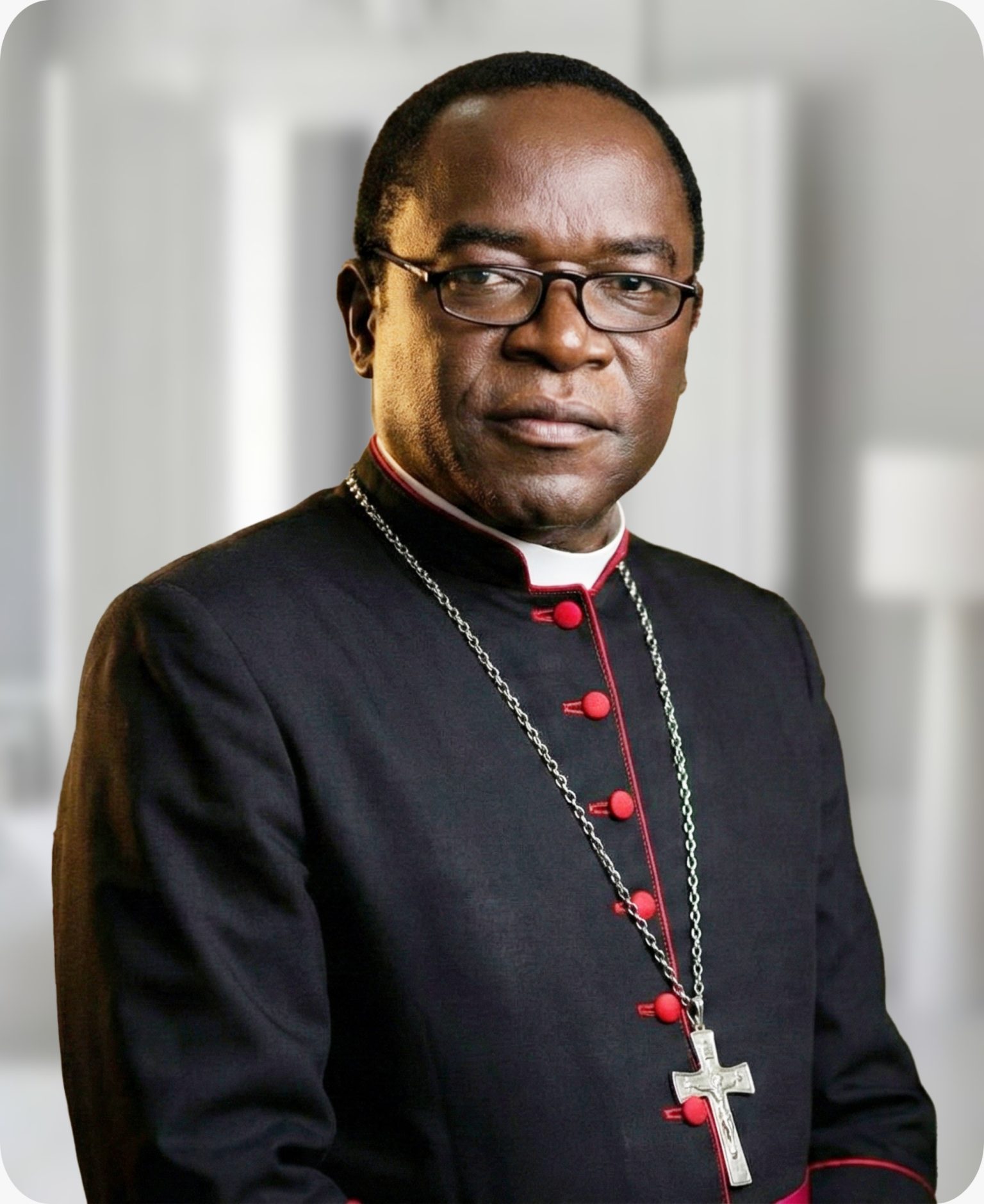


For five decades, Bishop Matthew Hassan Kukah has moved between the pulpit, classroom and public square, becoming a prominent voice on faith, democracy, peace and justice in Nigeria.
As Bishop Matthew Hassan Kukah turns 74 today, August 31, 2026, his journey tells the story of a priest whose influence has extended well beyond the Catholic Church.
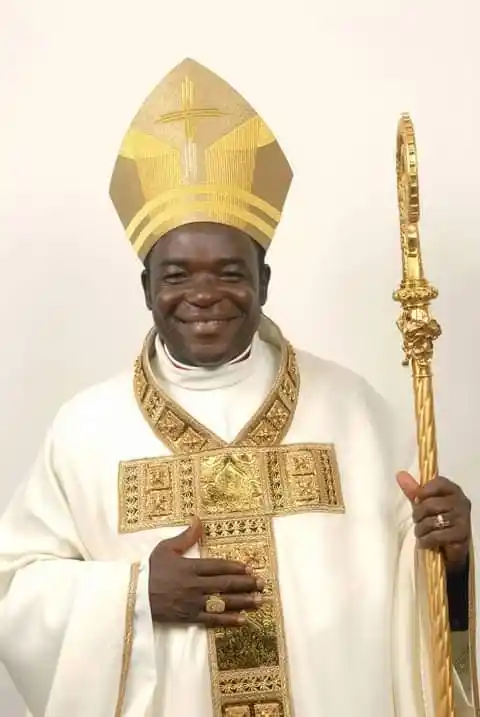
From his childhood in Anchuna, Kaduna State, to the Catholic Diocese of Sokoto and some of Nigeria’s most important national conversations, Bishop Matthew Hassan Kukah has built a career around faith, scholarship, public service and advocacy.
From Anchuna To The Priesthood
Bishop Matthew Hassan Kukah was born on August 31, 1952, in Anchuna, in the Ikulu Chiefdom of Zangon Kataf Local Government Area of Kaduna State.
His early education took him to St Fidelis Primary School, Zagom, followed by St Joseph Minor Seminary in Zaria and St Augustine Major Seminary in Jos, where he studied Philosophy and Theology.
He was ordained a Catholic priest on December 19, 1976.
His early priesthood included pastoral and teaching responsibilities in Kaduna, including service at St Andrew’s Catholic Church, Kakuri. He later held senior responsibilities within the Catholic Church, including serving as Vicar General of the Archdiocese of Kaduna.
A Scholar With A Global Education
Education has remained a major part of Bishop Matthew Hassan Kukah’s life.
He obtained a Diploma in Religious Studies from the University of Ibadan and a Bachelor of Divinity from the Pontifical Urban University in Rome.
He later earned a Master’s degree in Peace Studies from the University of Bradford in the United Kingdom and completed a PhD at the School of Oriental and African Studies, University of London, in 1990.
His academic journey also took him to Oxford and Harvard, where he further developed his interest in leadership, governance and public policy.
That mix of theology, peace studies and public policy would later shape much of his public work.
- Gov. Eno Honours Former Teacher Nearly 50 Years Later
- Kemi Okenyodo’s Journey In Police Accountability And Justice Reform
- Why Are the Idoma Celebrating?
- INEC Targets Safer, Smoother 2027 Elections
- Nigeria Plans Power-Telecom Integration to Boost Rural Connectivity
From Priest To National Contributor
Bishop Matthew Hassan Kukah’s public service has taken him into several major moments in Nigeria’s political history.
Between 1999 and 2001, he served on the Human Rights Violations Investigation Commission, popularly known as the Oputa Panel.
He later served as Secretary of the 2005 National Political Reform Conference and was a member of the Federal Government’s Electoral Reform Committee between 2007 and 2009.
He was also involved in reconciliation efforts relating to the Ogoni-Shell dispute.
These assignments placed him at the intersection of religion, human rights, politics and conflict resolution.
In 2011, Pope Benedict XVI appointed Kukah Bishop of the Catholic Diocese of Sokoto. He was installed on September 8 of that year.
As Bishop of Sokoto, Bishop Matthew Hassan Kukah has worked in a region where religious coexistence, insecurity, poverty and social development remain major concerns.
His position has also strengthened his role as an advocate for dialogue between communities and religious groups.
Building Bridges Through Dialogue
Interfaith dialogue has remained a consistent feature of Bishop Matthew Hassan Kukah’s work.
He has repeatedly called for Nigerians to look beyond religious and ethnic divisions and find common ground in addressing the country’s challenges.
His international engagements have included participation in interreligious and intercultural initiatives, including work with the King Abdulaziz International Centre for Interreligious and Intercultural Dialogue.
The Kukah Centre
Bishop Matthew Hassan Kukah’s ideas on faith, leadership and governance found institutional expression in The Kukah Centre, which he founded in 2008.
Based in Abuja and Kaduna, the Centre works on governance, leadership, interfaith dialogue, peacebuilding, citizen participation and public policy, bringing government, civil society, academics, religious leaders and citizens together to address Nigeria’s challenges.
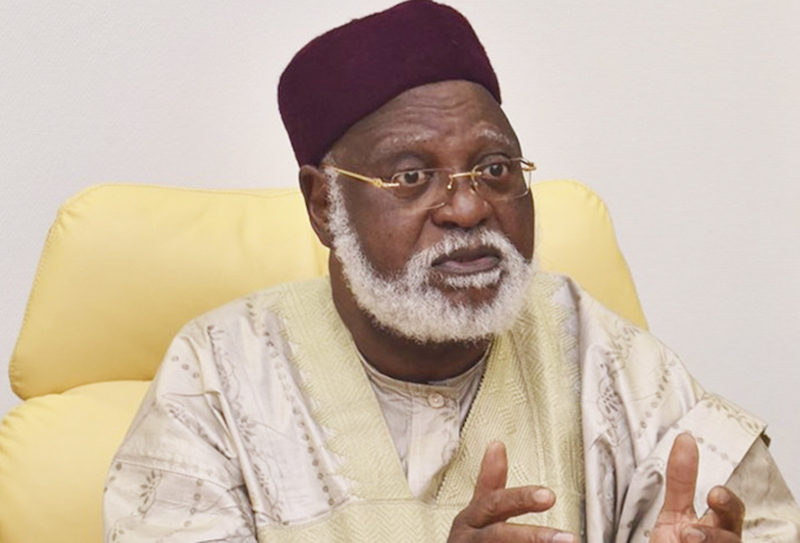
Its work has included research, policy dialogues, leadership programmes and electoral peacebuilding. The Centre also serves as the secretariat of the National Peace Committee, chaired by former Head of State General Abdulsalami Abubakar, which promotes peaceful elections and dialogue among political actors.
Through the Centre, Kukah’s long-standing advocacy for accountable leadership, social cohesion and peaceful coexistence has extended beyond public commentary into practical institution-building.
A Voice On Democracy And Leadership
Kukah has become one of the country’s most recognisable religious voices on governance and democracy.
His interventions have frequently touched on political leadership, elections, corruption, insecurity, poverty and the responsibilities of citizens and public officials.
He has also been associated with the National Peace Committee, which has worked to promote peaceful elections and dialogue among political actors.
Bishop Matthew Hassan Kukah’s influence also comes through his writing.
His books examine the relationship between religion, politics, justice, democracy and Nigerian society.
Among his notable works are Religion, Politics and Power in Northern Nigeria, Witness to Justice, Witness to Reconciliation and Democracy and Civil Society in Nigeria.
He has also published works such as The Church and the Politics of Social Responsibility, The Mustard Seed and At the Name of Jesus, reflecting the pastoral and spiritual dimension of his writing.
His writings have helped establish him not only as a Catholic bishop but also as a public intellectual whose ideas regularly enter Nigeria’s political and social conversations.
Leadership Beyond the Church
Bishop Matthew Hassan Kukah influence has increasingly extended into education and institutional leadership.
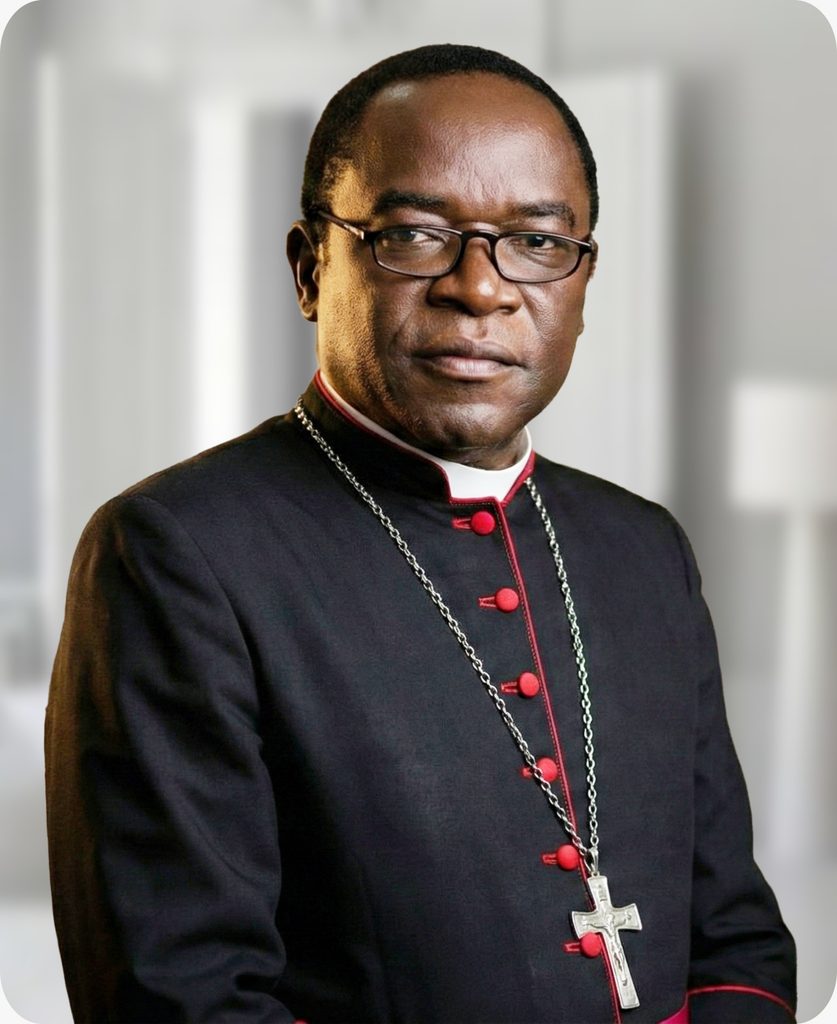
In 2025, he was appointed Pro-Chancellor and Chairman of the Governing Council of the Federal University of Applied Sciences, Kachia, Kaduna State.
In 2026, he was also appointed Chancellor of Chukwuemeka Odumegwu Ojukwu University in Anambra State.
The appointments reflect another side of his career: a continuing interest in education, leadership and the development of young Nigerians.
A Growing Role on the Global Stage
Bishop Matthew Hassan Kukah’s work has also earned him responsibilities beyond Nigeria.
In 2026, Pope Leo XIV appointed him to the Council of the Vatican’s Dicastery for Promoting Integral Human Development for a five-year term.
The role places him within a global Catholic institution concerned with human development, social justice, human rights and other issues affecting vulnerable communities.
For a Nigerian bishop whose public career has long centred on peace, justice and development, the appointment represents another international dimension to his work.
Recognition for Public Service
Bishop Matthew Hassan Kukah ‘s contribution to public life has attracted national and international recognition.
In 2025, he was among Nigerians honoured by President Bola Ahmed Tinubu with the national honour of Commander of the Order of the Niger, CON.
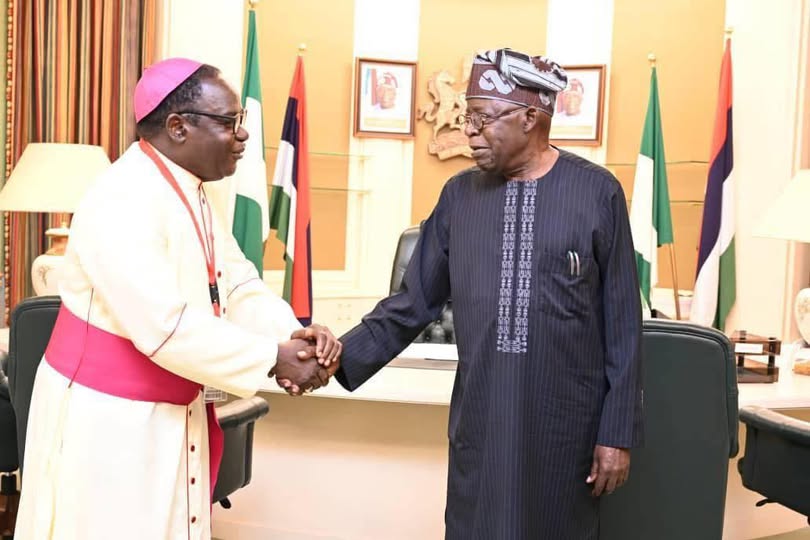
His work in peacebuilding, dialogue, leadership and public policy has also earned recognition from organisations beyond Nigeria.
Five Decades of Service
From Anchuna to Sokoto, and from the seminary to national and international platforms, Kukah’s life has been shaped by a willingness to engage the difficult questions facing society.
He has served as a priest, bishop, scholar, author, mediator, public policy advocate and institution builder.
At 74, Bishop Matthew Hassan Kukah remains a significant voice in Nigeria’s conversations on faith, justice, democracy, peace and human development.
His journey is ultimately one of a life spent moving beyond the walls of the church to engage a country in search of better leadership, greater justice and lasting peace.