


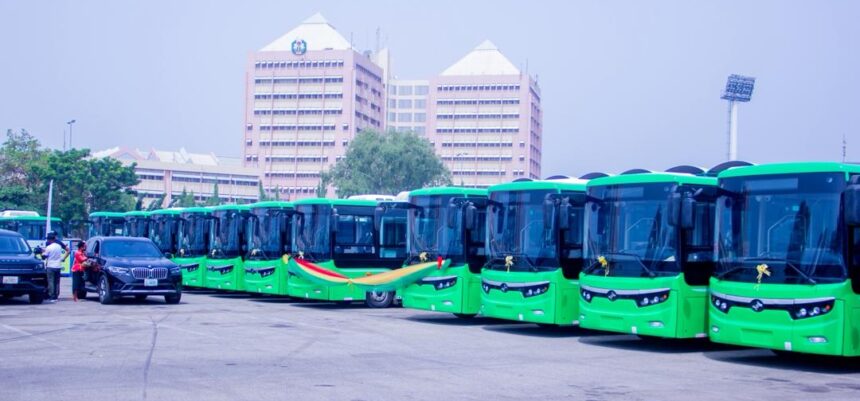
The Presidential Initiative on Compressed Natural Gas and Electric Vehicles (Pi-CNG) and EVs has taken a major step forward in Nigeria’s clean mobility transition with the successful hosting of the “Electrifying Mobility” EV Fair and the official announcement of its Phase 2 strategic direction at Eagle Square, Abuja.
Thank you for reading this post; don't forget to subscribe to our YouTube channel here!
Held yesterday, December 11th, the EV Fair showcased Nigeria’s growing readiness for electric mobility, bringing together policymakers, global and local OEMs, financiers, infrastructure providers, innovators, academia, and the media. A key highlight of the event was the unveiling and first public deployment of a batch of electric buses, supported by emerging charging infrastructure and evolving financing models.


Speaking during the press briefing, the Executive Chairman of Pi-CNG, Barrister Ismaeel Ahmed, outlined the organisation’s next phase—a consolidated strategy focused on Availability, Affordability, and Acceptability (the “3As”), particularly for CNG adoption, while elevating the prominence of EVs under the Initiative’s expanded mandate.
He stated that Phase 2 of Pi-CNG is designed to make clean mobility accessible to everyday Nigerians by ensuring more vehicles and conversion centres are available nationwide, creating price-relief mechanisms and financing pathways to make clean mobility cheaper, and building sustained public trust through safety assurance, standards, and transparency.
He reiterated the Federal Government’s resolve to leverage Nigeria’s abundant gas resources as the backbone of the transition, noting:
“We have gas, we are going to mop up that and make sure that we deliver cheaper, affordable, cleaner energy and mobility for the Nigerian people.”

The Chairman also highlighted key achievements recorded since the Initiative’s inception, including:
* The rollout of conversion centres across multiple states;
* The delivery of CNG buses and expansion of partnerships with OEMs and assemblers;
* Strengthened collaborations with financiers, ensuring improved access to vehicle and conversion financing;
* Progress in standards development and safety guidelines;
* Accelerated integration of EV solutions as part of the Initiative’s broader clean mobility agenda.
These milestones, he said, lay a strong foundation for a more coordinated, market-ready clean mobility ecosystem in Phase 2, where both CNG and EVs will play central roles in reducing transport costs, improving air quality, and positioning Nigeria as a leader in Africa’s energy transition.

The EV Fair recorded an impressive turnout from the Federal Ministries of Transport and Environment, international and local vehicle manufacturers, clean energy innovators, charging infrastructure developers, investors, and academic institutions. Their participation demonstrated a unified national commitment to advancing a modern, sustainable mobility future.
Pi-CNG expressed appreciation to all partners, exhibitors, technical teams, and attendees whose collaboration made the event a success. The Initiative reaffirmed its dedication to delivering a cheaper, cleaner, and more competitive transportation system for Nigerians through a strengthened and inclusive clean-mobility agenda.
Follow the AkweyaTV channel on WhatsApp: http://bit.ly/3I7mQVx
Or scan the QR code:


