



When I read Iorliam Shija’s “How Baiki introduced Tiv to the world” a few days ago, the issue of the Tiv identity became a worrisome project, moreso that at different levels, many Tiv especially the young have discussed this extensively and even probably thought of possible solutions. The paper presented at the Tiv Day celebration on Tiv Rebirth by Shima Gyoh and the ensuing interactions cracked several nerves in me.
Thank you for reading this post; don't forget to subscribe to our YouTube channel here!
I came to the conclusion that the Tiv, as a people, have yet to define, with clear intention, who we really are or even what we stand for in contemporary times. Strikingly, the British colonialists, in their classification of Nigerian ethnic groups, defined the Tiv as a distinct tribe within a national taxonomy. In doing so, they stereotyped us as “warlike,” “cannibals,” “agriculturalists,” “rude,” “passionate,” and sometimes even worse. The truth is they called us names. This default definition, though externally imposed, remains deeply embedded in how both outsiders and some of us view our identity but I think this is not good enough just like many other Tiv think too.

However, defining ourselves proactively in the present, drawing from our past yet decisively carving out a future, is not only possible but necessary and important. It is vital to avoid passively inheriting a fractured, externally-influenced identity that limits our potential.
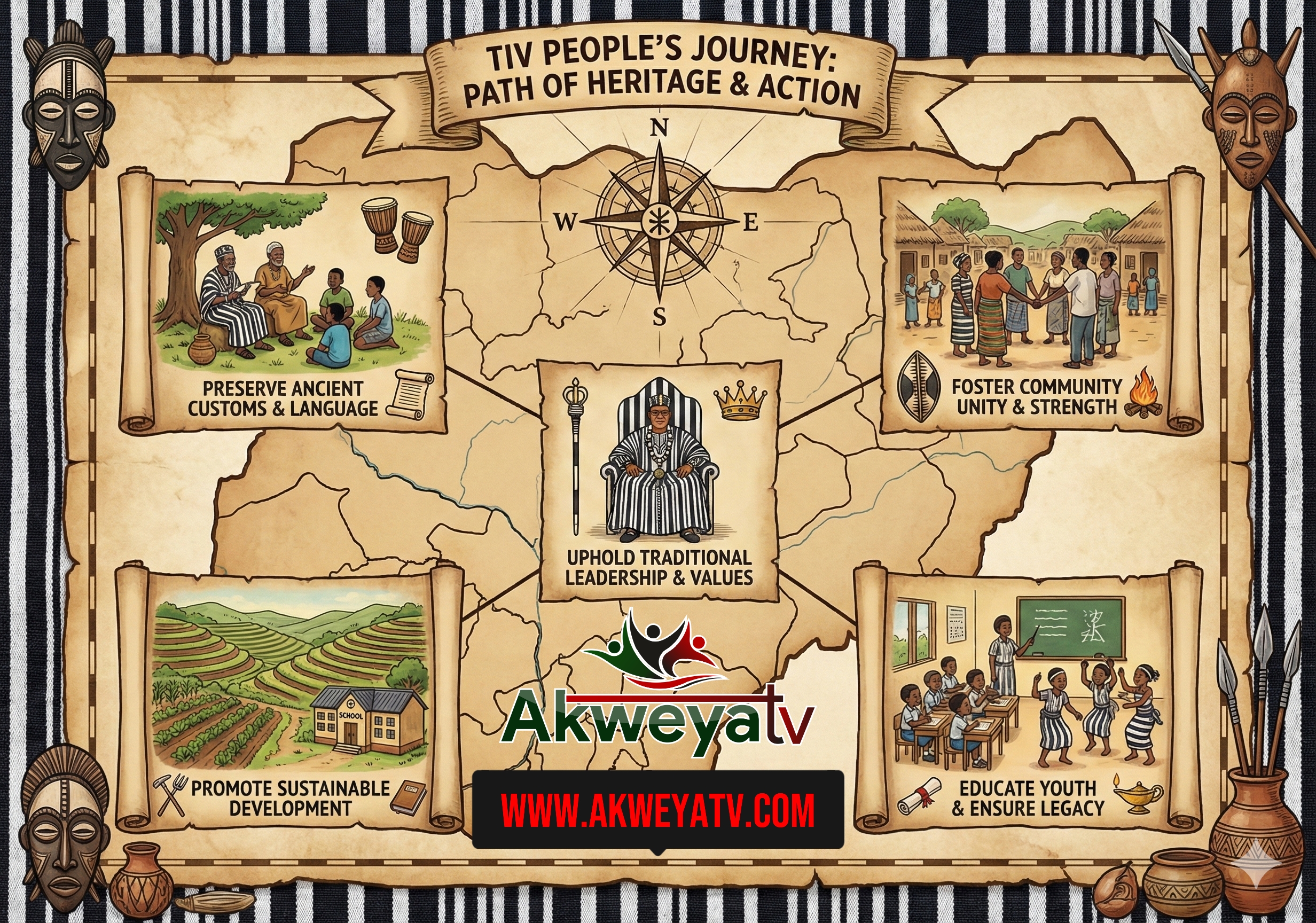
Our traditional definitions, such as ityo and tar our basic sociopolitical structure, the principle of balance rooted in need and equity and “Ya Na Angbian”, along with core values like kwav that captures truth, justice, and balance, represent a living philosophy that has guided us for centuries. Yet, this definition remains fragmented in the face of external influences, divided between the political, the modern, and the traditional behind especially a horde of young people rather confused.
Without a cohesive, intentional definition of who we are, we remain politically vulnerable, constantly reacting rather than planning or advancing.
The colonial and post-colonial state defined the Tiv as simply a tribe or ethnic nationality like they did many others within a competitive political system, where identity became a tool for resource allocation. This forced identity into a cynical, transactional framework.
In today’s world, identity is often measured by professional achievement, material success, and integration into the larger Nigerian, African or global culture. This creates a tension between being Tiv and being a modern Nigerian, African or a citizen of the world as the case maybe not merely by geographical location.
In intellectual circles, the definition is often shaped by historians, academics, and writers who analyse our past and present. However, these definitions can sometimes remain isolated within elite circles, never fully penetrating the broader consciousness mostly because no serious action is taken to ensure that it penetrates deep down.
The issue is simple as the Tiv people are operating with a fragmented and externally influenced definition of ourselves. And this has profound negative implications.
Identity is the foundation upon which our purpose and vision must be built.
Without a cohesive, intentional definition of who we are, we remain politically vulnerable, constantly reacting rather than planning or advancing. We risk cultural stagnation, where the deep philosophy and rich symbols of our heritage are reduced to mere performances without real significance. This lack of definition creates a crisis of purpose, where our collective energy is spent on defending what it means to be Tiv rather than creating what the Tiv aspire to be.
Amongst my maternal kin, there’s saying or metaphor of the “Cup as Toilet Pail” which is perhaps very powerful. The Tiv people, with immense potential, are often relegated to menial, even degrading roles because we lack a clear, self-asserted definition of our purpose. This is a tragic waste of dignity and potential.
The question, then, is whether the Tiv should have an intentional definition. The answer is a resounding yes. Without it, we remain subjects in others’ narratives, political pawns, and a community adrift. An intentional definition is not about inventing something new from scratch. No, we don’t need to do rather, it is about curating, interpreting, and projecting the timeless principles of Tiv identity into a contemporary framework.
Identity is the foundation upon which our purpose and vision must be built. Only by understanding who we are—our values, our history, our culture—can we then ask: What is our purpose? What are we here to do? If our identity is merely about survival and competition for resources, then our purpose will remain reactive as has mostly been the case. But if we define ourselves as a people of communal justice, artistic expression, agricultural ingenuity, and resilient social fabric, then our purpose will emerge clearly.
In essence, our purpose becomes to build societies based on fairness and balance, to contribute to the world’s cultural and intellectual heritage through our unique lens, to innovate in agriculture and environmental stewardship, and to become a nation of builders and reconcilers.
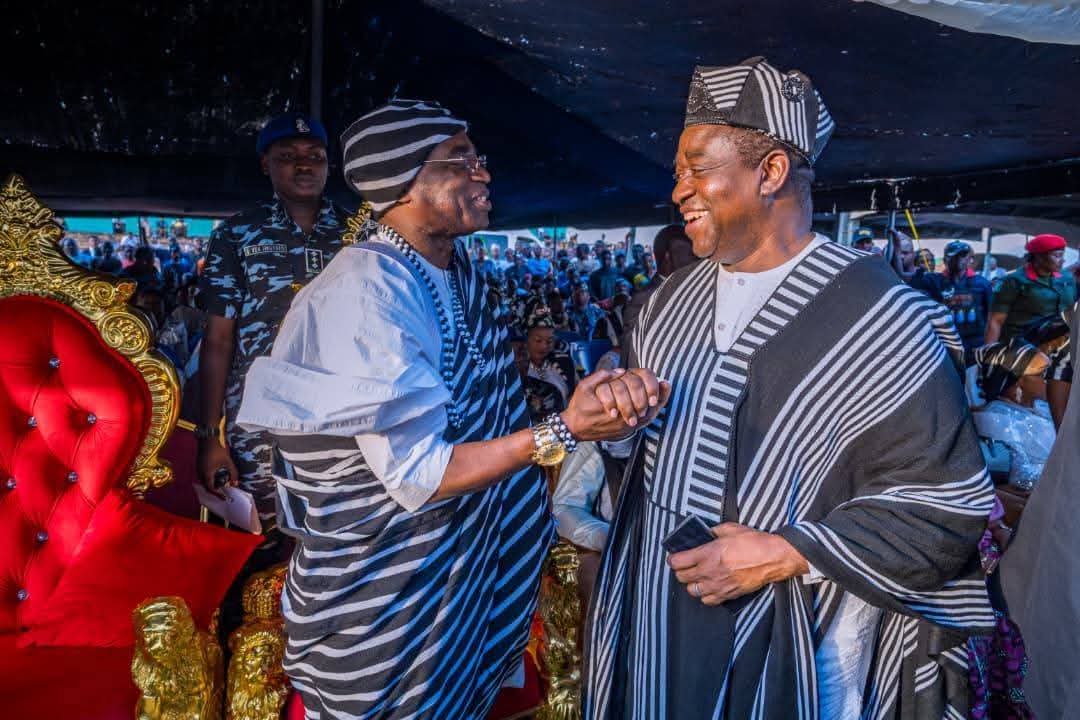
As intellectuals, leaders, and custodians of our heritage, the burden of this work cannot rest on isolated individuals alone. It requires moral authority, cultural legitimacy, and collective trust. In this regard, the Tor Tiv occupies a unique and irreplaceable position. The Tor Tiv should deliberately convoke Tiv sons and daughters—drawn from academia, the professions, culture, and civic life, devoid of partisan political, religious, or ideological leanings, to undertake this foundational task. Such a convocation would not be about power, privilege, or patronage, but about thought, meaning, and destiny.
This is no mean task but a daunting one as it begins It begins with excavating our core values—what does kwav mean for governance in the 21st century for instance? It requires the curation of our traditions, deciding which values are living and which are simply historical markers. It demands clear articulation, both in Tiv and English, through stories, art, and civic education. Finally, it necessitates institutionalisation by embedding this definition in governance, education, and cultural institutions.
Only then will we be able to recognise and use the “cup” for its true purpose, as a vessel for offering refreshment, not as a utility in the darkest corner. The Tiv identity will be a source of agency, pride, and contribution to the world and not merely a label to defend.
As intellectuals, leaders, and custodians of our heritage, the burden of this work cannot rest on isolated individuals alone. It requires moral authority, cultural legitimacy, and collective trust. In this regard, the Tor Tiv occupies a unique and irreplaceable position. The Tor Tiv should deliberately convoke Tiv sons and daughters—drawn from academia, the professions, culture, and civic life, devoid of partisan political, religious, or ideological leanings, to undertake this foundational task. Such a convocation would not be about power, privilege, or patronage, but about thought, meaning, and destiny.
If our identity is merely about survival and competition for resources, then our purpose will remain reactive as has mostly been the case.
This is the kind of gathering that can excavate our core values, curate what must endure, and articulate an intentional Tiv identity fit for the 21st century and beyond. It is only through such a broad, sober, and intellectually grounded engagement that the Tiv can move from inherited identity to chosen identity; from reaction to direction; from survival to purpose.
Only then will the “cup” be recognised and used according to its true design, as a vessel for holding and offering refreshment, dignity, and value and not as a tool relegated to the darkest corner. The Tiv identity, when consciously defined and owned, becomes a source of agency and contribution to Nigeria and the world, not merely a label to be defended in moments of crisis.
Without this intentional work, our future remains vulnerable to external definitions and internal fragmentation. With it, however, the Tiv can finally speak for themselves and clearly, confidently, and coherently and as a people who know who they are, understand why they exist, and are prepared to shape their destiny rather than merely react to history.
Chief Eskee Terna Sam-Kange, Otajiaku Mgbohara, writes from Anchiha, Mbaviende, Ushongo LG (15/12/2025)
Follow the AkweyaTV channel on WhatsApp: http://bit.ly/3I7mQVx
Or scan the QR code:


