

Benue State’s political landscape has undergone a dramatic transformation over the past 12 months. From intense security challenges to fierce party rivalries and rising media-driven politics, the state has become one of Nigeria’s most closely watched political theatres. At the centre of this evolving landscape are the politicians, civil servants, and power brokers whose names consistently dominate headlines, policy conversations, and grassroots mobilisation. AkweyaTV is here releasing a list of the 50 Most Visible Benue Politicians and Their Network Map.
We conducted an OSINT-based visibility analysis of Benue’s top political and public sector figures, and it reveals that Governor Hyacinth Alia currently occupies the most visible position in the state’s political ecosystem. This is likely because his administration has remained at the centre of debates around insecurity, civil service reforms, infrastructure, and the growing internal crisis within the ruling All Progressives Congress (APC).
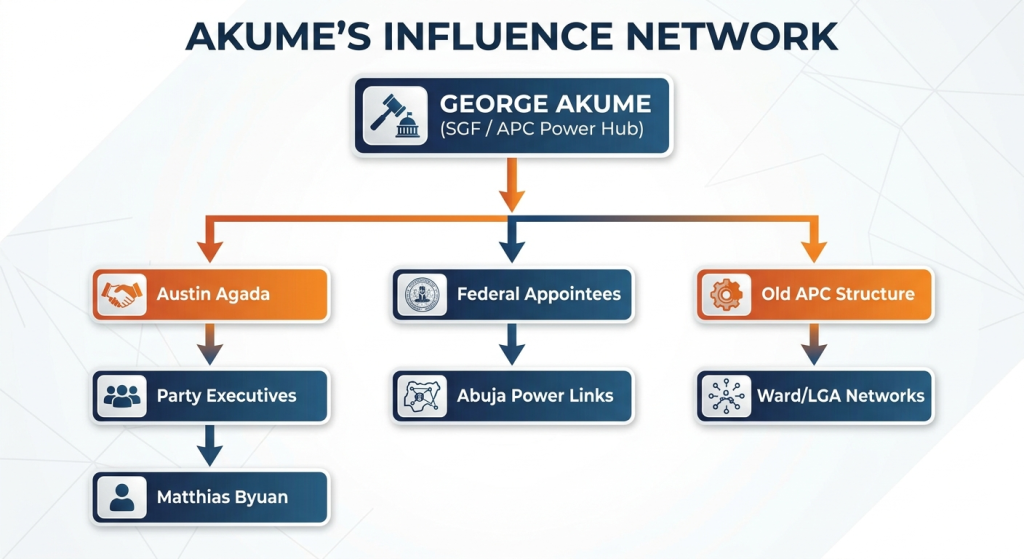
Closely behind Alia is Senator George Akume, the Secretary to the Government of the Federation (SGF), whose influence continues to shape APC politics both within Benue and nationally. Akume remains one of the most powerful political figures from the North Central region, controlling extensive federal and party networks developed over decades. However, his relationship with Governor Alia has increasingly defined the political temperature of the state. The rivalry between Alia and Akume has become the single most dominant storyline in Benue politics.
What initially appeared to be a disagreement over appointments and party structure evolved into a full-scale struggle for control of the APC machinery. Parallel ward congresses, competing executives, and contradictory public statements exposed deep fractures within the ruling party. This conflict also reshaped Benue’s political influence map into distinct clusters, as can be seen in the primaries, which saw many influential politicians like Daniel Onjeh lose out.

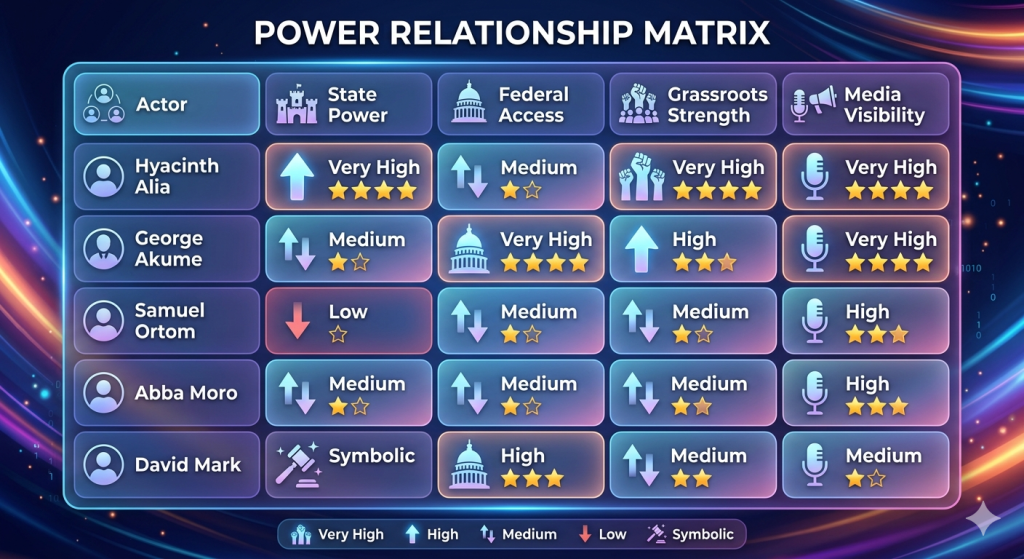
The first and strongest cluster is the Alia Governance Bloc, built around the governor’s control of the state executive structure. This network includes Deputy Governor Samuel Ode, several commissioners, loyal lawmakers, and a growing youth support base. Alia’s appeal is strengthened by his populist image, religious background, and perception as a grassroots leader. His administration’s visibility increased significantly because of recurring attacks in rural communities and repeated calls for federal intervention on insecurity.
The second cluster is the Akume Federal Power Bloc. This network consists of traditional APC loyalists, federal appointees, and long-established party operatives. Despite Alia’s rise, Akume still commands deep influence in Abuja and within the APC establishment. The bloc is strongly connected to Austin Agada and other party executives who remain loyal to the SGF’s political structure.
A third major cluster revolves around former Governor Samuel Ortom and the opposition Peoples Democratic Party (PDP). Although no longer in office, Ortom remains highly visible due to his continued commentary on security issues and Benue politics. Senator Abba Moro, Gabriel Suswam, and other PDP figures continue to maintain strong visibility through opposition engagement and media commentary.
Another important influence network is the Elder Statesmen Bloc, led symbolically by former Senate President David Mark. Though less active in daily political battles, these figures continue to shape negotiations, endorsements, and elite consultations ahead of the 2027 elections.
The final emerging cluster is the Media and Youth Influence Network. This includes younger and highly visible figures such as Philip Agbese, Arch. Dr. Asema Achado (who is not young in age but highly visible), and Raymond Edoh. Their influence is increasingly amplified through television appearances, online mobilisation, and digital political communication. In many ways, this network represents the future direction of Benue politics, where visibility is no longer driven solely by traditional structures but also by social media reach and public narrative control.
The OSINT ranking by AkweyaTV also showed that civil servants are becoming more publicly visible than before. Officials such as Moses Agbogbo Ode, Cephas Hough, Helen Nambativ, and James Iorpuu gained prominence through administrative reforms, humanitarian response efforts, and policy implementation. This reflects a growing trend in which governance actors, not just elected politicians, shape public discourse.
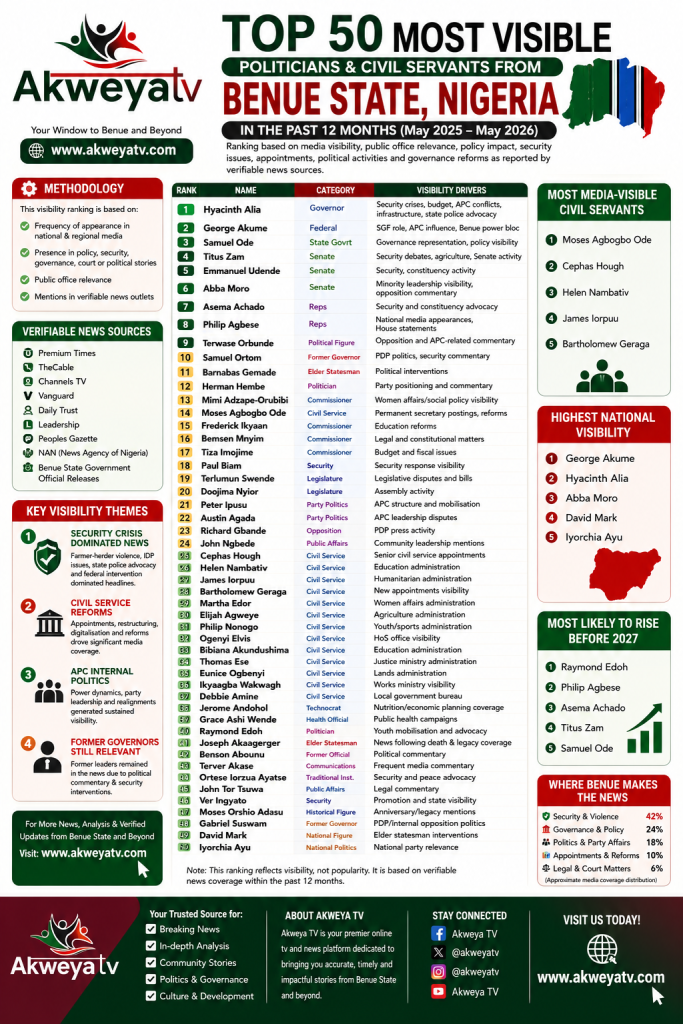
Security remains the issue that drives the highest level of media attention in Benue. Attacks in communities across the state generated widespread national and international concern, placing enormous pressure on political leaders and security agencies. Discussions around state policing, community protection, and humanitarian response dominated headlines throughout the year.
The broader implication of this visibility map is that Benue politics is shifting from traditional patronage politics toward a more media-centred and personality-driven system. Political influence is now determined not only by office or elite endorsements but also by digital presence, public perception, and crisis response visibility.
As preparations for the 2027 elections quietly begin, Benue’s political environment remains fluid and highly competitive. The contest between incumbency power, federal influence, opposition survival, and emerging youth-driven politics will likely define the next chapter of the state’s political history.