
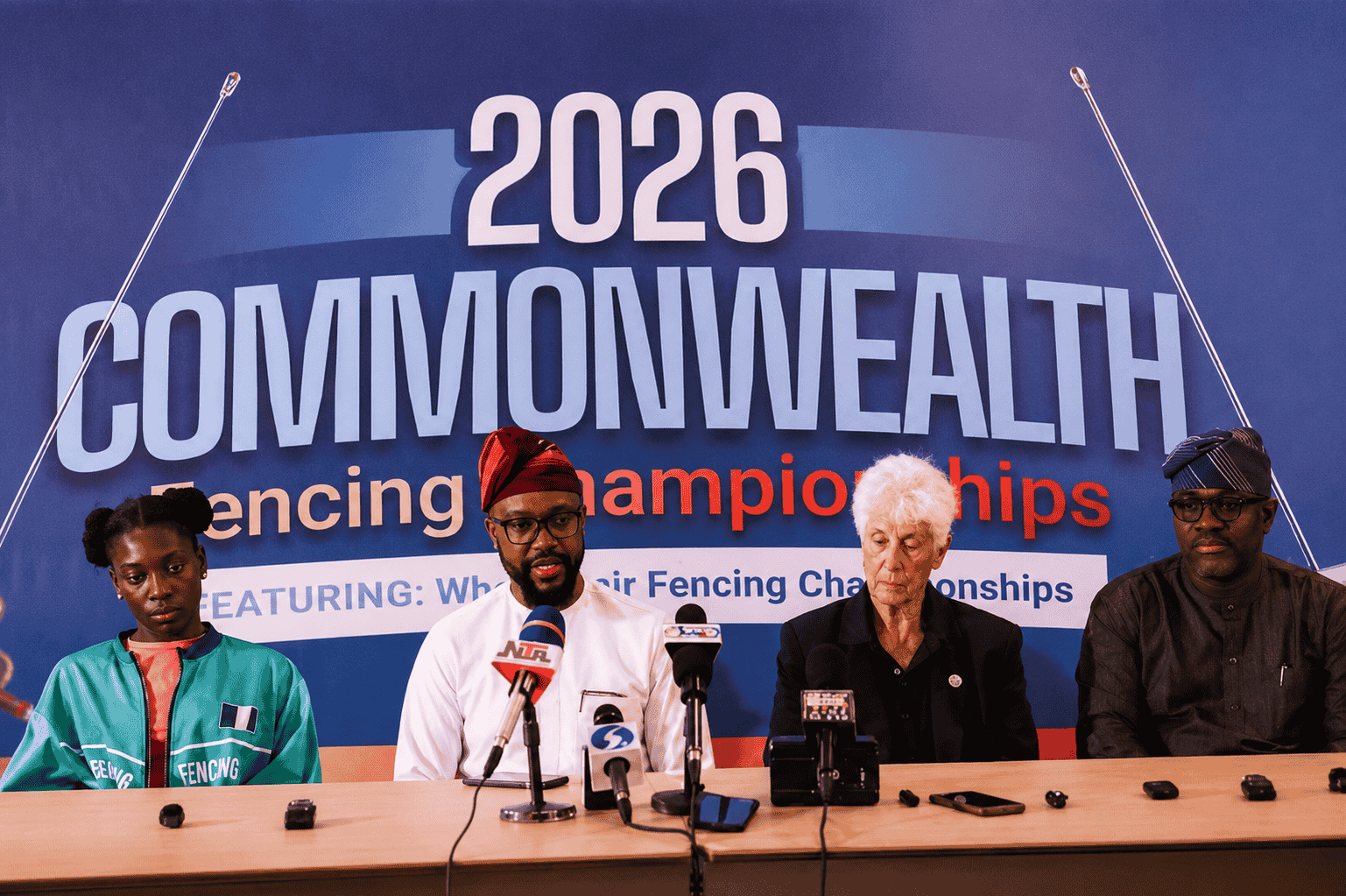


Nigeria is making history in a sport that has long remained on the margins of the country’s sporting conversation.
Lagos is hosting the 2026 Commonwealth Senior and Veteran Fencing Championships from August 9 to 14 at Rugby School Nigeria in Eko Atlantic City, marking the first time the Senior and Veteran Commonwealth fencing championships have been staged in Africa.
The event has attracted athletes, officials and delegations from more than 20 Commonwealth countries, including Nigeria, Australia, Bangladesh, Botswana, Cyprus, England, Ghana, Guernsey, Jamaica, Kenya, Mauritius, Namibia, Northern Ireland, Pakistan, Singapore, South Africa, The Gambia, Togo and Wales.
India is also competing with a large delegation, adding further depth to the competition.
For Nigeria, however, Lagos 2026 is about more than hosting an international tournament. It is an opportunity to demonstrate that fencing can become a more accessible and sustainable sporting pathway for young Nigerians.
Lagos Takes Centre Stage
The decision to award Nigeria the championships followed a successful bid against Australia, a country with a much longer established fencing tradition.
The Commonwealth Fencing Federation confirmed Nigeria as host of the 2026 Senior and Veteran Championships in 2025, following the country’s growing involvement in international fencing competitions.
The hosting decision is significant for Africa, where fencing has not enjoyed the same level of development or popularity as football, athletics and basketball.
Nigeria’s experience in hosting international fencing competitions, including FIE sanctioned events, helped strengthen its case.
The championship therefore represents both a sporting achievement and a test of Nigeria’s capacity to organise a major international event.
A Young Nigerian Takes The Spotlight
One of the most interesting Nigerian stories emerging from the championship is that of 16 year old Oghenegaren Esiovwa Thompson.
The young fencer has previously competed within the British fencing system, where he built an impressive junior record.
British Fencing records show that Oghenegaren Esiovwa Thompson won Under 13 men’s épée gold at the 2022 Wratislavia Challenge and was part of the Great Britain cadet men’s épée team that won bronze in Naples in 2025.
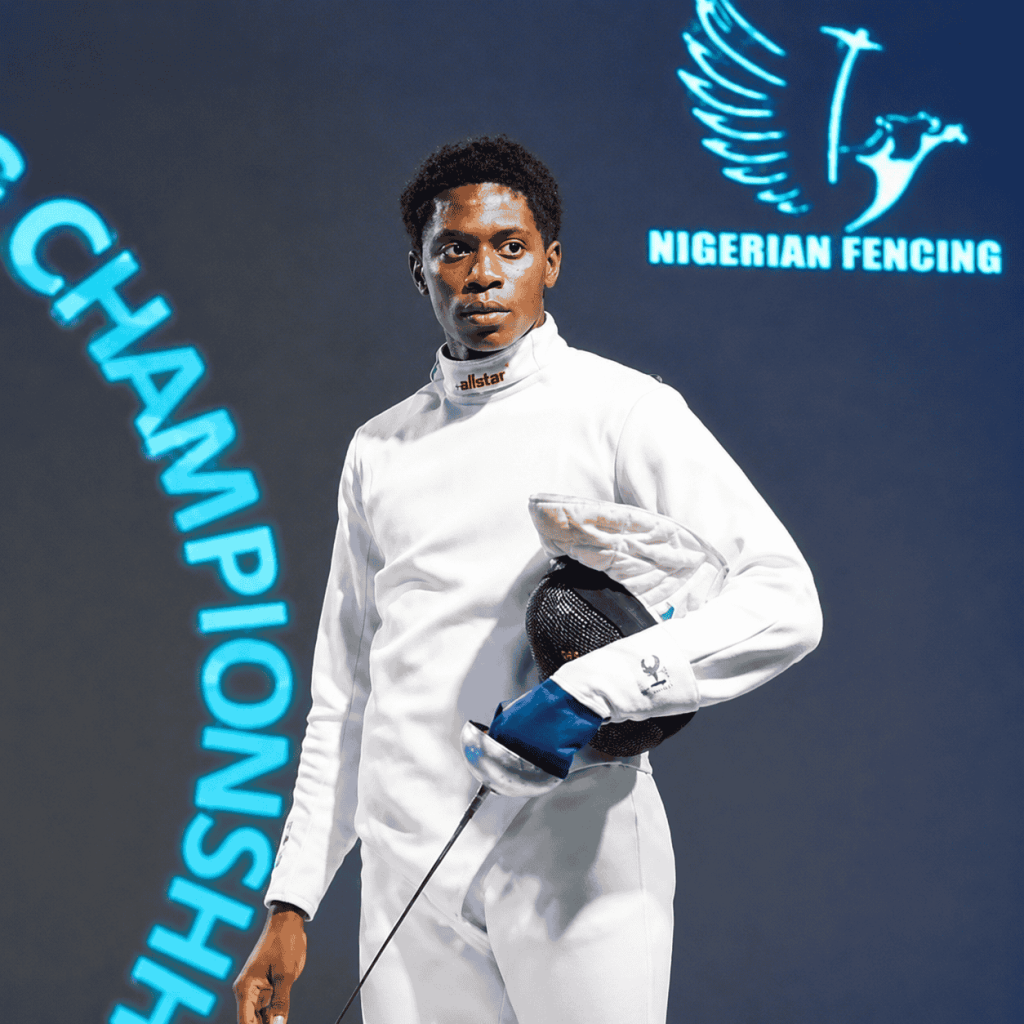
His appearance for Nigeria in Lagos illustrates the kind of international talent that could become available to the country when athletes with Nigerian heritage are connected to the national system.
Reports from the championship have also credited Oghenegaren Esiovwa Thompson with a major U-23 épée victory in Lagos. However, the reported final result could not be independently confirmed from an official results source at the time of publication.
His story nevertheless highlights an important issue for Nigerian fencing: talent alone is not enough.
Young athletes need access to professional coaching, modern equipment, regular competitions and international exposure if they are to progress from promising juniors to elite athletes.
U-23 Events Create A Pathway For Young Athletes
The introduction of Under-23 individual competitions is another important feature of Lagos 2026.
The category provides a bridge between junior and senior fencing, giving younger athletes the opportunity to compete against stronger international opposition before making the full transition into senior competition.
For Nigeria, this could be particularly valuable.
A successful fencing development programme would need to identify talented children early, keep them involved through their teenage years and provide a clear pathway into national and international competition.
Hosting the Commonwealth championships gives the Nigeria Fencing Federation an opportunity to expose young athletes to that environment at home.
Wheelchair Fencing Brings A New Dimension
Lagos 2026 is also reinforcing the Commonwealth’s commitment to making fencing more inclusive.
Wheelchair fencing was introduced into the Commonwealth Championships in London in 2022, when athletes competed for Commonwealth titles in the discipline.
Its continued inclusion in Lagos gives athletes with disabilities an opportunity to compete within the Commonwealth fencing structure and helps challenge the perception that fencing is a sport reserved for a narrow group of athletes.
For Nigeria, the bigger question will be whether the visibility created by the championship can translate into sustainable opportunities for athletes with disabilities after the event.
- NARD Gives Federal Government Two Weeks To Address Doctors’ Demands
- Group Urges Urgent Action on Nigeria’s Security Policy
- Kubwa Gas Plant Fire Police Trace Blaze to Driver’s Crash
- Fun Facts Young Nigerians Should Know About Nigeria’s Independence
- GOCOP Conference Opens Wider 2027 Election Conversation
From An Exclusive Sport To A Development Opportunity
Fencing has traditionally struggled to gain mass participation in Nigeria.
Its specialised equipment, technical demands and limited presence in schools have contributed to its perception as an expensive or inaccessible sport.
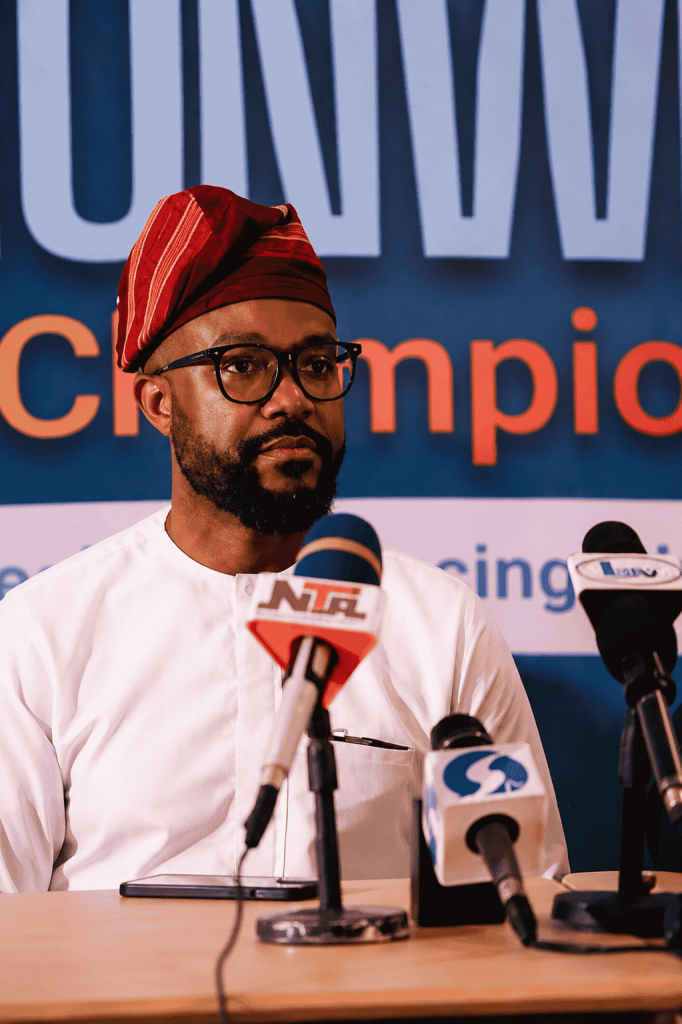
Nigeria Fencing Federation President Adeyinka Samuel has said the championship provides an opportunity to expand the sport into more schools and clubs.
“This is an opportunity to showcase our ability to host international competitions and to expand fencing into more schools and clubs across the country,” Samuel said.
If that ambition is backed by investment, the impact could extend beyond the current competition.
More schools could introduce fencing programmes, while new clubs, coaching opportunities, equipment suppliers and youth academies could emerge.
Nigeria’s Growing Role In Commonwealth Fencing
Adeyinka Samuel’s leadership has also strengthened Nigeria’s position within the international fencing community.
His role at the Nigeria Fencing Federation, combined with the country’s hosting of the Commonwealth championships, gives Nigeria an opportunity to contribute more strongly to the development of fencing across Africa.
The participation of African countries such as Ghana, Kenya, South Africa and Togo is particularly important.
Their athletes are competing alongside fencers from established fencing nations, creating opportunities for knowledge exchange, stronger competition and regional development.
Beyond The Medals
More than 20 international delegations coming to Lagos create activity for hotels, restaurants, transportation companies, aviation services, event managers, security providers and other businesses.
The championship also gives Lagos another opportunity to market itself as a destination capable of hosting specialised international sporting events.
But the biggest economic and sporting gains will depend on what happens after the competition ends.
The facilities, partnerships, expertise and public interest generated by Lagos 2026 will need to be sustained if fencing is to move from a niche sport into a stronger part of Nigeria’s sporting economy.


