
By Aishat O. Yekeen
What if a poem could make you laugh, break your silence, challenge your beliefs and leave you thinking long after the applause?
In Abuja, that is increasingly becoming the reality.
Across stages, competitions and social media platforms, spoken-word poetry is stepping into the spotlight and attracting audiences far beyond traditional literary circles. What was once largely associated with books, classrooms and poetry gatherings is becoming a powerful form of entertainment, storytelling and social expression.
And the transformation is happening in a surprisingly emotional way.
A performer walks onto a stage with nothing more than a microphone and a few carefully chosen words. Then something changes.
The room becomes quiet.
People listen.
A story unfolds.
And suddenly, an issue that may have seemed distant becomes deeply personal.
Her spoken-word performance focused on divorce and the effects of separation on African families. Rather than simply discussing the subject, she brought the emotions, struggles and human experiences behind it directly to the audience.
The impact was immediate.
The judges unanimously voted for her to continue in the competition, giving Nigerian audiences another reminder that poetry can command the same attention as music, comedy and other mainstream forms of entertainment.
But Che Joy’s moment is part of something much bigger.
THE MICROPHONE IS BECOMING A MEGAPHONE
For many emerging poets, spoken word is no longer just about performing beautiful lines.
It is about saying what people sometimes struggle to say themselves.
Family pressures. Identity. Culture. Gender. Inequality. Violence. Relationships. Corruption. Hope. National identity.
These subjects are increasingly finding their way onto poetry stages across Abuja.
The Nigerian Spirit poetry movement, for example, has provided a space where performers explore the country’s struggles and possibilities through words — reflecting on resilience, hardship, unity and the hope for a better future.
The result is poetry that does more than entertain.
It starts conversations.
ABUJA’S POETS ARE TALKING ABOUT MORE THAN LOVE
Romance may remain a familiar theme in poetry, but Abuja’s growing community of spoken-word artists is proving that there is much more to say.
Hafsat Abdullahi, popularly known as Havfy, has used spoken word to explore issues affecting women and girls, education, culture and social expectations.
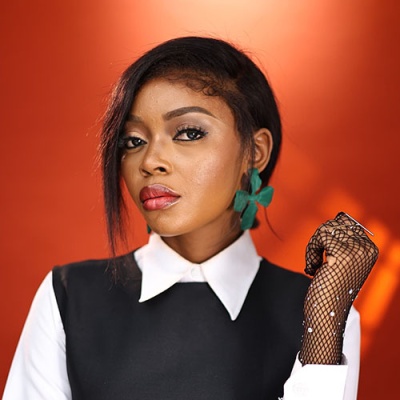
Other performers, including Abdullahi Salihu, have built visibility through poetry competitions and literary platforms, helping strengthen Abuja’s creative community.
Organisations such as the Splendors of Dawn Poetry Foundation have also contributed by creating spaces for competitions, cultural expression and conversations around justice, corruption, culture and social responsibility.
Together, these platforms are helping create something bigger than individual performances.
They are building a community.
THEN SOCIAL MEDIA CHANGED EVERYTHING
There is another reason poetry is reaching more people today: the smartphone.
A poet no longer needs a packed auditorium to find an audience.
A performance delivered before a small crowd in Abuja can be recorded, uploaded and watched by thousands of people across Nigeria, sometimes within hours.
That has fundamentally changed how poetry travels.
The stage is no longer just a physical location.
It is also Instagram, Facebook, TikTok, YouTube and every phone screen where someone stops scrolling long enough to listen.
For young poets especially, this has created an opportunity to build audiences without waiting for traditional publishers, literary institutions or major media platforms to discover them.
WHY WORDS CAN HIT HARDER THAN NUMBERS

There is something uniquely powerful about spoken word.
A statistic can tell you how serious a problem is.
A news report can tell you what happened.
A speech can explain why it happened.
But poetry can make you feel it.
That emotional connection was evident in Che Joy’s performance on divorce and African family life.
Instead of presenting divorce simply as a social problem, she brought the human experience behind the issue to the centre of the conversation.
And that is where poetry becomes something else.
It becomes communication with emotion.
A poem can make people question a tradition.
It can challenge an assumption.
It can preserve a piece of culture.
It can expose injustice.
It can encourage peace.
And sometimes, just sometimes, it can make someone see an old problem in an entirely new way.
- Tinubu, Obi Celebrate Kwankwaso On His 70th Birthday
- Zainab Shinkafi Becomes First African President Of UICC
- DEVELOPMENT INSIGHTS MORNING BRIEF, 22 OCTOBER 2026
- After 22 Years, NAAS Pioneer Returns to Honour Akweya Graduates at Benue Varsity
- Nigeria Revisits Ebola Lessons as New Case Emerges
THE NEW GENERATION IS LISTENING
For a generation growing up in a rapidly changing Nigeria, spoken word offers something valuable: a language for experiences that may otherwise remain unheard.
Young people are using poetry to process their realities, question social expectations and express ideas about the country they want to live in.
The growing creative industry is giving them more spaces to do it — from competitions and cultural events to digital platforms where one performance can travel far beyond its original audience.
That is why what is happening in Abuja deserves attention.
This is not simply a story about poets gaining popularity.
It is a story about voices finding audiences.
Che Joy’s emergence on the Nigerian scene is one example of a much broader shift. Poets are moving beyond the page, beyond literary gatherings and beyond the expectation that poetry must be quiet.
They are taking it to the stage.
They are taking it online.
They are taking it into difficult conversations.
And audiences are responding.
In Abuja, poetry is no longer simply something people read.
It is becoming something they watch.
Something they feel.
Something they discuss.
And increasingly, something that can change the conversation.