
Introduction
Akweya, also known as Akpa, is a rich Idomoid language spoken mainly in the Akpa District of Otukpo and parts of Ohimini Local Government Area of Benue State, Nigeria.
With its unique 40-letter alphabet, including distinctive digraphs and trigraphs, Akweya reflects the identity, history, and cultural richness of its people. It is also a tonal language, where changes in tone can give the same word different meanings.
The Akweya people proudly call themselves Akweya, meaning “sons of Akwu,” while Akpa is the name officially used by the government since 1950. Both names are commonly used to refer to the people, their language, and their land.
The latest Instalment of the Akweya Language Lesson explores another aspect of the language, focusing on its letters, words, and meanings, alongside different profiles of a notable Akweya personality featured in the book The 100 Most Influential Akweya.
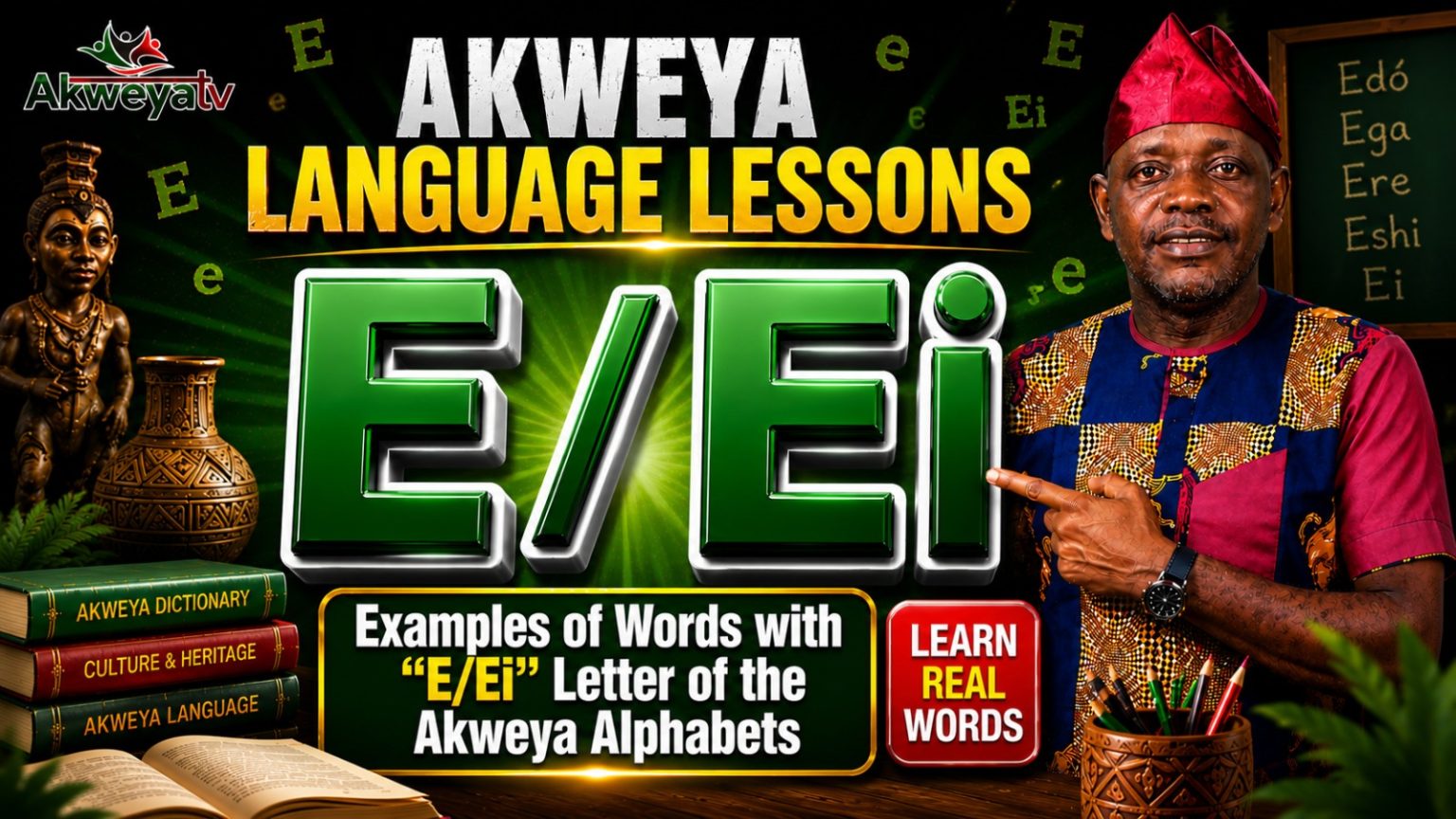
Akweya Language Lesson Highlights Words Beginning With ‘E’
The Akweya Language Lesson has featured examples of words beginning with the letter “E”, pronounced “ei”, while highlighting the contributions of Emmanuel Evans Egbe to Akweya culture and Gospel music.
The lesson also introduced “The 100 Most Influential Akweya,” a book that was scheduled for launch and which featured notable personalities from the Akweya community.
One of the personalities featured in the book was Emmanuel Evans Egbe, who had produced Christian songs and movies in the Akweya language and had become a recognised name in Gospel music ministry in Idoma land.
Egbe, popularly known as the “Papa of Gospel Songs in Zone C,” had, alongside Pastor Paul Onkpe, established Akweya Akpa New Creation, a YouTube channel and platform created to promote Akweya Gospel works.
He had also served as one of the elders of the Fellowship of Gospel Ministers of Nigeria at the national level and had headed the Zone C Mass Choir for several years.
Through his involvement in Gospel music, Egbe had contributed to the development of younger talents, including Chris Morgan and Owie Abutu, among others.
The language lesson subsequently introduced six examples of words beginning with the letter “E” in Akweya. They included “Ene”, meaning “mother”; “Eha”, meaning “coal”; another use of “Eha”, meaning “story”; “Ena”, meaning “sweat”; “Eja”, meaning “basket”; and “Eta”, meaning “three”.
It showed how the same spelling of a word could be pronounced in different ways and mean two different things.
The lesson formed part of efforts to document and promote the Akweya language while highlighting personalities who had contributed to the community.
Link to watch the full episode: