
Tinubu Seeks $21.7bn in External Loans
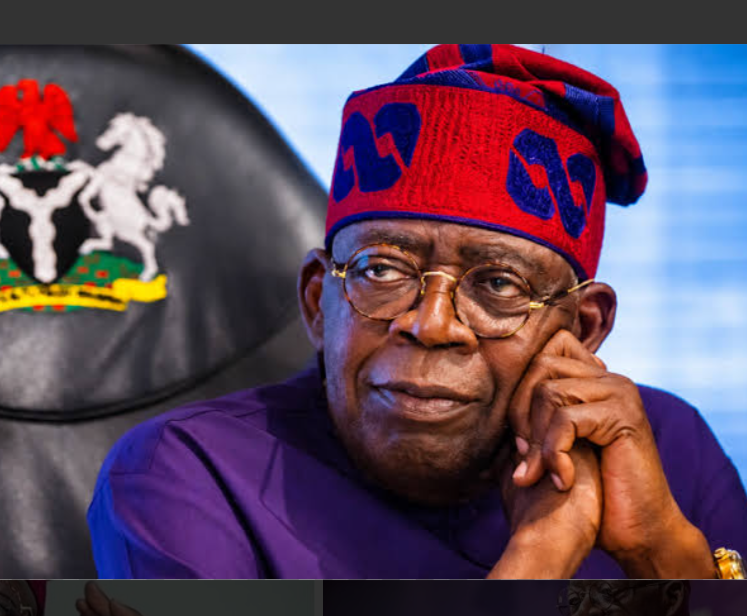
What happened: President Bola Tinubu asked the National Assembly to approve $20.52 billion and €1.045 billion in external borrowing for the 2026–2027 fiscal period. Senate President Godswill Akpabio referred the proposal to the Senate Committee on Local and Foreign Debts, which has one week to report. Tinubu also seeks approval to settle ₦269.44 billion in verified liabilities through promissory notes.
Why it matters: Proposed investments cover power, transport, agriculture, healthcare, education and water. However, project-specific allocations and financing terms were not detailed in the letter.
Implication: NGOs and accountability groups should monitor legislative approval, borrowing terms and project-level spending.
Presidency Seeks Private-Sector Support for State Police
What happened: On 26 October in Abuja, Presidential Chief of Staff Femi Gbajabiamila urged the Nigerian Economic Summit Group and business associations to develop financing and implementation proposals for state police. He said 24 State Houses of Assembly had approved the relevant constitutional amendment by 23 October. The draft National Policing Bill and 29 consequential amendment bills were submitted to the Federal Ministry of Justice on 19 October.
Why it matters: State police could improve local security, but inadequate funding and political interference could weaken accountability.
Implication: Civil society organisations should advocate transparent financing, independent oversight and human-rights safeguards.
FCTA Empowers Women with Business Equipment
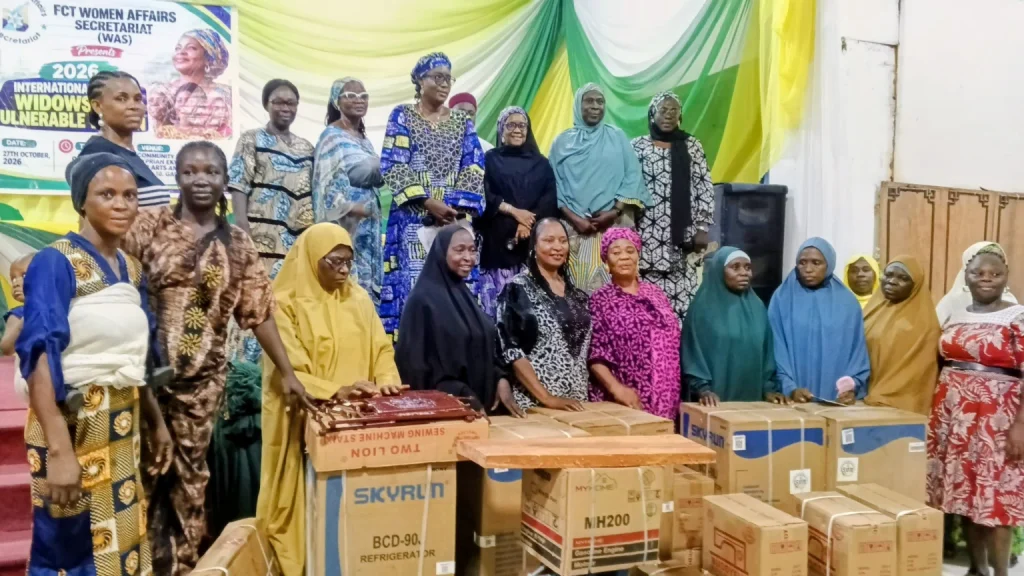
What happened: On 27 October in Abuja, the Federal Capital Territory Administration’s Women Affairs Secretariat distributed business equipment and cash grants to widows and vulnerable women. Support included sewing machines, grinding machines, hair dryers, refrigerators and ₦50,000 grants for selected beneficiaries.
Why it matters: The intervention offers practical opportunities for women to generate income and support their families. Beneficiary Hope Ochei said a refrigerator would help her Zobo and tiger nut drink business.
Implication: Development partners should track beneficiaries’ income growth and advocate expanding support across all six FCT area councils.
- Zambia’s Digital Future Faces New Turning Point
- Baze University Ignites Excitement for African Cinema
- Kogi Assembly Advances State Police Reform
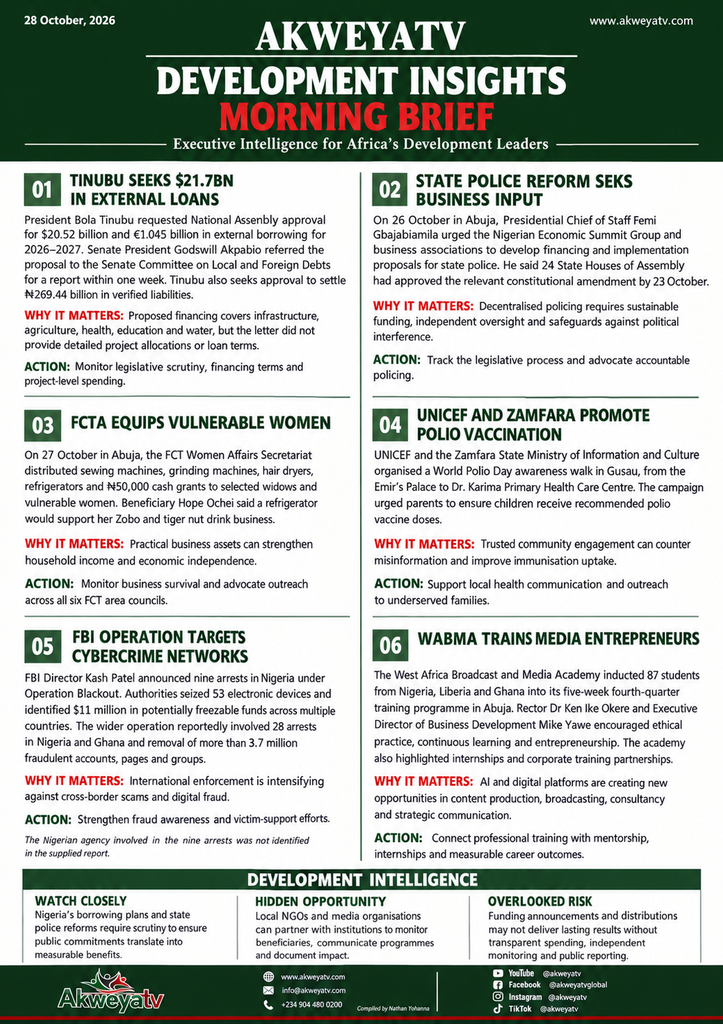
- DEVELOPMENT INSIGHTS MORNING BRIEF 28 October, 2026
- WABMA Urges Media Professionals to Become Entrepreneurs
UNICEF, Zamfara Intensify Polio Awareness
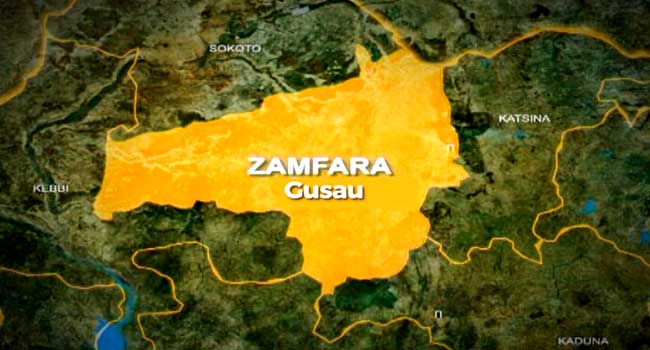
What happened: UNICEF and the Zamfara State Ministry of Information and Culture organised a World Polio Day awareness walk in Gusau, from the Emir’s Palace to Dr. Karima Primary Health Care Centre. The campaign encouraged parents to ensure children receive recommended polio vaccine doses.
Why it matters: Community awareness and trusted local leadership can help address misinformation and improve immunisation uptake.
Implication: Health NGOs and community media should partner with local leaders to promote accurate vaccine information and reach underserved families.
FBI Operation Targets West African Cybercrime
What happened: FBI Director Kash Patel announced nine arrests in Nigeria under Operation Blackout, alongside the seizure of 53 electronic devices and identification of $11 million in potentially freezable funds across multiple countries. The wider crackdown reportedly involved 28 arrests in Nigeria and Ghana and the removal of more than 3.7 million fraudulent accounts, pages and groups.
Why it matters: International enforcement is intensifying against cybercrime networks, with implications for digital safety and public trust. The Nigerian agency involved in the nine arrests was not identified in the supplied report.
Implication: NGOs and digital platforms should strengthen fraud awareness, victim support and cooperation with lawful investigations.
WABMA Urges Media Professionals to Become Entrepreneurs
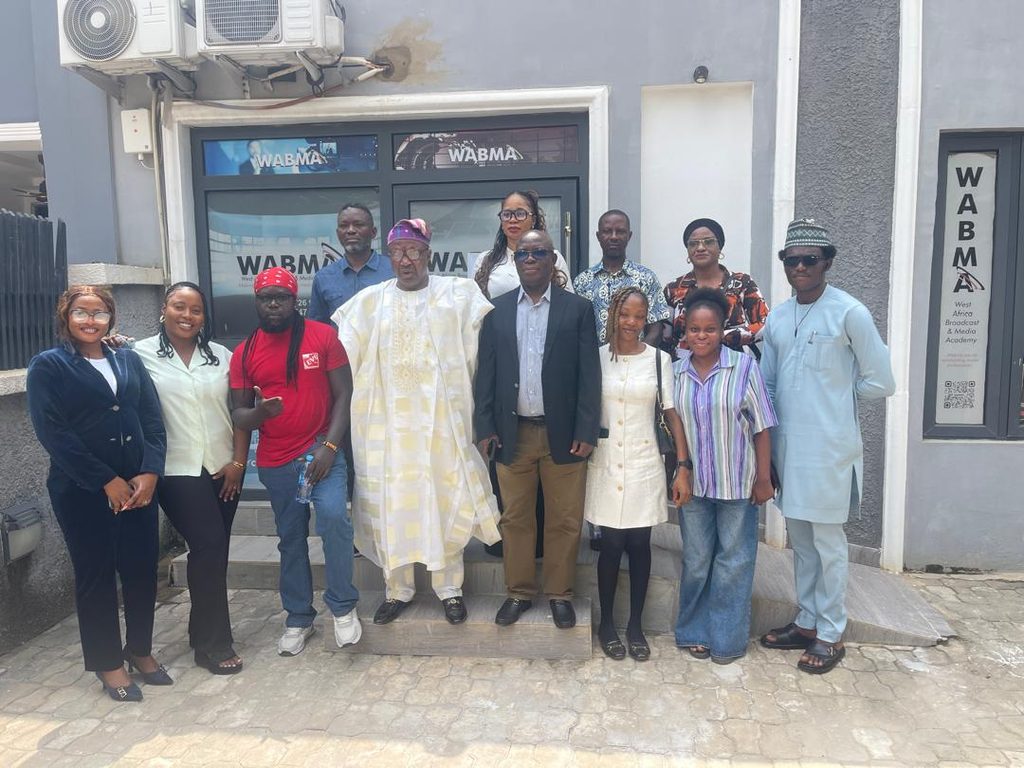
What happened: The West Africa Broadcast and Media Academy inducted 87 students from Nigeria, Liberia and Ghana into its five-week fourth-quarter training programme in Abuja. Rector Dr Ken Ike Okere and Executive Director of Business Development Mike Yawe encouraged participants to develop entrepreneurial skills alongside professional ethics and continuous learning. WABMA also highlighted internship opportunities and corporate training partnerships.
Why it matters: AI and digital platforms are reshaping media careers, creating opportunities in content creation, broadcasting, consultancy, marketing and strategic communication.
Implication: Training institutions, employers and donors should connect media training with mentorship, internships and measurable employment or business outcomes.
WATCH CLOSELY
Nigeria’s borrowing plans and security reforms require close monitoring to ensure commitments translate into accountable, measurable public benefits.
HIDDEN OPPORTUNITY
Local NGOs and media organisations can partner with public institutions to track beneficiaries, communicate programmes and document development outcomes.
OVERLOOKED RISK
Announced funding and interventions may not translate into lasting impact without transparent spending, independent monitoring and public reporting.
Compiled by Nathan Yohanna
YouTube: @akweyatv
Facebook: @akweyatvglobal
Instagram: @akweyatv
TikTok: @akweyatv