
The Fountain of Life Church has firmly rejected reports claiming that Pastor Jimmy Odukoya has been removed as its Senior Pastor, reassuring members and the general public that he remains the church’s duly appointed spiritual leader.
In an official statement issued on Tuesday, 17 November 2026, the church clarified that the purported removal announcement did not represent a constitutionally valid decision of its Board of Trustees.
According to the statement, the announcement originated from certain individuals describing themselves as “Concerned Members of the Board”, whom the church accused of acting outside its constitutional framework.
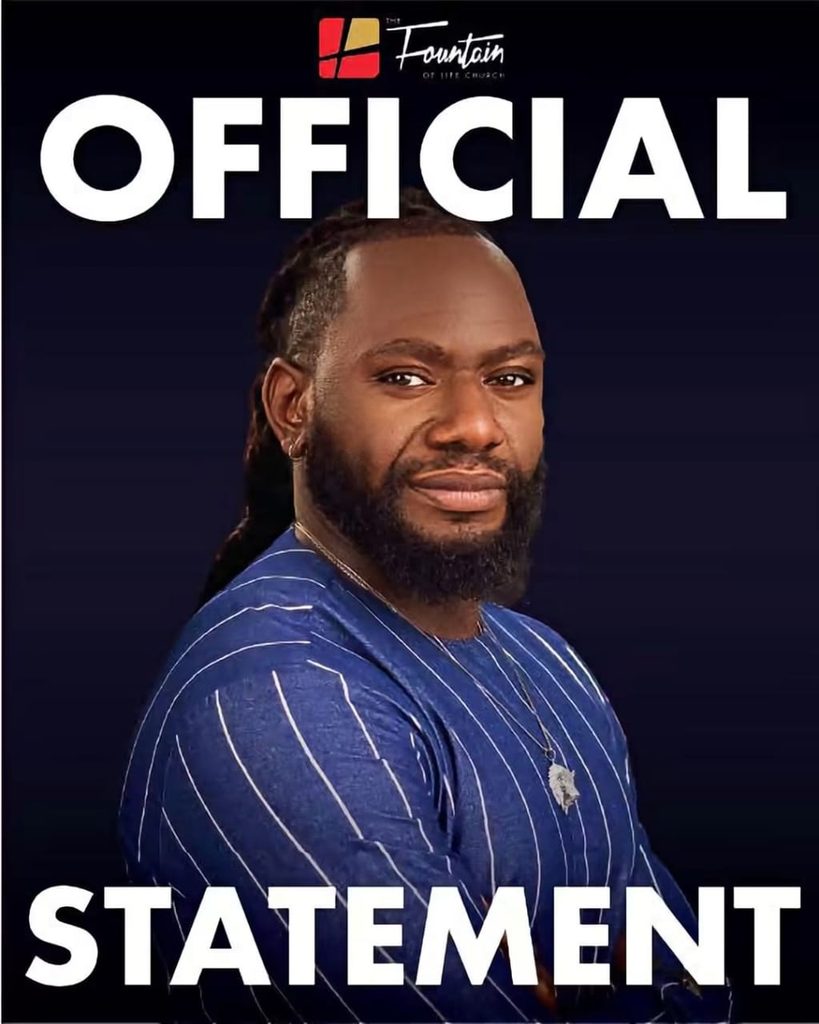
The church explained that the disagreement dates back to 14 March 2026, when some trustees were formally asked to resign over alleged repeated violations of the church’s Constitution, founding principles and objectives. The communication was reportedly delivered and acknowledged by the trustees concerned, with one trustee subsequently submitting a resignation.
Despite the development, the church maintained that the remaining individuals continued making pronouncements on behalf of the institution without following its established governance procedures.
Providing further clarification, The Fountain of Life Church stated that Pastor Jimmy Odukoya was unanimously approved by the Board of Trustees in September 2023 and remains both the Senior Pastor and Chairman of the Board of Trustees.
- Jonathan Urges Safeguards Ahead of 2027 Elections
- Are African Footballers Now Hiding Their Wealth From Their Wives?
- Church Rejects Pastor Jimmy Odukoya’s Removal
- Group Gives Nigerian Children Hope For Peace
- Edetaen Ojo: Championing Media Freedom And The Right To Information In Africa
The statement stressed that no constitutionally valid decision had been established to remove him from either position.
Emphasising its commitment to peace, unity and its founding spiritual mission, the church urged members, the media and the public to distinguish between individual declarations and decisions authorised by its Constitution.
The development highlights the importance of constitutional governance and institutional accountability in religious organisations, particularly when leadership disagreements attract public attention.
The church also indicated that it reserves the right to pursue appropriate lawful measures to protect its integrity.