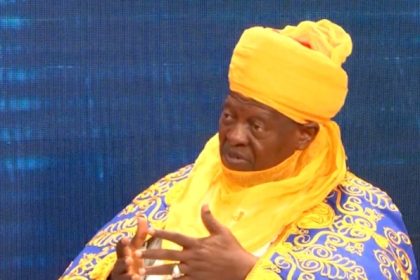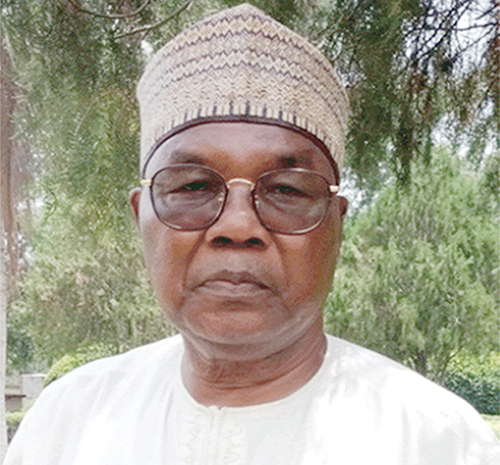

For many people, history is a collection of dates, names and events buried in old books. But in A History of Biu, Dr. Bukar Usman shows that history can also be about people, places, memories, traditions and the stories passed from one generation to another.
The 693 page book is an extensive account of Biu in present day Borno State, exploring its origins, people, culture, political development, environment and historical landmarks.
One of the book’s striking revelations concerns the name Biu itself. According to the account, the area was historically known as Viu, until British colonial officers changed the spelling to Biu, reportedly because they considered the original name too similar to the English word “view.”
The name Biu eventually became firmly established, while the older name gradually faded from common memory.
- ActionAid Raises Alarm Over Diphtheria Deaths In Abuja
- Bukar Usman Brings Biu’s History to Life
- ENTERTAINMENT INTELLIGENCE, 12 SEPTEMBER 2026
- Two Nigerians Killed In South Africa As Consulate Demands Justice
- Poetry, Play & Party to Bring Poetry, Theatre and Music Together in Abuja
Beyond the Colonial Records
Dr. Bukar Usman’s research does not stop with the earliest written accounts of Biu.
The author draws from existing historical works and records by colonial officers and historians, including J.G. Davies’ The Biu Book, as well as works by Roland Oliver and J.D. Fage.

While some of these records take the documented history of Biu back to around 1850, Usman went further, combining written sources with oral accounts gathered from elders, artefacts and other historical materials.
This approach gives the book a distinctly human dimension.
The author recognises that much of a community’s history may never have been written down. Stories, traditions and memories therefore become important sources for reconstructing the past particularly as some of the people interviewed during the research had passed away by the time the book was published.
As the book demonstrates, preserving these memories was not simply about looking backwards. It was about ensuring that future generations would still have something to look back on.
Yamtarawala and the Rise of Biu
At the centre of Biu’s historical narrative is Yamtarawala, a Kanuri prince whose story is closely associated with the emergence of Biu as a centralised kingdom.
According to Dr. Bukar Usman’s account, Yamtarawala left after losing the contest for the throne of the Mai of Maiduguri and eventually settled in Biu around 1535.
Before his arrival, the area was not governed by a single central monarch.
“Biu area before Yamtarawala was not the domain of any central monarch. It was peopled by indigenous groups who generally spoke Bura language and lived in fairly independent communities,” Dr. Bukar Usman writes.
His arrival and subsequent establishment of a kingdom became an important turning point in the political history of the area.
A Home to Many Peoples
Another important aspect of A History of Biu is its attention to the diversity of the people who make up the emirate.
Dr. Bukar Usman documents the presence of several groups, including the Babur, Bura, Tera, Kanakuru, Chibok, Marghi, Pidimidi, Jara, Komberi and Fulani.
Their histories and traditions are not presented as a single story. Instead, the book explores the different accounts of origin and migration associated with the communities.
Some traditions trace the origins of particular groups to distant places such as Yemen, while others point towards areas including Chad.
Whether every account can be historically verified or not, Dr. Bukar Usman treats these traditions as part of the cultural memory of the people.
Together, they tell the story of a place shaped by migration, settlement and interaction between different communities.
History Beyond Kings and Wars
What makes the book particularly engaging is that Usman does not restrict his work to political history.
Across its 14 chapters, A History of Biu explores the geography, culture and everyday life of the people.
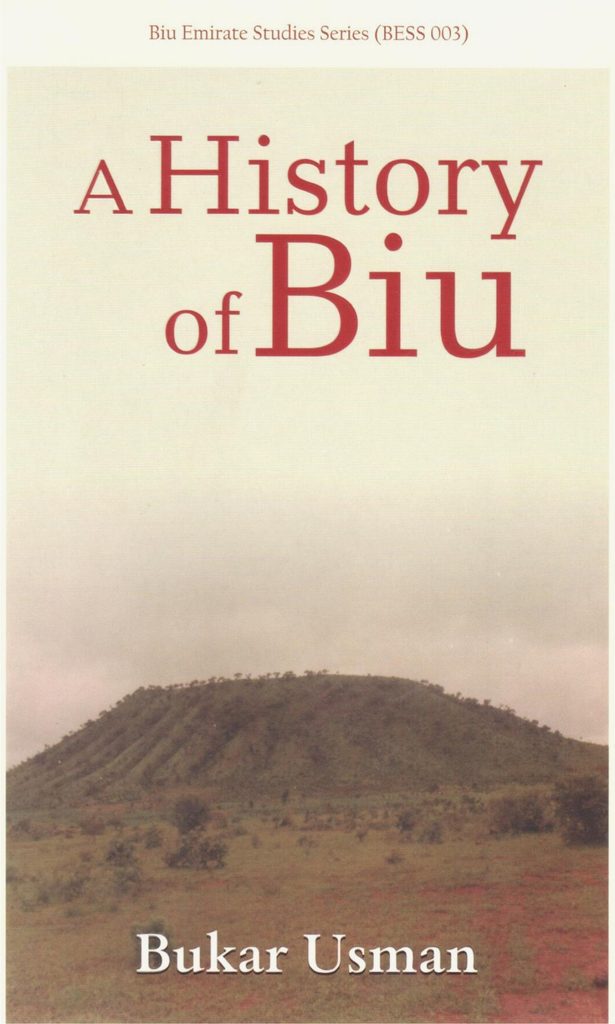
The book is also richly illustrated with photographs of historical artefacts, buildings and everyday objects, providing a visual record to complement the written history.
The Story of Malam Gulani
Among the colourful personalities featured in the book is Malam Gulani, a notorious robber whose story dates to the 1960s.
Yet his reputation was different from that of an ordinary criminal.
According to the account presented in the book, Gulani became something of a local Robin Hood, taking from the wealthy and giving to the poor.
His story offers an example of how history can preserve not only major political developments but also the unusual personalities and anecdotes that become part of a community’s collective memory.
Preserving Memories Before They Disappear
Perhaps the greatest achievement of A History of Biu is its effort to rescue history from being lost with those who lived it.
Much of the past exists in the memories of older people. But memories fade, people die and stories can disappear with them.
By interviewing elders, consulting records and documenting artefacts and traditions, Usman created a record that goes beyond his own generation.
His work also comes at a time when the importance of history as a field of study and as a tool for understanding society has increasingly been questioned.
For Biu, the book therefore serves as more than a historical reference. It is a record of identity.
It brings together the stories of a diverse people, their origins, traditions, leaders, environment and way of life, while preserving memories that might otherwise have disappeared.
In undertaking the painstaking work, Usman has left future generations with an opportunity to understand where their communities came from and how the Biu they know today emerged.
As the writer John Still once observed, “The memories of men are too frail a thread to hang history from.”
With A History of Biu, Bukar Usman has strengthened that fragile thread turning memories, records and traditions into a lasting account of a people and their home.
For more stories, news and updates, visit AkweyaTV: https://www.akweyatv.com/