


Nigeria & Africa Development Intelligence
- Digital Agricultural Extension Corps Trains 1,884 Personnel
- Nigeria’s Fish Import Gap Creates Investment Opportunity
- Yiaga Africa Warns INEC Over AI Election Misinformation
- CSOs Demand Investigation Into Alleged Voters’ Register Collection
- HYPREP Mobilises CSOs to Protect Ogoni Cleanup Gains
- Amnesty International and SERAP Demand Journalist’s Release
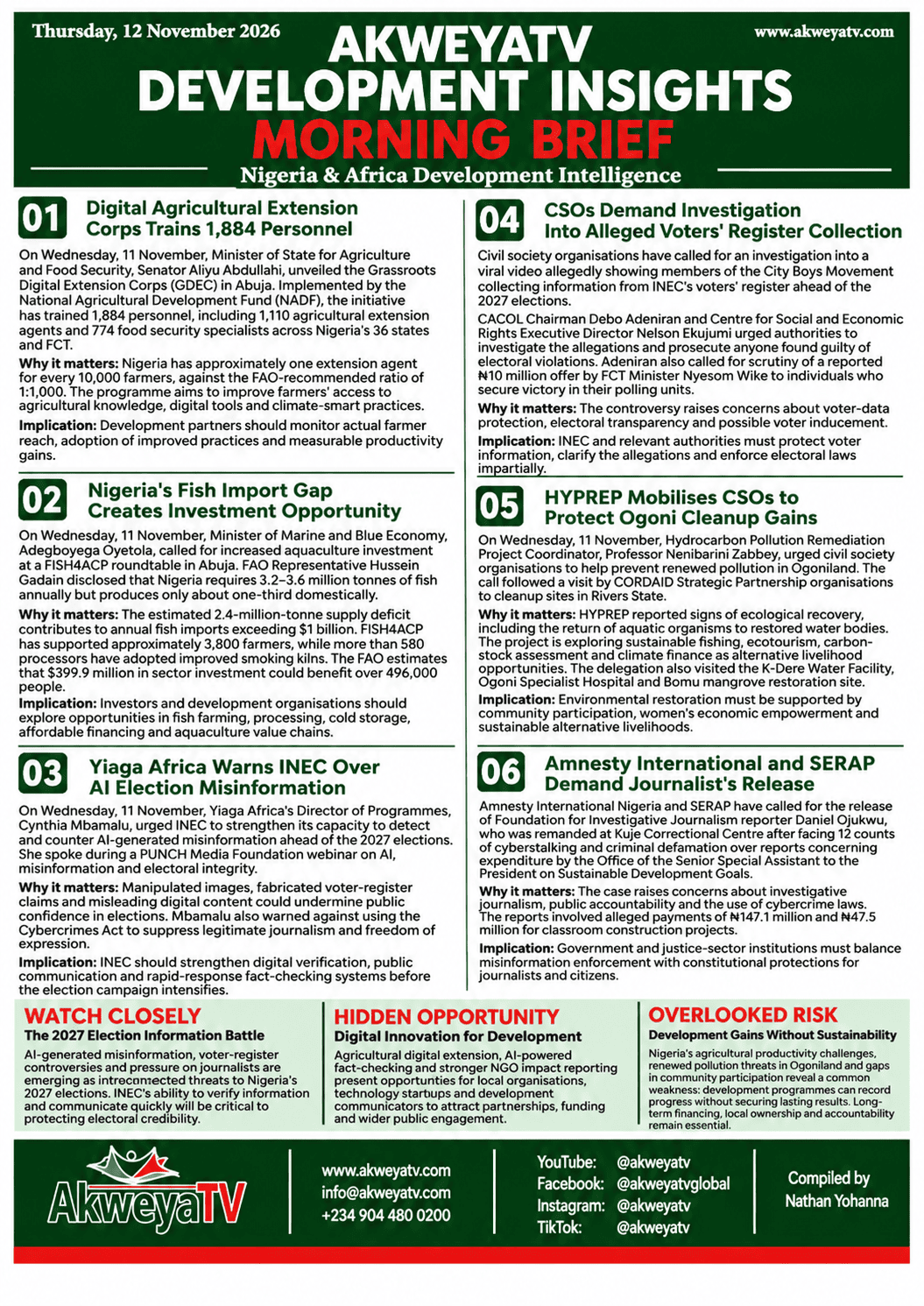
Digital Agricultural Extension Corps Trains 1,884 Personnel
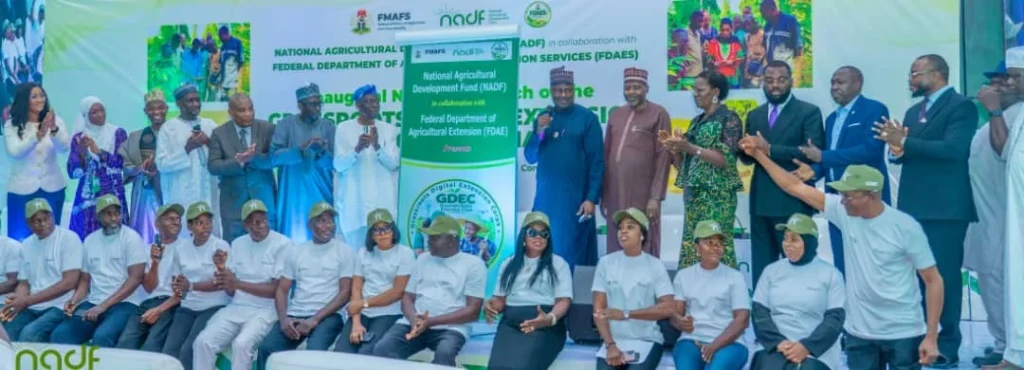
On Wednesday, 11 November, Minister of State for Agriculture and Food Security, Senator Aliyu Abdullahi, unveiled the Grassroots Digital Extension Corps (GDEC) in Abuja. Implemented by the National Agricultural Development Fund (NADF), the initiative has trained 1,884 personnel, including 1,110 agricultural extension agents and 774 food security specialists across Nigeria’s 36 states and FCT.
Why it matters: Nigeria has approximately one extension agent for every 10,000 farmers, against the FAO-recommended ratio of 1:1,000. The programme aims to improve farmers’ access to agricultural knowledge, digital tools and climate-smart practices.
Implication: Development partners should monitor actual farmer reach, adoption of improved practices and measurable productivity gains.
Nigeria’s Fish Import Gap Creates Investment Opportunity
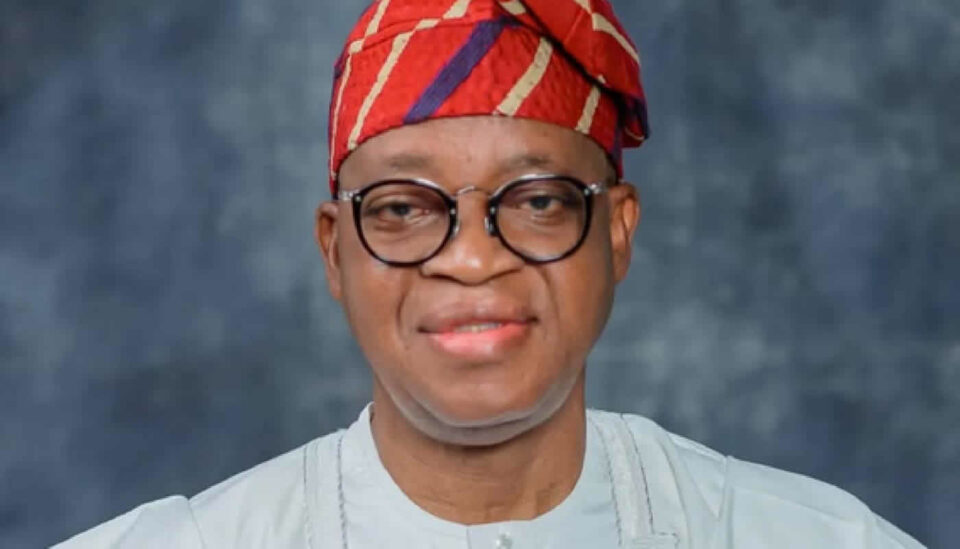
On Wednesday, 11 November, Minister of Marine and Blue Economy, Adegboyega Oyetola, called for increased aquaculture investment at a FISH4ACP roundtable in Abuja. FAO Representative Hussein Gadain disclosed that Nigeria requires 3.2–3.6 million tonnes of fish annually but produces only about one-third domestically.
Why it matters: The estimated 2.4-million-tonne supply deficit contributes to annual fish imports exceeding $1 billion. FISH4ACP has supported approximately 3,800 farmers, while more than 580 processors have adopted improved smoking kilns. The FAO estimates that $399.9 million in sector investment could benefit over 496,000 people.
Implication: Investors and development organisations should explore opportunities in fish farming, processing, cold storage, affordable financing and aquaculture value chains.
Yiaga Africa Warns INEC Over AI Election Misinformation

On Wednesday, 11 November, Yiaga Africa’s Director of Programmes, Cynthia Mbamalu, urged INEC to strengthen its capacity to detect and counter AI-generated misinformation ahead of the 2027 elections. She spoke during a PUNCH Media Foundation webinar on AI, misinformation and electoral integrity.
Why it matters: Manipulated images, fabricated voter-register claims and misleading digital content could undermine public confidence in elections. Mbamalu also warned against using the Cybercrimes Act to suppress legitimate journalism and freedom of expression.
Implication: INEC should strengthen digital verification, public communication and rapid-response fact-checking systems before the election campaign intensifies.
CSOs Demand Investigation Into Alleged Voters’ Register Collection

Civil society organisations have called for an investigation into a viral video allegedly showing members of the City Boys Movement collecting information from INEC’s voters’ register ahead of the 2027 elections.
CACOL Chairman Debo Adeniran and Centre for Social and Economic Rights Executive Director Nelson Ekujumi urged authorities to investigate the allegations and prosecute anyone found guilty of electoral violations. Adeniran also called for scrutiny of a reported ₦10 million offer by FCT Minister Nyesom Wike to individuals who secure victory in their polling units.
- Looking Back on Bukar Usman’s Journey Through Public Service, Literature and Culture
- UNIJOS Makes History With Five Women Leaders
- Amnesty Demands Release of Detained Journalist Ojukwu
- FIJ Journalist Remanded Over Corruption Report
- When Africans Become Strangers In Africa: The Troubling Reality Of Xenophobia
Why it matters: The controversy raises concerns about voter-data protection, electoral transparency and possible voter inducement.
Implication: INEC and relevant authorities must protect voter information, clarify the allegations and enforce electoral laws impartially.
HYPREP Mobilises CSOs to Protect Ogoni Cleanup Gains
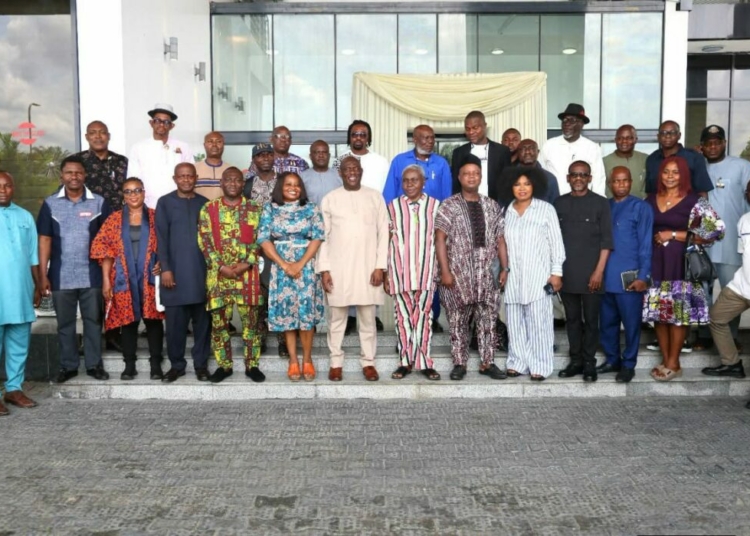
On Wednesday, 11 November, Hydrocarbon Pollution Remediation Project Coordinator, Professor Nenibarini Zabbey, urged civil society organisations to help prevent renewed pollution in Ogoniland. The call followed a visit by CORDAID Strategic Partnership organisations to cleanup sites in Rivers State.
Why it matters: HYPREP reported signs of ecological recovery, including the return of aquatic organisms to restored water bodies. The project is exploring sustainable fishing, ecotourism, carbon-stock assessment and climate finance as alternative livelihood opportunities. The delegation also visited the K-Dere Water Facility, Ogoni Specialist Hospital and Bomu mangrove restoration site.
Implication: Environmental restoration must be supported by community participation, women’s economic empowerment and sustainable alternative livelihoods.
Amnesty International and SERAP Demand Journalist’s Release
Amnesty International Nigeria and SERAP have called for the release of Foundation for Investigative Journalism reporter Daniel Ojukwu, who was remanded at Kuje Correctional Centre after facing 12 counts of cyberstalking and criminal defamation over reports concerning expenditure by the Office of the Senior Special Assistant to the President on Sustainable Development Goals.
The Federal High Court in Abuja ordered his continued detention until 1 December 2026, when his bail application is scheduled to be heard. Meanwhile, Information Minister Mohammed Idris reaffirmed the Federal Government’s commitment to press freedom.
Why it matters: The case raises concerns about investigative journalism, public accountability and the use of cybercrime laws. The reports involved alleged payments of ₦147.1 million and ₦47.5 million for classroom construction projects.
Implication: Government and justice-sector institutions must balance misinformation enforcement with constitutional protections for journalists and citizens.
WATCH CLOSELY: The 2027 Election Information Battle
AI-generated misinformation, voter-register controversies and pressure on journalists are emerging as interconnected threats to Nigeria’s 2027 elections. INEC’s ability to verify information and communicate quickly will be critical to protecting electoral credibility.
HIDDEN OPPORTUNITY: Digital Innovation for Development
Agricultural digital extension, AI-powered fact-checking and stronger NGO impact reporting present opportunities for local organisations, technology startups and development communicators to attract partnerships, funding and wider public engagement.
OVERLOOKED RISK: Development Gains Without Sustainability
Nigeria’s agricultural productivity challenges, renewed pollution threats in Ogoniland and gaps in community participation reveal a common weakness: development programmes can record progress without securing lasting results. Long-term financing, local ownership and accountability remain essential.
Compiled by Nathan Yohanna
For more inquiries
YouTube: @akweyatv
Facebook: @akweyatvglobal
Instagram: @akweyatv
TikTok: @akweyatvglobal



