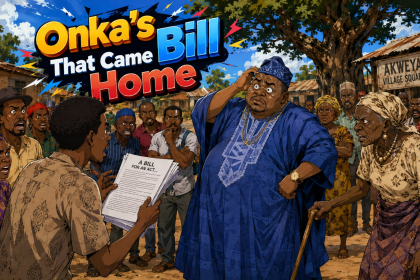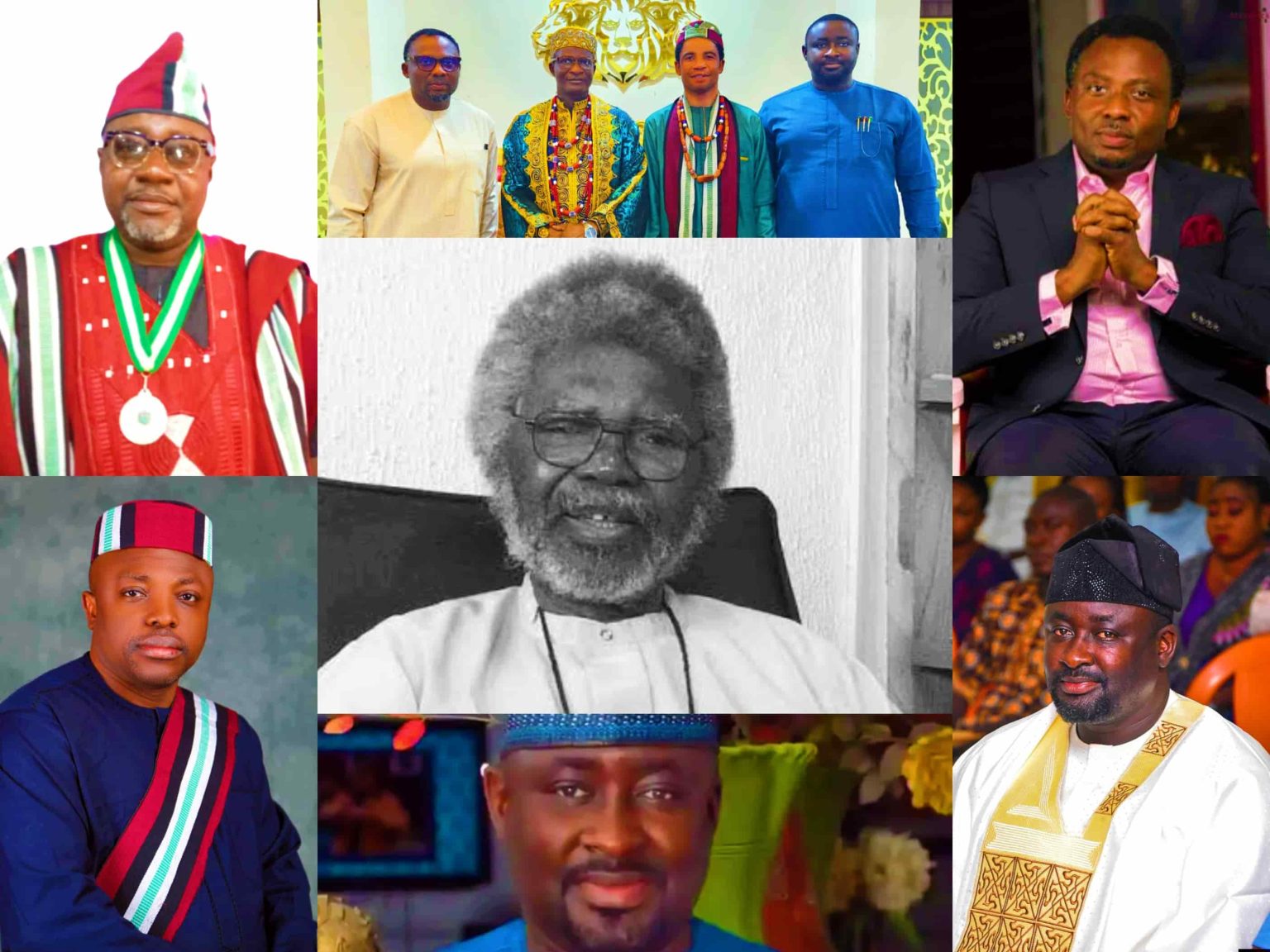

There are moments in the life of a people when history ceases to be mere memory and becomes warning. Akweya may be living through one of those moments.
At a time when political tensions, elite rivalries, and communal distrust appear to be deepening across Akweya land, it may be wise for every stakeholder (politicians, elders, traditional rulers, youth leaders, and ordinary citizens) to revisit a remarkable piece of Nigerian political correspondence: the 1992 letter written by Wantaregh Paul Unongo to then-Benue State Governor Moses Orshio Adasu, who pioneered having a Reverend Father occupying the revered office of Governor.
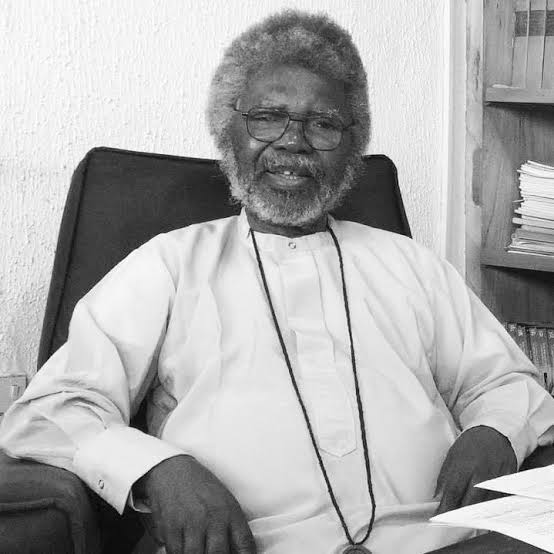
Though written in another era and directed to another people, the letter reads today like a prophetic memo to any community drifting toward internal fracture.
Its central warning is brutal in its simplicity: communities are rarely destroyed by enemies from outside; they are weakened first by division within.
That is the danger before Akweya.
Let us be honest. Political disagreement is not the problem. No vibrant society can exist without competing interests, ambitions, and viewpoints. Politics without disagreement is not unity; it is suppression. But when disagreement degenerates into factional warfare, when every critic becomes an enemy, and when every ambition is pursued as though the community itself is expendable, politics ceases to be competition and becomes cannibalism.
That is how communities sabotage themselves.
One of the deepest lessons from Unongo’s letter is that political crises do not begin when they become public. They begin long before then—when leaders stop speaking honestly to one another, when grievances are allowed to harden in silence, and when suspicion replaces consultation.
By the time conflict becomes visible to the public, trust has usually already collapsed behind closed doors.
If Akweya’s political actors can no longer sit in one room and have difficult but honest conversations, then the crisis is already more advanced than many may wish to admit.
Yet perhaps the most piercing warning in that historic letter is not about opposition, but about sycophancy. Unongo warned Governor Adasu that the people around him, those whispering in his ear, flattering his ego, and constantly identifying new enemies for him, might be his greatest danger.
This is a lesson African politics has failed to learn repeatedly.
Many leaders do not fall because of their critics. They fall because they are cocooned by loyalists whose influence depends on sustaining conflict. Such men and women isolate leaders from reality. We are seeing at play right now with all the political leaders in Akweya. The loyalists distort facts, exaggerate threats, suppress dissenting voices, and profit from keeping their principals in a permanent state of suspicion. Well-meaning voices are blackmailed into silence.
Every community knows these characters. They hover around power. They speak the language of loyalty while sowing the seeds of destruction.
Akweya must recognise them for what they are: political arsonists disguised as advisers. But, for a people so accustomed to suffering and poverty, can they see beyond today and some shiny coins?
More dangerously still, internal division weakens a people far more effectively than any external opponent ever could.
No minority community can afford prolonged elite disunity. No people with limited political leverage can survive endless internal warfare and still expect to bargain effectively in wider political arenas. While leaders fight one another, opportunities pass them by. Appointments go elsewhere. Development projects are redirected. Strategic alliances weaken. Outsiders exploit fractures that insiders created.
A divided people negotiate from weakness.
And here lies perhaps the greatest tragedy of elite conflict: while the powerful quarrel, it is ordinary people who pay the price.
The farmer in the village pays.
The unemployed graduate pays.
The struggling trader pays.
The underfunded school pays.
The abandoned road pays.
The forgotten health centre pays.
Communal disunity is never merely a quarrel among elites. It eventually becomes underdevelopment for everyone else.
That is why Akweya must resist the dangerous habit of personalising every disagreement. Not every rival is a traitor. Not every critic is malicious. Not every competing ambition is an act of war. It’s obvious that these observations account for the lethargy on the part of wise Akweya elders, who may want to speak, but fear that they would be misconstrued as supporting on political divide against another. But the elders have to speak.
Political maturity requires the ability to disagree without disintegrating.
It also requires courageous elders.
One of the reasons Unongo’s letter remains instructive is because he chose intervention over indifference. He did not remain silent while tensions escalated. He did not hide behind neutrality. He did not whisper privately while pretending publicly that all was well. He confronted the issue directly, respectfully, and with unmistakable candour.
That is what elder statesmanship looks like. Today, we know those in political office tend to resist advice, and this is not a new phenomenon. For many, political office is like a psychiatric disorder that creates a feeling of being beyond reproach, because time is short, and there’s a lot to be done. There’s even the greater expediency of remaining in office, as your detractors are always plotting your downfall.
But Akweya’s elders and respected stakeholders must understand that silence in times of preventable crisis is not wisdom. It is abdication. Communities do not honour elders merely for age; they honour them for judgment, courage, and timely intervention.
If those with moral authority refuse to speak when their people are drifting toward avoidable fragmentation, then they become complicit in the consequences. For avoidance of doubt, there are signals that the community is approaching boiling point, where unprecedented things might begin to happen, given the killings of five politically-linked persons at Otobi in the first month of 2026, and the trading of accusations over marginalisation and lack of transparency among Akweya political elites and their followers. So the elders have to speak.
But speeches alone will not save Akweya.
Calls for “peace” and “unity” are not enough. Communities do not heal through slogans. They heal through structured reconciliation: deliberate dialogue, honest grievance airing, neutral mediation, negotiated compromise, and enforceable understandings.
Unity is not magic. It is architecture.
If Akweya is serious about avoiding deeper crisis, then its leaders must create formal mechanisms for internal dialogue and conflict management; not occasional reactive meetings when matters have already deteriorated, but standing structures for mediation, consultation, and consensus-building. The young ones are also crying to be carried along. The platform for this seems to be nonexistent. The youths are often shut out either because of how they speak and act, or they speak and act in those ways because they are not given a controlled but free space to express themselves.
For the real lesson of history is this: strong communities are not those without conflict. Strong communities are those with institutions capable of managing conflict before it becomes destructive.
In the end, Akweya faces a choice.
It can continue down the familiar road of elite suspicion, factional bitterness, and political absolutism, where every disagreement becomes a feud and every contest becomes existential.
Or it can choose political maturity: the difficult but necessary path of dialogue, restraint, institutional mediation, and collective responsibility.
History has already supplied the warning.
The correspondence between Unongo and Adasu is more than archival material. It is a mirror held up to every community tempted to believe it can survive endless internal warfare without consequence.
Akweya must decide whether it will heed that warning.
Because communities do not collapse in a day.
They decline slowly, through ego, through silence, through avoidable division, through leaders who mistake personal victory for communal progress.
And by the time the damage is obvious, the cost is often far greater than anyone imagined.
Akweya still has time. Very little, though.
Not forever.