For more than three decades, Auwal Ibrahim Musa, popularly known as Rafsanjani, has remained a familiar voice in Nigeria’s civil society space, speaking against corruption, defending human rights and pushing for greater accountability in government.
- From Bayero University to Activism
- Choosing Activism Over a Conventional Career
- Turning Advocacy into Action
- A Voice Against Corruption
- A Career Built Around Human Rights
- From Military Rule to Democratic Engagement
- Representing Civil Society At The National Conference
- A Familiar Voice In The Media
- His Work Continues To Evolve
- A Global Recognition for Decades of Work
- A Journey Rooted In Service And Advocacy
A political scientist from Bayero University, Kano, Rafsanjani has built a career around activism, legislative advocacy, democratic governance and the rights of ordinary citizens.
Today, he serves as the Executive Director of the Civil Society Legislative Advocacy Centre (CISLAC), heads Transparency International Nigeria, chairs the Zero Corruption Coalition (ZCC) and serves as Chairman of the Transition Monitoring Group (TMG).

His work has taken him from student activism in Kano to national political reform campaigns and international platforms where he has engaged governments, development institutions and civil society organisations.
- FCTA Empowers Women to Rebuild Their Lives
- Expert Warns of El Niño Risks to Gombe Farmers
- Nigeria Builds Global Alliance to Fight Child Malnutrition
- NEMA Advises Nigerians On Safety Measures Against El Niño Risks
- House Of Representatives Considers Bill To Limit Advance Rent In Abuja
From Bayero University to Activism
Auwal Ibrahim Musa Rafsanjani’s journey into activism began during his university years at Bayero University, Kano, where he studied Political Science.
Rather than seeing his university education as an end in itself, he became deeply involved in student and political activism.
In 1992, he became Assistant General Secretary of the National Association of Nigerian Students (NANS), following his involvement in the students’ movement.
He has attributed part of his early political consciousness to influential academics and activists he encountered during his university years.
Reflecting on that period in an earlier interview, Auwal Ibrahim Musa Rafsanjani said:
“I first cut my teeth as an activist under the tutelage of prominent Nigerians and academia.”
He specifically recalled Professor Attahiru Jega, who taught him political economy and contributed to his understanding of political activism.
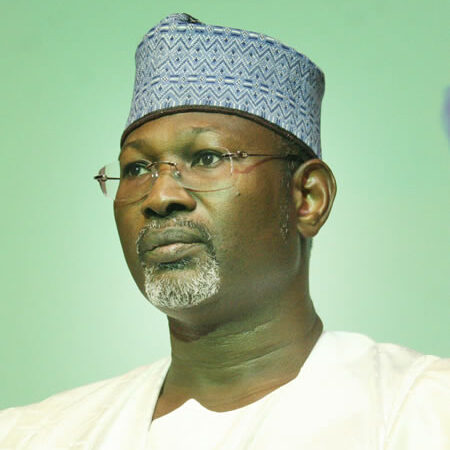
His student activism came at a difficult period in Nigeria’s history, when civil society groups and students were challenging military rule and demanding democratic reforms.
Choosing Activism Over a Conventional Career
After completing his studies and national service, Rafsanjani could have pursued a conventional professional career. Instead, he chose to remain in the civil society space.
In 1995, he joined Community Action for Popular Participation (CAPP) as a Programme Officer, working on community development and human rights issues.
He later moved to the Centre for Democracy and Development (CDD), where his work expanded into legislative and policy advocacy, local democracy, good governance, constitutionalism and development.
His experiences during these years helped shape the approach he would later bring to CISLAC using research, advocacy and engagement with lawmakers to push for institutional reforms.
Turning Advocacy into Action
In 2005, Auwal Ibrahim Musa Rafsanjani founded the Civil Society Legislative Advocacy Centre (CISLAC), an organisation focused on strengthening the relationship between civil society and legislative institutions.

The idea was rooted in a simple but important observation, Civil society organisations could not effectively influence governance by merely criticising government from outside. They also needed to understand legislative processes and engage policymakers directly.
Through CISLAC, Rafsanjani has worked on issues including anti-corruption, public accountability, extractive-sector transparency, electoral integrity, human rights and legislative reform.
Over the years, CISLAC has become one of Nigeria’s prominent civil society organisations working around legislative and policy advocacy.
A Voice Against Corruption
Anti-corruption advocacy has become one of the defining features of Auwal Ibrahim Musa Rafsanjani’s career.
As head of Transparency International Nigeria and chairman of the Zero Corruption Coalition, he has consistently called for stronger institutions, transparency in public spending and accountability for those entrusted with public resources.
In recent years, his advocacy has extended to issues including oil sector transparency, public finance, constituency projects, security spending and the management of government revenue.
In June 2026, CISLAC called for a comprehensive investigation into alleged irregularities involving billions of naira in Kogi State security related funds, with Rafsanjani urging authorities to establish the facts and hold anyone responsible for wrongdoing accountable.
His position has remained consistent: public resources must be managed transparently and citizens have a right to demand answers from those in power.
A Career Built Around Human Rights
Auwal Ibrahim Musa Rafsanjani’s activism is not limited to corruption.
His work has also covered human rights, democratic participation, gender issues, social justice and the protection of vulnerable groups.
He has been associated with several major civil society organisations and served on the boards of reputable organisations, including Amnesty International Nigeria.
His advocacy has also focused on the need for policies that protect women and girls exposed to exploitation and forced labour.
For Rafsanjani, activism is closely tied to the everyday experiences of ordinary Nigerians.
In an interview reflecting on his life and work, he said:
“I am interested in seeing for the rest of my life how I would continue to play this role by ensuring that I give my maximum contribution to a better Nigeria.”
From Military Rule to Democratic Engagement
Auwal Ibrahim Musa Rafsanjani’s activism began during Nigeria’s military era, when demanding democratic reforms could carry serious personal consequences.

He was involved in organisations and movements that challenged military rule, including the Campaign for Democracy, Democratic Alternative and the United Action for Democracy.
He also became a founding member of the Transition Monitoring Group (TMG), a coalition that has played an important role in election observation and democratic accountability in Nigeria.
His involvement with TMG has continued decades later. In 2021, he was elected chairman of the group.
In 2026, TMG under his leadership has continued to monitor electoral developments and speak on issues surrounding Nigeria’s democratic process, including the conduct of elections ahead of the 2027 general elections.
Representing Civil Society At The National Conference
Auwal Ibrahim Musa Rafsanjani was also among the civil society representatives at Nigeria’s 2014 National Conference, where delegates discussed some of the country’s most important political, constitutional and socio-economic questions.
His participation reflected the broader role he has played in bringing civil society perspectives into national policy discussions.
For an activist whose career began in student politics, the National Conference represented another stage in his long engagement with Nigeria’s political development.
A Familiar Voice In The Media
Beyond advocacy meetings and policy forums, Auwal Ibrahim Musa Rafsanjani has become a regular voice in the Nigerian and international media.
He has appeared on television, radio and international media platforms to discuss corruption, democracy, governance, human rights and development.
His interviews and commentaries have reached audiences through platforms including the BBC, CNN, Al Jazeera, NTA, AIT, TVC, Channels Television, Voice of America and other local and international media organisations.
He communicates in both English and Hausa, allowing him to engage audiences beyond Nigeria’s formal policy and political circles.
His media presence has also made him one of the more recognisable civil society voices in Nigeria.
His Work Continues To Evolve
Auwal Ibrahim Musa Rafsanjani’s advocacy in 2026 continues to respond to emerging governance challenges.
In January, CISLAC called on the National Assembly to prioritise critical governance and legislative reforms, while warning against allowing early electioneering to overshadow the responsibilities of government and lawmakers.
In April, he criticised Nigeria’s revised tobacco taxation framework, arguing that the policy needed stronger consideration of public health and revenue objectives.
In June, CISLAC and Transparency International Nigeria also raised concerns following the acquittal of former Petroleum Minister Diezani Alison-Madueke in the United Kingdom, using the development to call for stronger domestic accountability mechanisms in Nigeria.
These interventions demonstrate how Rafsanjani’s work has evolved with the issues confronting the country from military rule and democratic transition to public finance, corruption, elections, health policy and institutional accountability.
A Global Recognition for Decades of Work
One of the biggest recognitions of Auwal Ibrahim Musa Rafsanjani’s career came in July 2026 when he received the Transparency International Amalia Award for Individual Professional Excellence.

The award was presented at the Transparency International Movement Awards Ceremony in Berlin, Germany, at the conclusion of the organisation’s 2026 summit.
The honour recognises individuals who have demonstrated outstanding leadership, professionalism and commitment to transparency, accountability and the fight against corruption.
Auwal Ibrahim Musa Rafsanjani’s recognition was particularly significant because he was reported to be the first African recipient of the Amalia Award for Individual Professional Excellence.
For a man who began his activism as a university student in Kano, the international recognition represents another milestone in a career that has largely revolved around one central idea making public institutions more accountable to the people they serve.
A Journey Rooted In Service And Advocacy
Auwal Ibrahim Musa Rafsanjani’s story is not simply about the positions he has held or the organisations he has led.
It is also about longevity.
Few Nigerian civil society figures have remained active across such different political eras from military rule and the struggle for democracy to today’s debates around corruption, electoral reform, public finance and governance.
His career has taken him from student politics to international policy platforms, while his work has placed him in conversations involving the Nigerian government, parliament, international development institutions and global civil society organisations.
For Auwal Ibrahim Musa Rafsanjani, however, the work appears far from finished.
His own description of his life’s mission remains perhaps the clearest summary of the journey:
“We must work toward eradicating poverty, address conflict, address injustice in Nigeria, address inequality, environmental abuses and degradation and monumental corruption that has led to underdevelopment in Nigeria.”
After decades in the struggle, Auwal Musa Rafsanjani remains one of Nigeria’s prominent voices for transparency, human rights and accountable governance continuing to use advocacy, public engagement and policy dialogue to push for the Nigeria he believes citizens deserve.