

A Non-Governmental Organization (NGO), The Destiny Trust, has rewarded Nigerian secondary school students for developing technology-driven solutions to challenges affecting education, food security, school safety and climate change.
The young Innovators were recognized at the Kids Innovation Challenge, organized through the NGO’s Kids Innovation Africa initiative, which aims to equip Nigerian and African children with digital skills and encourage them to become creators and problem-solvers. The competition attracted more than 160 applications nationwide, with 10 finalists selected to present their innovations to a panel of judges.
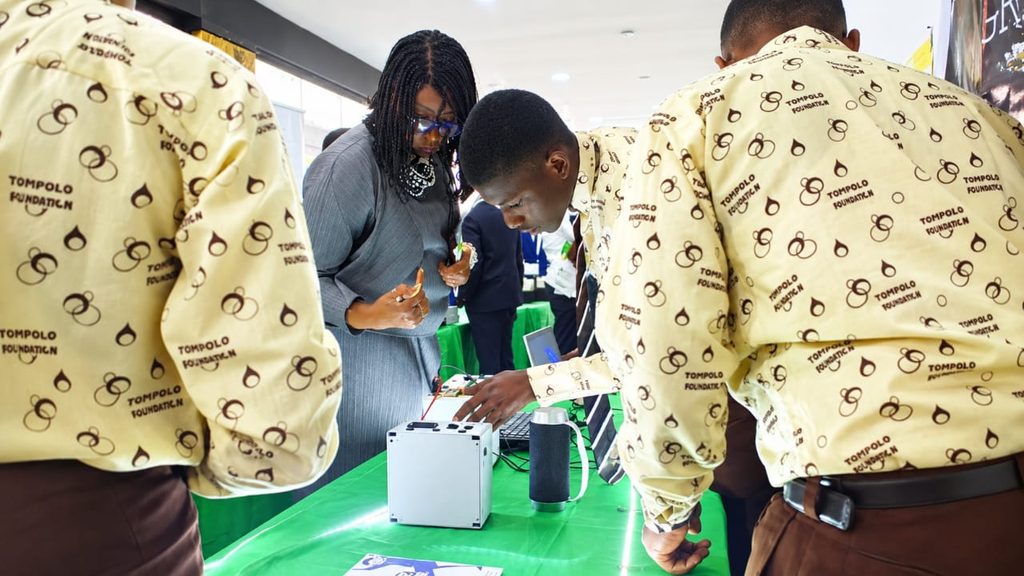
The winning team of Adam Abubakri, Owede Divine and Taofeeq Thaoba received N2 million for developing Smarteach, a solar-powered educational robot designed to function as an offline teaching assistant. The device provides interactive lessons and learning support, particularly for students with limited access to conventional educational resources.
The first runner-up, Fanika Faith, Giwa Olaosebikan and Olaoye Rhoda of Lagos State Model College, received N1.5 million for developing Smartfarm. The system combines automated irrigation, soil-moisture detection, surveillance, produce preservation, pest control and fire detection to improve food production and protect farm produce.
The second runner-up team, comprising Malik Oye, Zacson Favour, Bethel and Chizaram, received N1 million for creating affordable AI-powered smart glasses designed to assist blind and severely visually impaired students. The three winning teams also received 3D printers and filaments to support further development of their innovations.
- Transport Fares Rise by 30% in Abuja, Neighbouring States
- Nigeria’s Young Tech Stars Get Rewarded
- 1,130 Children Receive Life-Changing Support
- Foreign Aid Investigation Sparks Debate Over NGO Accountability
- DEVELOPMENT INSIGHTS MORNING BRIEF, 15 SEPTEMBER 2026
Speaking at the event, Destiny Trust co-founder, Abimbola Ojenike, called for greater investment in technology education for children, particularly those from underserved communities, saying that equipping young people with relevant digital skills can help them develop practical solutions to societal challenges.