
A continent that fought for freedom from colonial rule is still struggling with a different kind of division: the rejection of its own people. Across Africa, people have been forced out of countries where they had lived, worked and built businesses, not because they came from another continent, but because they came from another African country. In some cases, governments have turned suspicion of foreigners into official policy; in others, hostility has spilled into attacks on homes, shops and livelihoods.
- Looking Back on Bukar Usman’s Journey Through Public Service, Literature and Culture
- UNIJOS Makes History With Five Women Leaders
- Amnesty Demands Release of Detained Journalist Ojukwu
- FIJ Journalist Remanded Over Corruption Report
- When Africans Become Strangers In Africa: The Troubling Reality Of Xenophobia
When Economic Hardship Turns Foreigners Into Enemies
Xenophobia often grows out of fear and suspicion. Migrants are perceived as competitors for jobs, business opportunities and public resources. They are also sometimes blamed for social problems such as crime, drug trafficking and prostitution, even when such allegations are not supported by evidence. In periods of economic difficulty, these perceptions can become a convenient explanation for problems that have deeper political and structural causes.
This pattern was evident in Ghana in 1969, when Prime Minister Kofi Busia introduced the Aliens Compliance Order. The policy required foreigners without the necessary documentation to leave the country. Although the government defended the decision as a way to create employment opportunities for Ghanaians, improve the country’s balance of payments and address alleged economic crimes, its consequences were severe for migrants who had made Ghana their home.
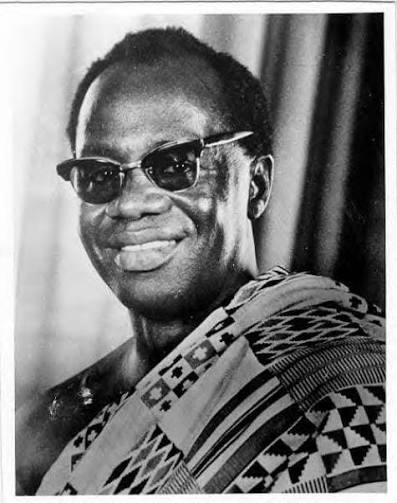
An estimated 140,000 Nigerians were expelled alongside about 60,000 other foreign nationals. Many had lived and worked in Ghana for years, contributing to its economy and commercial activities. The policy was particularly striking because Ghana had been home to Kwame Nkrumah, one of Africa’s leading advocates of Pan-Africanism, who had promoted the vision of a united African continent.
The contradiction between that vision and the expulsion of fellow Africans reflected the growing tension between African solidarity and national economic interests. Rather than treating migration as part of the region’s shared history, the policy presented foreigners as a problem that needed to be removed.
Ghana And Nigeria: A History Of Expulsions And Retaliation
The relationship between Ghana and Nigeria has been marked by repeated tensions over the treatment of their citizens. While the 1969 expulsion in Ghana affected thousands of Nigerians, Nigeria later introduced its own mass expulsion policy in 1983, targeting foreigners living and working in the country.
On February 17, 1983, Nigeria’s then Minister of Internal Affairs, Ali Baba, announced on the Nigerian Television Authority that unskilled foreigners residing and working in the country were required to leave. Skilled workers were also given a deadline to depart. The government justified the order by citing the economic recession, declining foreign exchange earnings, alleged involvement of some foreigners in crime and the need to protect employment opportunities for Nigerians.
Although citizens of several West African countries were affected, Ghanaians formed a significant part of those expelled. More than one million Ghanaians and nearly two million other West Africans were affected by the expulsions between 1983 and 1985. The episode became popularly known as “Ghana Must Go,” a phrase that remains part of Nigeria’s historical memory.
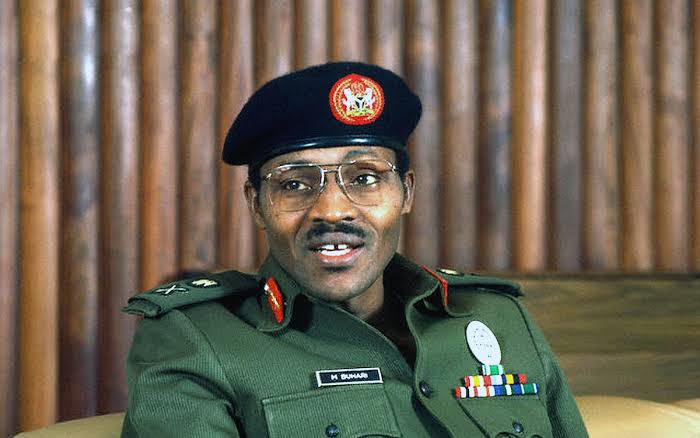
The policy also had serious human consequences. Families were separated, people were forced to abandon businesses and belongings, and many had to leave the country under difficult circumstances. In 1984, the military government under General Muhammadu Buhari introduced Decree No. 4, which further empowered the government to expel about 300,000 Ghanaians.
The cycle of retaliation continued through economic restrictions and disputes over business ownership. In 1994, Ghana introduced the Ghana Investment Promotion Council Act, which restricted non-Ghanaians from engaging in certain small-scale businesses, including petty trading, hawking and operating kiosks. The restrictions affected foreign traders, including Nigerians, and contributed to tensions between the two countries.
The situation resurfaced in the following years when some Nigerian-owned businesses in Ghana were closed over alleged non-compliance with investment laws. In December 2018, Nigerians in Ghana were also attacked following allegations surrounding the disappearance of a Ghanaian national. Between 2018 and 2019, 723 Nigerians were expelled from Ghana over allegations of social and financial crimes.
Nigeria, on its part, also introduced restrictions affecting Ghanaian businesses. In 2004, the administration of former President Olusegun Obasanjo banned 96 Ghanaian products, including textiles, garments, starch and plastics. The action affected Ghanaian traders and raised questions about the commitment of both countries to regional trade agreements and the free movement of goods.
These repeated actions show how economic and political disagreements between neighbouring countries can extend beyond government relations and affect ordinary people whose livelihoods depend on cross-border trade and migration.
Beyond Ghana And Nigeria: The Same Hostility, Different Borders
The experiences of Ghana and Nigeria are part of a wider pattern across West Africa. In July 2002, Nigerian-owned businesses in Freetown, Sierra Leone, were attacked by local residents. In The Gambia, 44 Ghanaians were allegedly killed by security agents in 2005. These incidents demonstrated that migrants could face hostility even in countries within the same regional community.
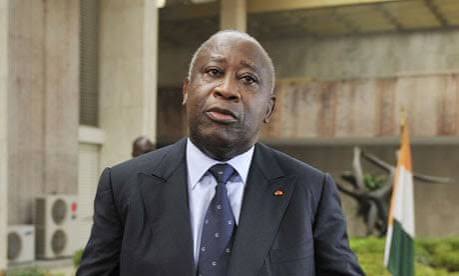
In Côte d’Ivoire, the concept of Ivoirité, promoted under former President Laurent Gbagbo, reinforced the idea of prioritising Ivorian identity and belonging. The concept generated xenophobic sentiments, particularly during the 2010 election, when questions of nationality and origin became politically charged.
Nigeria’s October 2019 closure of its land borders with Benin also raised concerns about the commitment of West African countries to regional integration. Although the government presented the action as a measure to protect local agricultural markets and tackle illegal trade, the closure disrupted cross-border movement and commercial activities.
These incidents stand in contrast to the 1979 ECOWAS Protocol on the Free Movement of Persons, Residence and Establishment, which was designed to promote movement and cooperation among citizens of member states. The continued restrictions, expulsions and attacks reveal the gap between the regional community’s stated ideals and the experiences of people moving across its borders.
South Africa: When Fellow Africans Become Targets
While xenophobic hostility has appeared in different parts of West Africa, South Africa has experienced repeated waves of anti-immigrant violence. The country has long attracted migrants from across the continent, many of whom travel there in search of employment, business opportunities and better living conditions.
Statistics South Africa put the number of foreign nationals in the country at 2.4 million in 2022, representing about 3.7 percent of its total population of 65 million. Despite this relatively small proportion, migrants have frequently been blamed for unemployment, crime and pressure on public services.
Since 2008, South Africa has experienced three major waves of anti-immigration protests, which turned violent and resulted in casualties and the looting of shops and other properties. Migrants from Zimbabwe, Mozambique and Malawi have been among those targeted, alongside Nigerians and Ghanaians.

The hostility has raised questions about whether the violence is simply xenophobia or whether it is more accurately described as Afrophobia, given that much of the anger is directed at other black Africans. The distinction became part of a wider debate following the targeting of Nigerians and other African migrants.
Former Nigerian Minister of Foreign Affairs, Yusuf Tuggar, condemned the attacks, describing them as a contradiction of the solidarity African countries demonstrated during the struggle against apartheid. He recalled Nigeria’s support for South Africa’s liberation struggle, including scholarships and assistance to victims of apartheid, and said it was difficult to reconcile that history with the hostility now directed at Nigerians and other black Africans.
Tuggar argued that the continent’s commitment to Pan-Africanism must go beyond political speeches and diplomatic relations. He identified the African Continental Free Trade Area as an important framework for promoting economic cooperation and said the free movement of workers was necessary for the continent to achieve the full benefits of integration.
Similarly, President of The Bridge Club, Abdulhakeem Mustapha, questioned how Africa could genuinely aspire to unity when people were made to feel unwelcome in other African countries because of their nationality or origin. His remarks reflected the wider contradiction between the continent’s ambition for solidarity and the treatment of migrants within its borders.
The Human Cost: Beyond Borders And Government Policies
Behind every expulsion order, business closure or violent attack are people whose lives are disrupted. Migration is not always a temporary decision made in search of quick economic gains. For many, it involves years of building relationships, raising families, establishing businesses and creating a sense of belonging in a place they may eventually be forced to leave.
This is one of the central concerns explored in Alex Agyei-Agyiri’s Unexpected Joy at Dawn. The novel presents xenophobia not merely as a government policy or political disagreement, but as an experience that enters people’s homes, relationships and everyday lives.

Moses Nii Tackie, one of the novel’s major characters, is caught between Ghana and Nigeria. Although Ghana is the country of his birth, the threat of deportation leaves him living in fear. When he eventually returns to Nigeria, he encounters another form of rejection. Despite his Nigerian origin, his inability to speak any Nigerian language makes him appear foreign in the country he is expected to call home.
His experience reveals the complicated nature of identity when nationality is reduced to birthplace, language or official documentation.
The novel also portrays the devastating consequences of the expulsion policies through the death of Aaron, Nii’s close ally and confidant, during the harassment of foreigners. The conditions of the camp where aliens are held further reveal the suffering associated with forced displacement.
Mama Orojo’s experience presents another dimension of the crisis. Her desperate desire to reconnect with a living relative reflects the emotional devastation that follows when families are separated by policies that treat people as unwanted outsiders. Her story gives a human face to the pain that statistics about expelled migrants cannot fully communicate.
The novel also explores the wider economic consequences of xenophobia through the collapse of Katamanto Market in Ghana. The market, which had benefited from the activities of traders from different parts of the continent, represents the economic possibilities of cooperation among Africans. Its collapse reflects how policies that drive away migrants can also damage the very economy they are intended to protect.
The relationship between Mama Orojo and Joe also reflects this possibility. Joe’s desire to combine gold and oil, representing Ghana’s gold and Nigeria’s oil, suggests the economic and social benefits that could emerge from cooperation between the two countries. Their relationship becomes a symbol of the possibilities of a continent whose people and resources can complement one another rather than remain divided by national boundaries.
The challenge is not simply to condemn xenophobic attacks when they occur, but to confront the attitudes, policies and political narratives that make such hostility possible. Until Africans can move, work and live among one another without being treated as enemies because of where they come from, the idea of one united Africa will remain an aspiration that its own people continue to struggle to recognise
For more news stories, information, and development: https://akweyatv.com/