

For generations, crossing the Okpokwu River, popularly known as Ohumenyi among the Akweya, was a way of life for the people of Adim in Akpa District. Today, however, the community’s long struggle for a permanent, motorable bridge remains unfinished.
The history of organised efforts to provide a bridge dates back to January 15, 1979, when the people of Adim constructed, for the first time, a motorable wooden bridge across the river.
The initiative was proposed by the late Chief Stephen Igwe Ajah in preparation for the ordination of the first Catholic priest from Akweya, Bishop Fidelis Oga Orgah. The proposal initially met strong opposition, with many people doubting that such a project could be achieved.
But a few courageous youths, supported by some elders, joined Chief Ajah and made it happen.
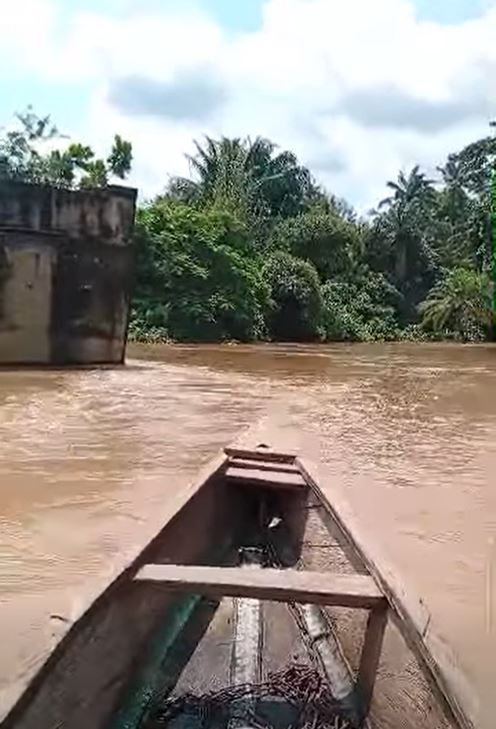
On March 16, 1979, hundreds of vehicles crossed the newly constructed wooden bridge and drove into Adim for the historic priestly ordination ceremony.
Before the wooden bridge was constructed, crossing the river was not necessarily regarded by the people as an extraordinary hardship. It was simply part of everyday life, and the community devised different ways to navigate the water.
Women sometimes placed their babies in large bowls known as ogbanje and swam across the river. Young men would tie their clothes around their heads and swim to the opposite bank.
Another method involved a strong rope tied between trees on opposite sides of the river. Those crossing would hold firmly onto the rope while using the current to float from one side to the other.
There was also a narrow, elevated wooden bridge made from small logs or bamboo tied together. Supporting ropes were placed on both sides for people to hold as they crossed. Because of its height and narrowness, it was certainly not an option for anyone with a fear of heights.
Canoes were another means of transportation, although they were considered something of a luxury. During the rainy season, when the water overflowed its banks around Agbene, crossing could become particularly difficult.
The water could stretch accros the Agbene area to the location where actor Emaikwu Oglegba currently has his residence. For many people, particularly younger generations, these experiences are now almost unimaginable.
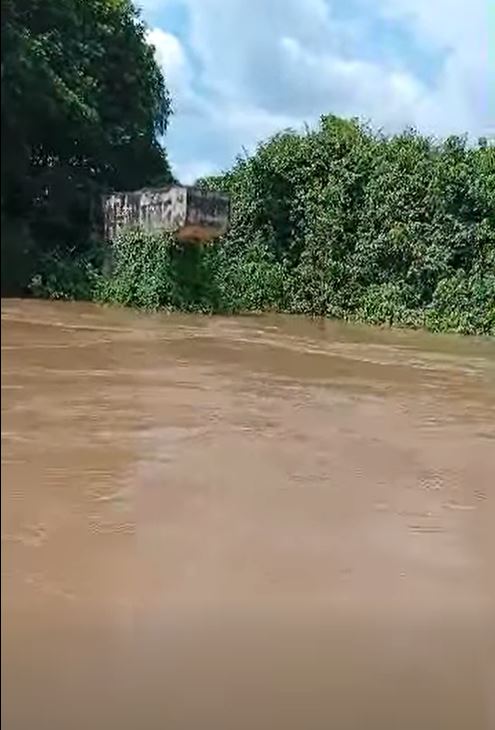
Men such as Okopi Cherry, who have lived through several generations of Adim’s river-crossing experiences and were also skilled in canoe construction, could provide even more accounts of those difficult times.
A significant improvement came with the construction of two culverts across Agbene by the Adim Community Development Association (ACDA).
The culverts provided considerable relief, particularly during periods when the lake overflowed and made access to the main river difficult.
Yet the bigger dream remained: a permanent, motorable bridge across the Adim River.
The people of Adim had already seen what was possible. Their fathers had witnessed the construction of the Ekwapa Ejor Bridge, reportedly built by Bataloti during the construction of the Otukpo–Ado road. It became a symbol of what a permanent bridge could mean for the community.
I experienced the difficulty of crossing Adim firsthand.
In August 1995, I returned to our house in Otukpo from school and discovered that my parents had travelled to the village. I followed them to Adim, only to find that the river had overflowed its banks.
A canoe was available to cross the main stream, but getting to the river was itself a challenge because Agbene had become a vast body of muddy water.
At Agbene, I removed my clothes, placed my bag on my head and walked into the water. The muddy water rose to my chest as I made my way through the lengthy stretch before reaching the main stream, where I was eventually taken across in a small wooden canoe.
Thankfully, the construction of the two culverts across Agbene in subsequent years has eliminated much of that particular ordeal.
For decades, the people of Adim have hoped for a permanent solution.
About 10 to 12 years ago, the construction of the Adim/Adankari Bridge was awarded. The project was listed under the Federal Ministry of Water Resources, domiciled with the Lower Benue River Basin Development Authority (LBRBDA).
A 2021 record listed the project as “Completion of the Construction of Adim Akpa Adankari Bridge,” with project code ERGP12157837, and an appropriation of ₦27 million.
The record indicated that the project was ongoing.
However, more than five years later, the situation on the ground tells a different story.
Two attempts to construct bridges at different locations along the river have reportedly been abandoned. One was a federal project, while another contract involving a different company was also left incomplete.
The remains of the construction are still visible. Concrete pillars stand at the site, although at least one has already fallen.
- Ten Ajegunle Students Get Equal Scholarship Opportunities
- Paradigm Initiative Equips Journalists Against Disinformation
- DEVELOPMENT INSIGHTS MORNING BRIEF, 14 OCTOBER 2026
- Akwa Ibom Brings Hope to Flood-Affected Families
- Scoliosis Patients Urged to Seek Emotional Support
In 2021, news that one of the companies involved in the project, reportedly led by an Akweya man, had returned to the site generated excitement in the community.
I rushed to Adim to find out what was happening and to follow up on what could potentially become one of the most important infrastructure projects in the community’s history.
I saw fresh construction materials, including reinforcement rods, at the site. But there were no workers around.
I later met with the Chairman of Adim Community and some elders. The chairman, Mr Jerome Oblete, confirmed that some men had come to the site, but the community had not been properly informed about their presence or the scope of their assignment.

The chairman expressed the desire for the community to be carried along.
“We as a community should be carried along so that our women could be bringing some kunu or gruel to the workers,” he reportedly told the man in charge.
But according to the account shared with the community, concerns that the Adim people might be seeking accountability appeared to have made those overseeing the work reluctant to engage with the community. They reportedly maintained that they had been sent to the site and were accountable only to those who deployed them.
The anticipated return of the project therefore failed to translate into sustained construction.
The Seasonal Bridge Remains the Community’s Best Option
For now, the people of Adim continue to depend largely on the seasonal wooden bridge.
Its construction every year provides some relief and, to a certain extent, represents a remarkable community effort. But it remains only a temporary solution.
When the rains return and the river rises, the water once again spreads across the low-lying areas. The seasonal bridge eventually becomes unusable, and the canoe returns.
For a community that first demonstrated its ability to construct a motorable wooden bridge as far back as 1979, the continued dependence on a seasonal crossing more than four decades later raises an important question:
How long will the people of Adim have to wait for the permanent bridge their fathers envisioned?
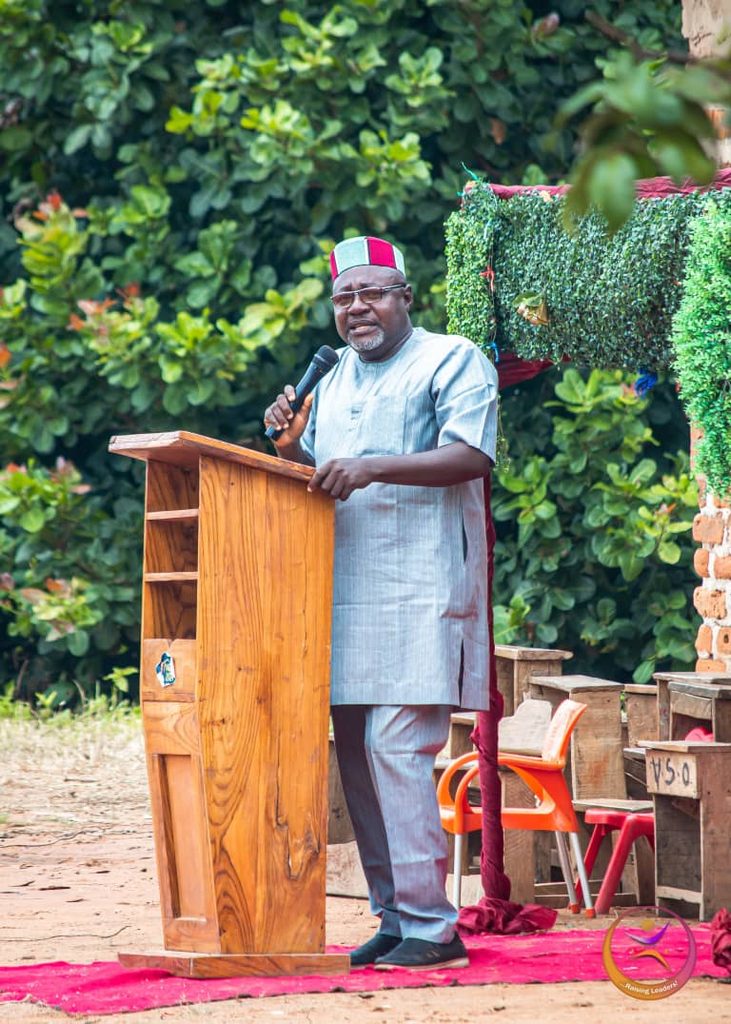
The abandoned pillars standing along the river remain a physical reminder of a promise that has yet to be fulfilled—and of a community still waiting for a bridge that could transform access, commerce, education, healthcare and everyday life.
The seasonal bridge may be a testament to the resilience and ingenuity of the people of Adim. But it should not have to remain their permanent solution.
Chief MAURICE AJAH IDAJOR
OHILOKO ,ADIM-AKPA