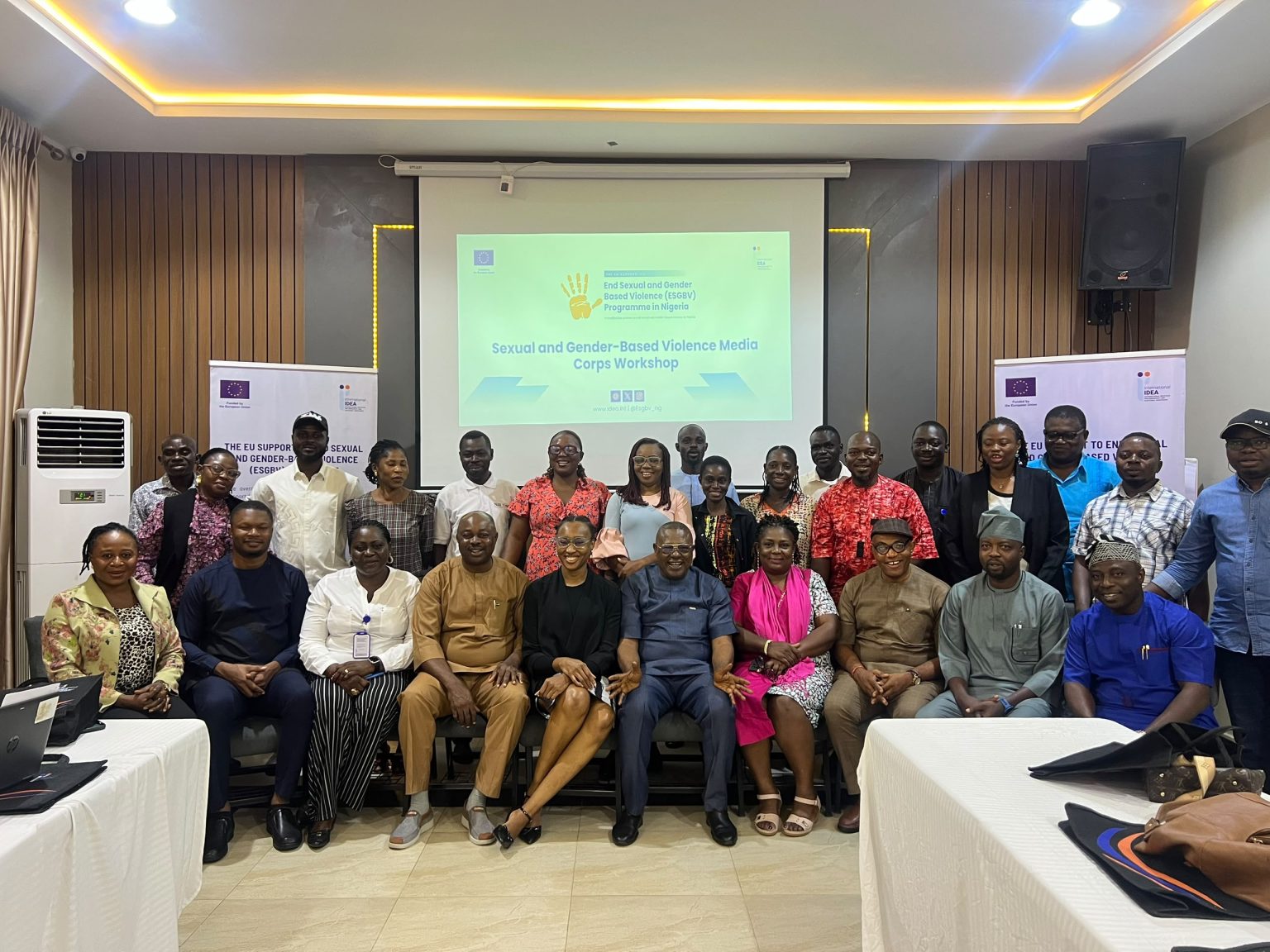


International IDEA, NAPTIP Train Benue Journalists on SGBV Reporting
The International Institute for Democracy and Electoral Assistance (International IDEA), in collaboration with the National Agency for the Prohibition of Trafficking in Persons (NAPTIP), has begun a two-day training for journalists in Benue State on Sexual and Gender-Based Violence (SGBV).
The training is supported by the European Union Support to End Sexual and Gender-Based Violence (ESGBV) Programme, implemented by International IDEA.
The initiative is aimed at improving media reporting of SGBV and promoting survivor-centred, ethical and evidence-based coverage.
NAPTIP Urges Media to Expose Perpetrators
The Director-General of NAPTIP, Binta Bello, represented by the agency’s Head of Press and Public Relations, Adekoye Vincent, urged journalists to use their platforms to amplify survivors’ voices, expose perpetrators and promote accountability.
Bello described SGBV as a widespread human rights violation, noting that women, children, men and other vulnerable people face rape, domestic violence, sexual exploitation, harmful traditional practices, emotional abuse, economic deprivation and online harassment.
She said fear, stigma, intimidation, cultural barriers and limited confidence in the justice system continue to prevent many survivors from reporting abuse.
According to her, NAPTIP remains committed to investigating and prosecuting offenders, rescuing victims and supporting survivors through care and rehabilitation.
She disclosed that the agency had secured more than 40 convictions in SGBV-related cases, including three life sentences for rape convictions.
Bello also called for stronger media collaboration in exposing violations and ensuring perpetrators are held accountable.

- NARD Gives Federal Government Two Weeks To Address Doctors’ Demands
- Group Urges Urgent Action on Nigeria’s Security Policy
- Kubwa Gas Plant Fire Police Trace Blaze to Driver’s Crash
- Fun Facts Young Nigerians Should Know About Nigeria’s Independence
- GOCOP Conference Opens Wider 2027 Election Conversation
International IDEA: Media Key to Changing Attitudes
The Civil Society and Community Mobilisation Specialist of the ESGBV Programme at International IDEA said the programme was developed after consultations with federal and state stakeholders.
She explained that the programme focuses on Benue, Kaduna and Oyo states, where it seeks to strengthen existing efforts rather than create parallel structures.
She identified three major areas of focus: strengthening laws and policies, improving access to services for survivors, including Sexual Assault Referral Centres (SARCs), and promoting positive social norms through stronger community engagement.
She stressed that laws alone cannot end SGBV if people do not know their rights or understand that certain acts constitute criminal offences.
“The media are important in taking information, awareness and behavioural-change messages to grassroots communities,” she said.
She urged the newly selected SGBV Media Corps in Benue to use responsible reporting to challenge harmful practices, improve public understanding and promote positive behavioural change.
Radio Benue Promises Support
The Director-General of Radio Benue, Terseer Mzuulga, said combating SGBV requires a grassroots approach involving the media, religious institutions and community leaders.
Mzuulga called for awareness campaigns to reach churches and communities, where religious and traditional leaders can help influence attitudes towards SGBV.
He noted that stigma and harmful cultural practices continue to discourage survivors from speaking out.
He pledged Radio Benue’s support through interactive programmes aimed at increasing public awareness and encouraging communities to take action against gender-based violence.
The training is part of broader efforts to strengthen SGBV prevention and response through better media and community-based communication in Benue, Kaduna, Oyo and the Federal Capital Territory.

For more news and updates, visit: AkweyaTV