
By Praise Otor Peters
Writers, journalists, publishers, editors, theatre practitioners and educators have been urged to use their creative and professional platforms to promote peace, empathy, justice and inclusion in society.
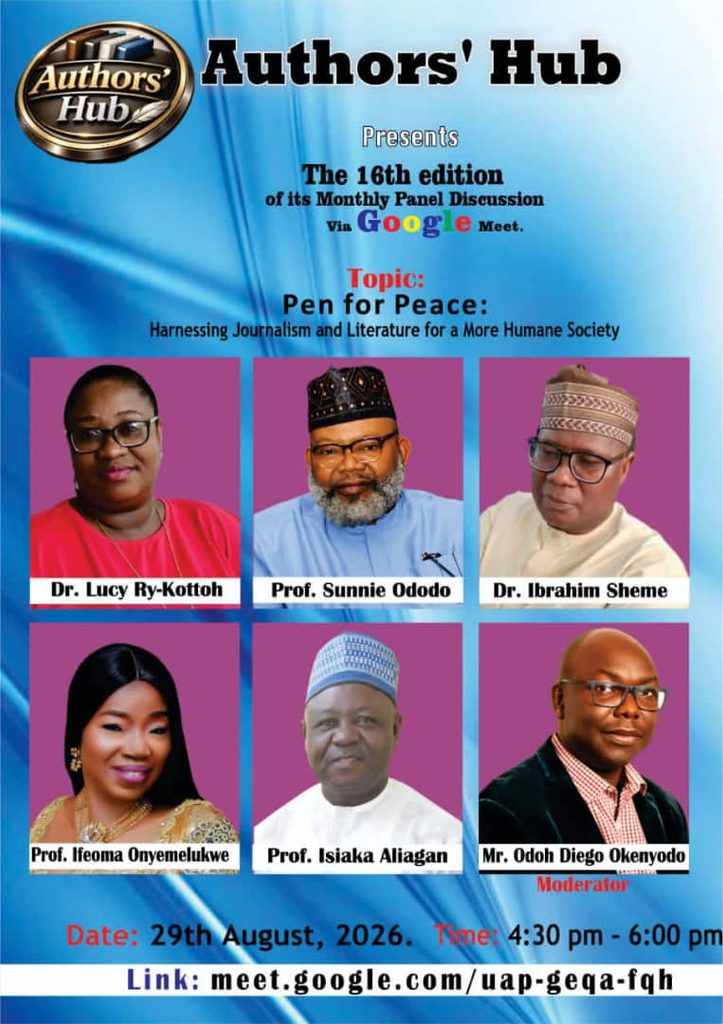
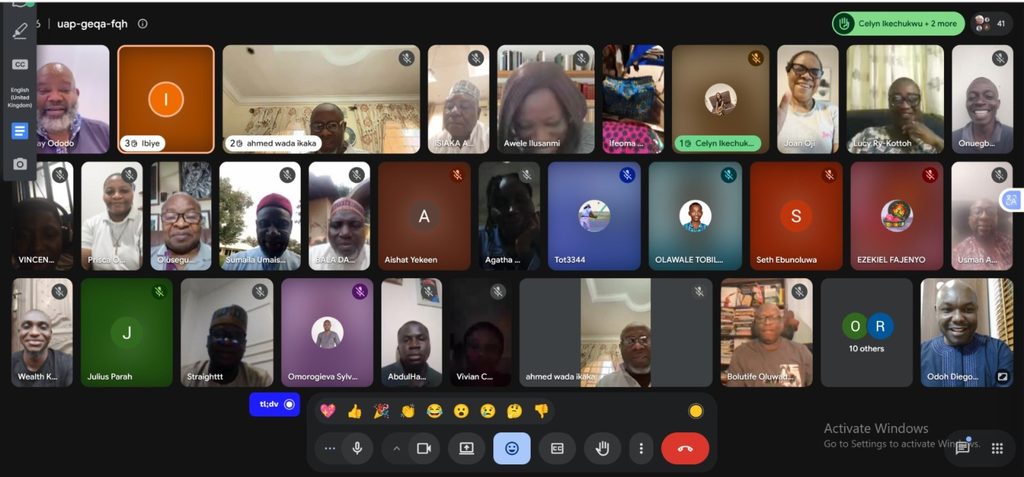
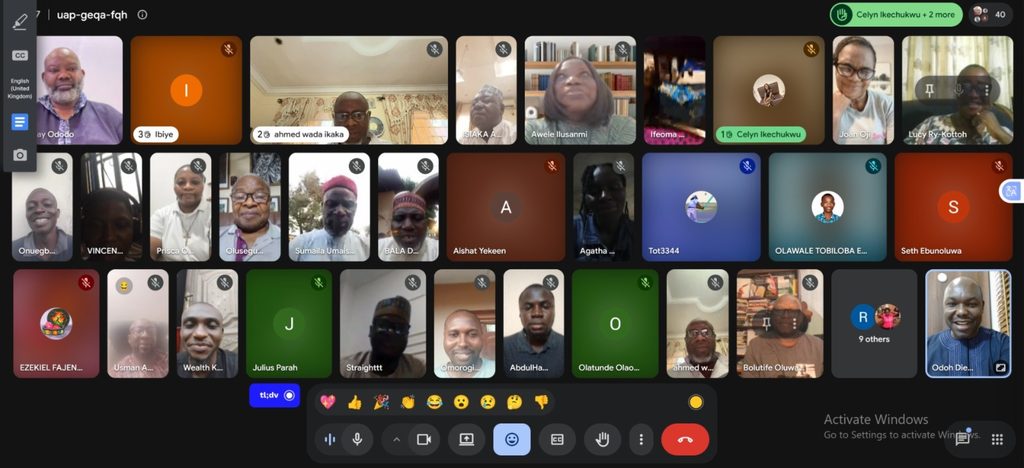
The call was made on Saturday, August 29, 2026, at the 16th edition of the Authors’ Hub Monthly Panel Discussion, held virtually via Google Meet. The session, themed “Pen for Peace: Harnessing Journalism and Literature for a More Humane Society,” examined how literature, journalism and the creative arts can contribute to peacebuilding, challenge injustice and address misinformation and social division.
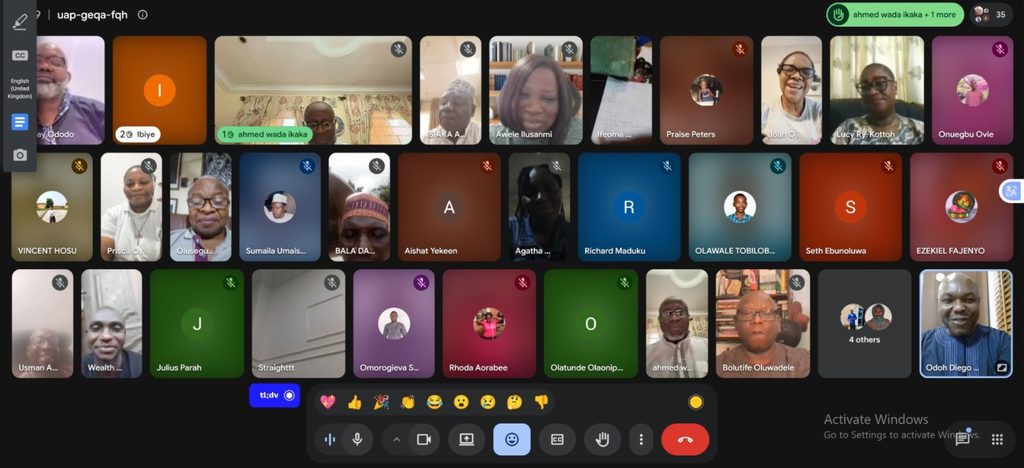
The discussion was moderated by development communication practitioner, poet and editor, Mr. Odoh Diego Okenyodo. Panelists included Dr. Lucy Ry-Kottoh, Senior Lecturer in Publishing Studies at Kwame Nkrumah University of Science and Technology, Ghana; Prof. Sunnie Ododo, theatre scholar and former General Manager/CEO of the National Arts Theatre; Dr. Ibrahim Sheme, journalist, novelist, editor and publisher; Prof. Ifeoma Onyemelukwe, professor of literature and member of the Nigerian Academy of Letters; and Prof. Isiaka Aliagan, professor and Dean at Kwara State University.
Speaking on the role of publishing in peacebuilding, Dr. Lucy Ry-Kottoh emphasized the responsibilities of publishers and editors as gatekeepers. She said peace-oriented communication begins with the selection, editing, packaging and dissemination of content, stressing the need for accuracy, context and sensitivity. She also advocated the use of sensitivity readers when authors write about cultures outside their own, as well as inclusive formats such as Braille, audiobooks, e-books and large-print books.
Prof. Ifeoma Onyemelukwe challenged the idea that writers merely document society, noting that literature can shape attitudes, humanize conflict and encourage empathy. She urged writers to tell the truth responsibly and identified physical threats, institutional restrictions, limited resources and socio-cultural pressures as major barriers to writers. She said writers can navigate these challenges through allegory, metaphor, satire, coded language, alternative publishing, diaspora platforms, pseudonyms, solidarity networks and persistent documentation.
Prof. Sunnie Ododo focused on the power of theatre to confront violence and promote reconciliation. He advocated participatory theatre, where audiences become active participants in identifying problems and developing solutions. He also highlighted WhatsApp Theatre and other digital performances as tools for reaching wider audiences, encouraging real-time debate and turning digital spaces into platforms for peacebuilding and media literacy. However, he noted that digital interaction can lack the emotional and non-verbal connection of face-to-face reconciliation, even though it removes geographical barriers and gives participants more time to reflect.
Prof. Isiaka Aliagan, meanwhile, addressed the changing media environment, warning that social media and artificial intelligence are transforming how information and creative content are produced and consumed. He urged writers and journalists to understand contemporary audiences and acquire digital skills to remain relevant. He also called on the Association of Nigerian Authors to pay greater attention to technology, digital publishing and new methods of reaching audiences.
The panel further discussed the dangers of misinformation, polarization and what participants described as the “Olodo Uprising,” with speakers stressing the need for stronger media literacy and responsible digital engagement. They also emphasized the power of language, urging writers and journalists to avoid stigmatizing expressions and consciously use language that promotes dignity, equality and inclusion.
As the discussion ended, participants called for the conversation to move beyond advocacy into practical action through training workshops on sensitivity reading, editorial gatekeeping, digital storytelling, WhatsApp Theatre, inclusive publishing and emerging technologies. They also proposed publishing the panel’s proceedings and distributing relevant materials to schools, libraries and wider communities.
In his closing remarks, Prof. Ododo noted that “a humane society is not inherited but intentionally built,” while Aliagan urged writers to question the status quo, examine their own biases and adapt to changing technologies and audiences.
- Ten Ajegunle Students Get Equal Scholarship Opportunities
- Paradigm Initiative Equips Journalists Against Disinformation
- DEVELOPMENT INSIGHTS MORNING BRIEF, 14 OCTOBER 2026
- Akwa Ibom Brings Hope to Flood-Affected Families
- Scoliosis Patients Urged to Seek Emotional Support
The programme ended with a vote of thanks by Malam Sumaila Omeisha, who called for the ideas discussed to be taken beyond the virtual meeting through workshops, publications and other practical initiatives.
The panel ultimately agreed that journalism, literature and theatre can go beyond documenting society’s problems to humanize experiences, challenge injustice, promote empathy and create pathways towards peace and reconciliation.