


Long before boreholes, dams and pipe-borne water came to Biu, residents depended on nature for one of life’s most basic needs.
The history of water supply in Biu Town and its surrounding communities is a story that stretches from springs, wells, streams, pools and rivers to modern water infrastructure. It is also a story of community resilience and the efforts of individuals who responded to the water needs of their people.
According to oral history associated with Kuthli Maribiya, the 22nd Kuthli of Biu Emirate, who reigned from 1873 to 1891, residents relied mainly on natural and traditional sources of water.
These sources supported generations of residents, providing water for drinking, cooking, washing, farming and livestock. Beyond their practical importance, many became part of the cultural and historical identity of Biu.
A Well With More Than 150 Years Of History
One of the oldest traditional wells in Biu is Jibir Thlema, located in Garuwashina Ward, along the old route to Viukuthla, the royal cemetery of Biu.
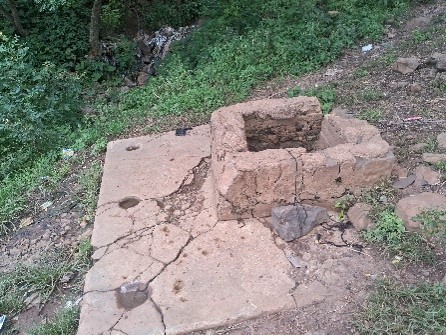
According to oral tradition, the well was discovered and dug by the Hona and Gwi, described by local accounts as early settlers who were already living around present-day Biu before the arrival of the Kuthli from Pelaminta.
The well was reportedly dug by hand to provide water for drinking, farming and livestock. Its location in a low-lying area made it a dependable source of water, helping the surrounding settlement to grow.
Local tradition links the name Jibir Thlema to Thlema, said to have been a respected chief among the Hona and Gwi. He was remembered for his leadership and his efforts to organise the community around the development of water sources.
For generations, the name has remained attached to the well.
Remarkably, Jibir Thlema is still functional. Residents of Garuwashina continue to rely on it, particularly during dry seasons and periods of water shortage.
Today, the well represents more than an old water source. It is a physical link to Biu’s early settlement history.
Jibir Mambila The Spring That Kept Biu Going
Another important traditional water source is Jibir Mambila in Zarawuyaku Ward.
Located along the valley leading to Waka, shortly after Biu Central Primary School, Jibir Mambila is described by local oral history as a natural spring that has served the community for more than 150 years.
Tradition holds that the spring was discovered after the migration of the Biu Kingdom from Pelaminta to present-day Biu in 1873.
As the settlers established themselves in the Zarawuyaku valley, they reportedly discovered water flowing naturally from the rocks. The water became an important source for drinking and watering livestock.
The name is derived from “Jibir”, understood locally to refer to a spring or well, and “Mambila”, the name associated with the location.
According to oral tradition, the area acquired the name Mambila following a spiritual event in which a dead body was reportedly found a short distance from the spring. The event became a landmark in the memory of the early settlers, and the name remained attached to the area and the water source.
More than a century later, Jibir Mambila remains in use.
For residents of Zarawuyaku and people living along Waka Road, the spring is both a source of water and a reminder of the migration and settlement history of Biu.
- ENTERTAINMENT & LIFESTYLE BRIEF 24 October, 2026
- Abba Adaudu: The Benevolent Pride of Idoma Kingdom
- Swiss Diplomat’s Wife Tests Positive For Ebola In Nigeria
- Farida Isiak Case Raises Press Freedom Concerns
- ISDEVCOM Delegation Pays Condolence Visit To Family Of Late Francis Duru
Jibir Yapana Yero Where Water Management Was Led By A Woman
In Garuwashina Ward stands another historic water source, Jibir Yapana Yero.
According to community oral history, the traditional water source is more than 220 years old. Unlike Jibir Thlema and Jibir Mambila, however, Jibir Yapana Yero is no longer in use.
Local accounts say it originally emerged as a natural spring, with water flowing from the rocks. As the community grew, residents developed the spring into a well and protected the source for safer and easier access.
What makes its history particularly remarkable is the traditional system used to manage access to the water.
According to elders, a female community leader was appointed to oversee the well. Residents could fetch water during designated hours, while the well was closed at night.
At about 7:30 p.m., the caretaker would reportedly cover the well with a wooden covering and reopen it at 7:30 a.m. the following morning.
The system was intended to reduce wastage, prevent conflicts, protect the water from contamination and ensure fair access.
The caretaker was known as Yapana Yero, a woman remembered in oral tradition as strong, disciplined and influential. Her fairness and determination in enforcing community rules reportedly earned her lasting recognition.
The well eventually became known as Jibir Yapana Yero.
Its history also highlights the role women played in managing communal resources in traditional Biu society.
Although modern boreholes and other water infrastructure eventually reduced the community’s dependence on the well, its historical importance remains. The surrounding land has since been used as a community cemetery.
Jibir Kuthli The Royal Well Of 1908
Not all of Biu’s traditional wells were developed by ordinary settlements.
Jibir Kuthli, also known as Gadina Kuthli, is closely associated with the royal palace and the reign of Kuthli Ari Dogo, the 24th Kuthli of Biu, who ruled from 1908 to 1935.
According to local oral history, the site originally had a natural spring which was developed into a well in 1908.
The water was used around the palace, particularly to support an orchard established by the Kuthli. Trees and crops were cultivated around the area, while water from the well was used for irrigation.
Community accounts further state that prison inmates were assigned to fetch water from the well during the mornings and use it to water the royal orchard.
The well consequently became known as Jibir Kuthli,The Kuthli’s well while the name Gadina Kuthli reflected its association with the royal garden.
Unlike many of Biu’s traditional water sources, Jibir Kuthli remains in use today.
Its survival gives it a special place in the history of Biu: it is simultaneously a traditional water source, a historical landmark and a reminder of the relationship between water, agriculture and the traditional institution.
Mandra Abdu The Stream That Became A Lifeline
South of Biu Town, in Sil-Umthla Ward, is Mandra Abdu, another important traditional source of water.
Local accounts identify the original stream as “Manda Mean”, described as a stream that flowed throughout the year and served residents of Sil-Umthla and neighbouring communities.
People relied on it for drinking, cooking, washing and other domestic activities.
The stream was considered important enough for the former Biu Native Authority to place its protection under the Health Division.
Among those responsible for monitoring the water source was Audu Gasi, a Health Sanitary Officer.
According to local accounts, Gasi enforced sanitation rules around the stream and across Biu Town, including measures against open defecation and environmental pollution.
Over time, the stream became popularly known as Mandra Abdu, with local tradition linking the name to Audu Gasi’s work.
For decades, women and children reportedly travelled to the stream to fetch water, particularly during the dry season when other sources became unreliable.
Today, although modern water systems have reduced dependence on the stream, Mandra Abdu remains part of the historical memory of Sil-Umthla.
Biu’s Lost Waterway
The Whu River once played another important role in the life of Biu.
The river divided the old Biu Town from the newer settlement around Galdimare Ward and served as the principal drainage channel for the township.
Its waters flowed down the valley towards Piku stream near Waka, the missionary settlement.
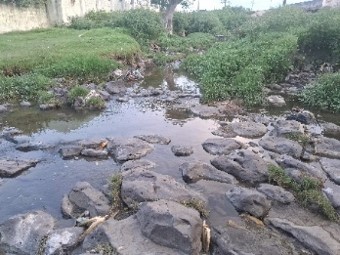
According to historical accounts, the river supported both people and animals. Residents used its water for drinking and washing, while the river was also home to aquatic life, including crocodiles.
Over time, however, the Whu River dried up, leaving only isolated patches of water.
Parts of its former course have since been built over, while the Damaturu-Mubi trunk road crosses the river’s former channel. During the colonial period, a wooden bridge was reportedly constructed across it.
The disappearance of the Whu River marks another chapter in Biu’s changing relationship with water.
From springs and wells to streams and rivers, these traditional sources sustained communities for generations. But as Biu grew, the demand for a more reliable and accessible water supply became increasingly urgent.
For more news, stories and updates, visit:https://www.akweyatv.com/


