Young Nigerians living with depression, anxiety, obsessive-compulsive disorder (OCD) and post-traumatic stress disorder (PTSD) who do not respond adequately to conventional treatments may have another option through a technology-based treatment known as Transcranial Magnetic Stimulation (TMS).
TMS is a non-invasive treatment that uses magnetic pulses to stimulate specific areas of the brain associated with particular mental health conditions.

Dr Olufemi Oluwatayo, a Consultant Psychiatrist, Fellow of the Royal College of Psychiatrists, London, and Medical Director of Ikeja Specialist Clinic and TMS Centre, Lagos, said TMS could provide an alternative for patients who have not achieved the desired results from commonly used treatments.
Why TMS Matters
According to Oluwatayo, depression, anxiety, OCD and PTSD are common among young people but may sometimes go unnoticed or untreated.

He noted that some patients fail to respond adequately to antidepressants and talking therapies, while side effects associated with some medications can also affect patients’ willingness to continue treatment.
“Depression, anxiety, Obsessive Compulsive disorders and PTSD are common in young people and often go unrecognised. They may not respond to the usual first line treatments, i.e. antidepressants and talking therapy,” he said.
“Also, common antidepressants often present with side-effects, and adherence is poor. For these reasons, TMS should be considered as a treatment option.”
Oluwatayo, who is also the Chief Executive Officer of Retreat Healthcare, Ikorodu, said the growing familiarity of young people with technology could make them more receptive to technology-based approaches to treatment.
“Research has shown that it is safe for use in young people just as in adults as it has no lasting side effects,” he said.
How TMS Works
TMS works by using magnetic pulses to influence activity in specific areas of the brain.
Explaining the process, Oluwatayo said a TMS machine generates magnetic pulses through coils positioned on particular areas of the patient’s scalp.
“A TMS machine produces pulses that are passed through magnetic coils to generate magnetic waves. The magnetic coils are placed on specific parts of the scalp on the head to target certain parts of the brain,” he explained.

“The waves from the coils induce tiny electric currents in the part of the brain that is targeted. This resets dysfunctional brain patterns associated with those conditions.”
Unlike treatments that require medication to be taken orally, TMS delivers stimulation directly to targeted areas of the brain without surgery.
Treatment Is Tailored to Each Condition
Oluwatayo explained that TMS is not administered in exactly the same way for every patient.
He said the area of the brain targeted, the intensity of the magnetic waves and the duration of treatment depend on the particular condition being treated.
“The part of the brain targeted depends on the condition being treated. The intensity of the waves and the duration of treatment also depends on the condition,” he said.
- World Bank Report Signals Nigeria Poverty Stabilisation
- Lagos Chamber 0f Commerce And Industry Seeks Petroleum Price Reduction
- Nigerian NGOs Demand Equal Voice At UN
- Could Cheaper Petrol Finally Bring Food Relief?
- Abiodun Baiyewu’s Journey In Human Rights And Access To Justice
“Over the past 10 years or so different centres in the US, UK and Australia have developed different protocols for different conditions.”
This means that treatment can be adjusted according to the mental health condition being managed and the protocol being followed.
Standard and Accelerated Treatment
According to the psychiatrist, two commonly used approaches are the standard and accelerated TMS protocols.
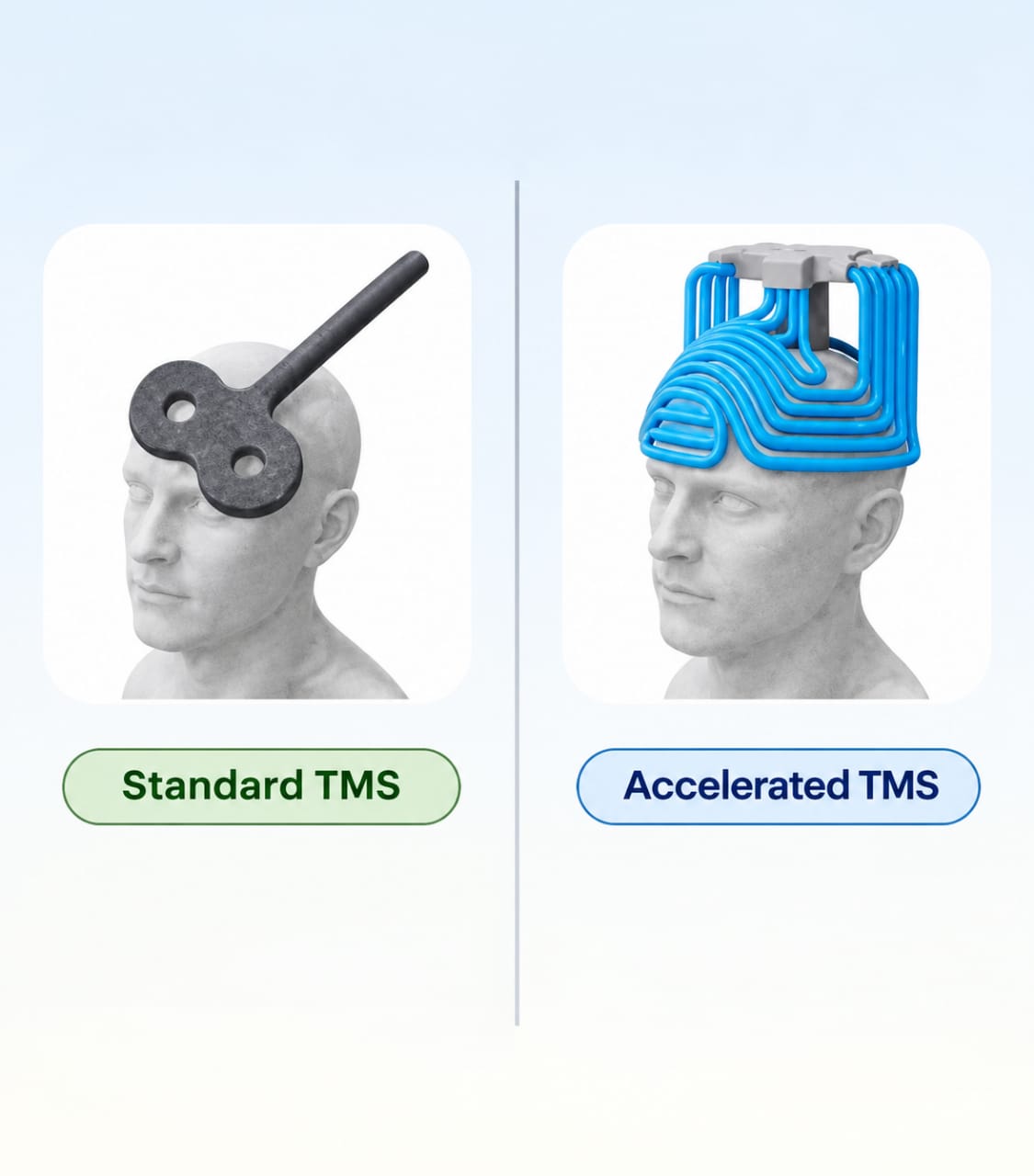
“In the standard protocol, a session lasts for 30 minutes and is given five days a week for six weeks,” Oluwatayo said.
“Whilst the accelerated protocol lasts for only a few minutes and is repeated several times a day over a two weeks period.”
He added that both approaches involve about 30 treatment sessions, although the accelerated protocol delivers them over a considerably shorter period.
What Patients Can Expect
Oluwatayo said available research and clinical evidence indicate that TMS can be beneficial to some patients who have not responded to other forms of treatment.
“There are research and clinical evidence that it works in 50 percent of patients who have failed to respond to other treatments,” he said.
He also described the treatment as generally well tolerated, noting that some patients may experience temporary discomfort.
“It is well tolerated with only brief scalp aches and tiredness after the treatments, the common side effects,” he said.
A Growing Role for Technology
The use of TMS highlights the expanding role of technology in mental healthcare, particularly as researchers and clinicians continue to explore alternatives for people who do not respond sufficiently to conventional treatment.
For young people, who are generally familiar with technology-based services and tools, such approaches could broaden the range of treatment options available to them.
However, mental health treatment remains individualised, and the suitability of TMS depends on the patient’s condition and clinical assessment.
TMS is currently available at the Ikeja Specialist Clinic and TMS Centre in Lagos, which has partnered with a UK company for training and technical support.