
A major development intervention in northern Nigeria is producing a striking result: 41 per cent of participating local farmers have reportedly moved out of poverty under the World Bank-assisted Agro-Climatic Resilience in Semi-Arid Landscapes (ACReSAL) project.
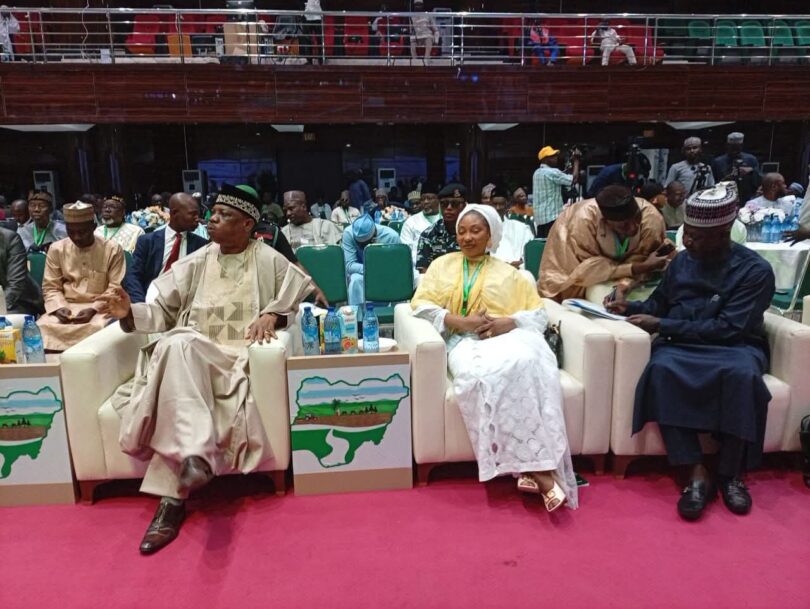
The milestone was disclosed on Monday by ACReSAL Task Team Lead, Dr Joy Iganya Agene, during the hybrid Additional Financing Pre-Appraisal Mission held at the Ahmadu Bello International Conference Centre in Bauchi State.
For communities spread across Nigeria’s 19 northern states and the Federal Capital Territory, the figure represents more than a project statistic. It signals the possibility that climate-focused investment can also translate into stronger household incomes, improved livelihoods and greater economic resilience for farmers living in some of the country’s most climate-vulnerable landscapes.
According to Dr Agene, ACReSAL has significantly improved farmers’ incomes, directly supporting the World Bank’s broader objective of reducing poverty. With the project now being considered for additional financing, she expressed optimism that the poverty reduction figure could rise beyond 50 per cent.
That prospect could give the programme an even larger development footprint.
Rather than redesigning the project because of weak implementation, as sometimes happens with development programmes, ACReSAL is maintaining its original framework because of its strong performance.
The proposed additional funding is expected to focus on scaling up existing interventions, reclaiming more degraded land and expanding impact at community level.
The progress is particularly significant because ACReSAL was designed to respond to several challenges at once. The project seeks to strengthen climate resilience, restore degraded landscapes, protect agricultural productivity and improve food security across Nigeria’s semi-arid regions.
The National Project Coordinator of ACReSAL, Abdulhamid Umar, described the initiative as a highly successful project targeted at mitigating climate change, strengthening food security and protecting agricultural yields.
The Federal Government has formally classified ACReSAL as a performing project, a designation that triggered the World Bank’s pre-appraisal process for additional funding.
The choice of Bauchi to host the mission was therefore significant. Umar explained that the state was selected because it ranks among the best-performing states in the country in implementing the programme.
Bauchi’s performance also received recognition from Dr Agene, who commended the state for its implementation since ACReSAL was launched in May 2023. She specifically praised Governor Senator Bala Abdulkadir Mohammed for his understanding of donor-funded programmes and his continued support. The governor was represented at the event by his deputy, Rt. Hon. Auwal Muhammad Jatau, alongside commissioners and senior government officials.
- ENTERTAINMENT & LIFESTYLE BRIEF 24 October, 2026
- Abba Adaudu: The Benevolent Pride of Idoma Kingdom
- Swiss Diplomat’s Wife Tests Positive For Ebola In Nigeria
- Farida Isiak Case Raises Press Freedom Concerns
- ISDEVCOM Delegation Pays Condolence Visit To Family Of Late Francis Duru
As the Federal Government and World Bank work toward a definitive agreement on the next phase of funding, ACReSAL is entering an important moment.
If the additional financing is secured, the programme will have the opportunity to take what is already working and extend it to more communities, more farmers and more degraded landscapes.
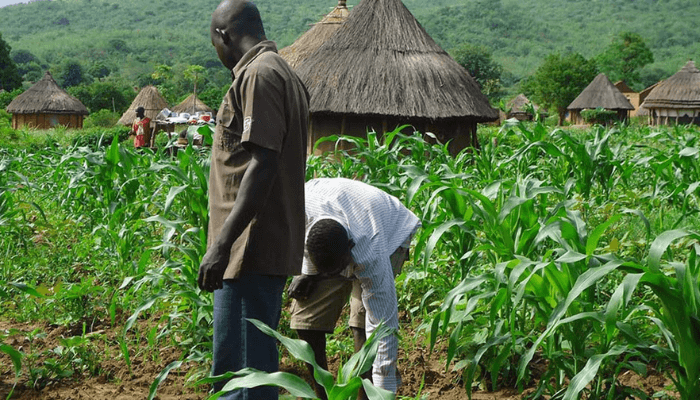
For northern farmers, the most encouraging number may therefore not be 41 per cent.
It may be the possibility of more than 50 per cent.
And behind that number is a bigger story: climate resilience is beginning to look not only like environmental protection, but also like a practical pathway out of poverty.