

The United Nations has proposed a $3.3 billion regular programme budget for 2027, as Secretary-General António Guterres calls on member states to meet their financial obligations and support the organisation’s operations.
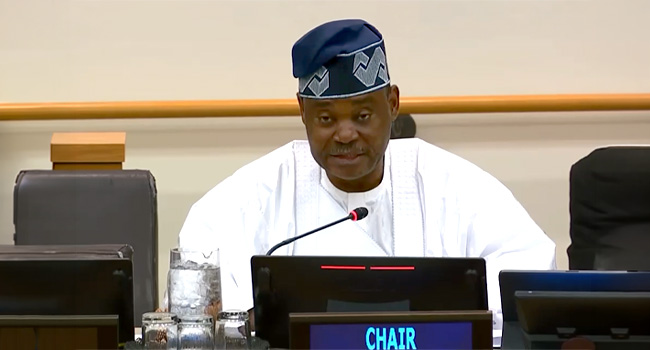
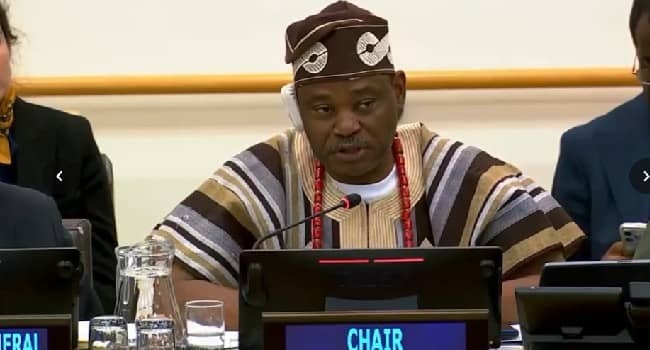
António Guterres presented the proposal to the General Assembly’s Fifth Committee in New York, chaired by Nigeria’s Permanent Representative to the United Nations, Senator Jimoh Ibrahim.
The proposed budget is designed to sustain the UN’s work in international peace and security, sustainable development and human rights, while improving accountability and reducing administrative costs.
Presenting the estimates on October 13, Guterres said the organisation was continuing efforts to make its operations more efficient and responsive to global challenges through the UN80 Initiative.
The initiative focuses on improving the use of resources, reducing duplication and strengthening the link between approved mandates, funding and results.
- Sports Media Partnership Could Unlock Jobs
- NAF Assures Igbokoda Residents Of Action Over River Pollution Concerns
- CSO Leader Champions Kindness for Global Progress
- UN Proposes $3.3bn Budget As Nigeria Chairs Review
- Nigeria Moves to Strengthen Power and Digital Infrastructure
UN Faces Growing Financial Pressure
Despite the proposed reforms, António Guterres warned that cost-cutting measures alone would not resolve the organisation’s financial difficulties without predictable funding from member states.

“Efficiency alone cannot compensate for an unstable financial foundation,” the Secretary-General said, urging countries to fulfil their financial obligations in full and on time.
He noted that delays in contributions could affect the UN’s ability to implement mandates approved by member states, particularly at a time when the organisation is dealing with conflicts, humanitarian emergencies and growing development needs.
The proposed regular budget covers 11,150 posts and represents a reduction of approximately $40.8 million, or 1.2 per cent, compared with the approved 2026 budget.
A separate allocation of $423 million is proposed for the continued operation of special political missions in 2027.
António Guterres said presenting the organisation’s financial requirements earlier in the budget process would give member states a clearer understanding of the resources needed to sustain its programmes.
Reforms To Reduce Administrative Costs
Under the UN80 Initiative, the organisation plans to expand shared administrative platforms, relocate additional functions to lower-cost duty stations and reduce duplication across its departments.
The proposed changes include extending common administrative arrangements to Geneva, Nairobi, Vienna and Addis Ababa, building on existing efforts to consolidate support services.
The UN is also considering further changes to senior management structures and the allocation of personnel to ensure that resources are directed towards its priorities.
According to the budget proposal, 44 additional functions are expected to be relocated across 12 UN entities, while measures to reduce senior-level positions form part of the wider restructuring effort.
The reforms are intended to lower operating costs while preserving the organisation’s capacity to deliver essential programmes.
However, the changes come amid difficult decisions over staffing and the need to balance savings with the responsibilities assigned to the UN by its member states.
Funding For Development And Other Programmes
Beyond administrative reforms, the proposed budget includes additional resources for development cooperation and other priority areas.
The Secretary-General proposed an additional $1 million each for the UN’s Regular Programme of Technical Cooperation and the Development Account.
The estimates also include $2.7 million for the UN Sustainable Development Group System wide Evaluation Office and $3.7 million to advance the organisation’s disability inclusion strategy.
Other proposed allocations include $1.7 million for work on reviewing the implementation of UN mandates, $3.2 million for the Independent Investigative Mechanism for Afghanistan and $2.1 million for an upgrade of Umoja, the organisation’s enterprise resource planning system.
A further $22 million is proposed to address rising costs associated with health insurance for retired UN personnel.
António Guterres said the estimates were prepared after reviewing existing resources and identifying opportunities for savings, while taking into account new and expanded mandates.
He stressed that financial discipline must go hand in hand with the effective delivery of programmes approved by member states.
Receiving the proposal, Jimoh Ibrahim described it as a budget for a sustainable United Nations and assured the Secretary-General of the committee’s cooperation.
Jimoh Ibrahim said the committee would begin deliberations and consultations on the estimates as part of the process of examining the organisation’s financial and administrative requirements.
Nigeria’s chairmanship places the country at the centre of discussions on the UN’s budget, institutional reforms and the funding required to implement decisions taken by the General Assembly.
The Fifth Committee is responsible for administrative and budgetary matters, including the examination of proposed expenditure and the resources required to support the organisation’s work.
Its deliberations are therefore central to determining how the UN balances its commitments with the financial contributions available from member states.
For more news, information and stories, visit: https://www.akweyatv.com/



