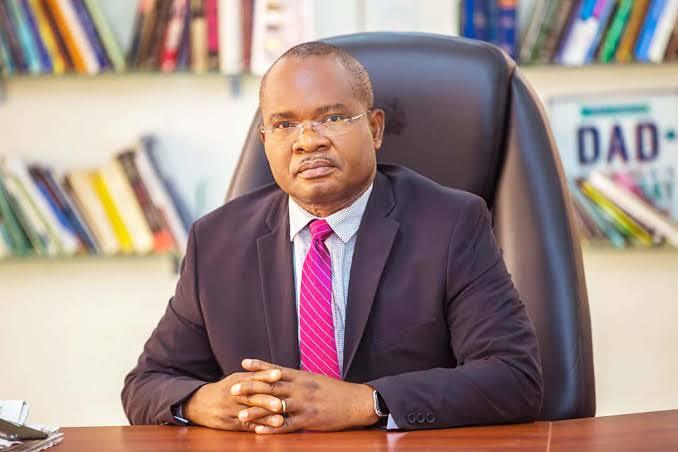

Clement Nwankwo, a Nigerian lawyer and pro-democracy activist, has spent decades working to protect human rights, strengthen democratic institutions and promote accountability. As the founder of the Policy and Legal Advocacy Centre (PLAC), he has contributed to Nigeria’s electoral reform and legislative development.
His journey began in the late 1980s, when Nigeria was under military rule and civil society organisations faced significant restrictions.
- Swiss Diplomat’s Wife Tests Positive For Ebola In Nigeria
- Farida Isiak Case Raises Press Freedom Concerns
- ISDEVCOM Delegation Pays Condolence Visit To Family Of Late Francis Duru
- Clement Nwankwo’s Fight For Human Rights And Democracy
- AEDC Announces Three-Day Power Disruption In Parts Of Abuja
Clement Nwankwo studied law at the University of Nigeria, Nsukka, graduating in 1984. He proceeded to the Nigerian Law School and was called to the Nigerian Bar in 1985.
His early legal experience included working with the Legal Aid Council, where he served as a counsel during his national service. The experience helped shape his interest in access to justice and the protection of people whose rights were at risk.
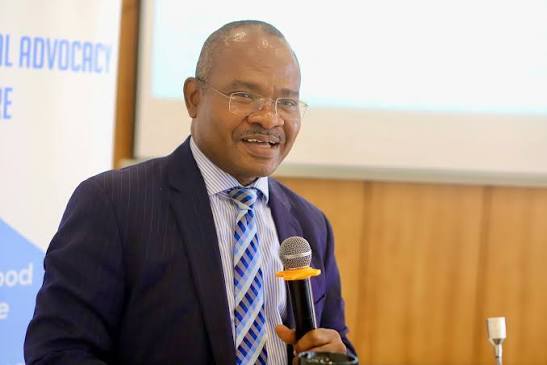
In 1987, Clement Nwankwo co-founded the Civil Liberties Organisation (CLO), First National Secretary/Executive Director of the Civil Liberties Organisation (CLO) 1987-1990, one of Nigeria’s pioneering human rights groups. He later established the Constitutional Rights Project (CRP), which used legal advocacy, public education and documentation of abuses to promote respect for constitutional rights.
During the regime of General Sani Abacha in the 1990s, human rights defenders, journalists and pro-democracy activists faced arrests, detention and restrictions on freedom of expression. The Constitutional Rights Project (CRP) continued to speak out against abuses and campaign for respect for international human rights standards.
His work earned him the 1996 Martin Ennals Award for Human Rights Defenders, an international recognition of his contribution to human rights protection.
At the award ceremony in London, Clement Nwankwo declared “We shall continue to strive and push to achieve an accountable and responsible government that derives its legitimacy from the Nigerian people.”
The statement reflected his longstanding position that government authority should be grounded in public consent and accountability.
How Nwankwo Helped Nigerians Embrace Democracy
Clement Nwankwo also played a central role in Nigeria’s transition to civilian rule through the Transition Monitoring Group (TMG), a coalition of civil society organisations established in 1998 to monitor the transition process.
As chairman of Transition Monitoring Group (TMG) , he helped coordinate efforts to promote credible elections and encourage citizens’ participation. During the 1999 presidential election, the coalition trained and deployed nearly 11,000 election observers across the country.
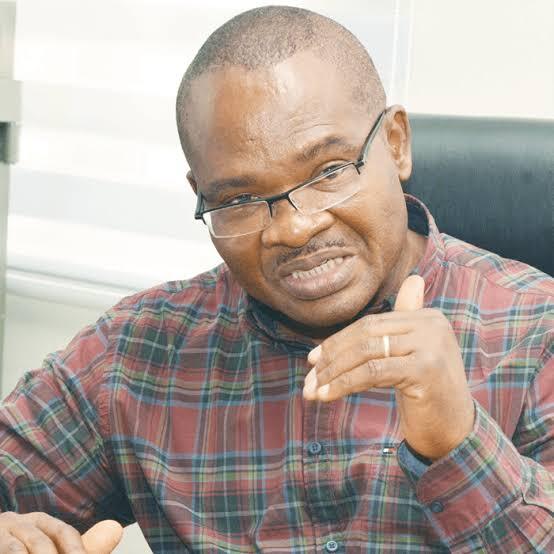
That year, Clement Nwankwo accepted the National Endowment for Democracy’s Democracy Award on behalf of Transition Monitoring Group (TMG) in recognition of its work to support Nigeria’s democratic transition.
He later opposed moves to amend the Constitution to allow former President Olusegun Obasanjo to seek a third term. Clement Nwankwo argued that the country needed continuity in democratic governance and constitutional rule, rather than the extension of an individual’s tenure.
Building Stronger Democratic Institutions
In 2009, Clement Nwankwo founded the Policy and Legal Advocacy Centre (PLAC), an Abuja based organisation that works to strengthen legislative institutions, promote electoral reform and expand citizens’ participation in governance.

Through PLAC and the Nigeria Civil Society Situation Room, he has supported election monitoring, legislative accountability and engagement between citizens and public institutions.
His commitment to legal reform has continued through publications and initiatives focused on access to justice. In April 2026, Policy and Legal Advocacy Centre (PLAC) launched the Guide to Human Rights and Public Interest Litigation in Nigeria, authored by Clement Nwankwo, to help lawyers, civil society organisations and other stakeholders understand how litigation can be used to advance human rights and accountability.
For more news, information and stories, visit: https://www.akweyatv.com/