
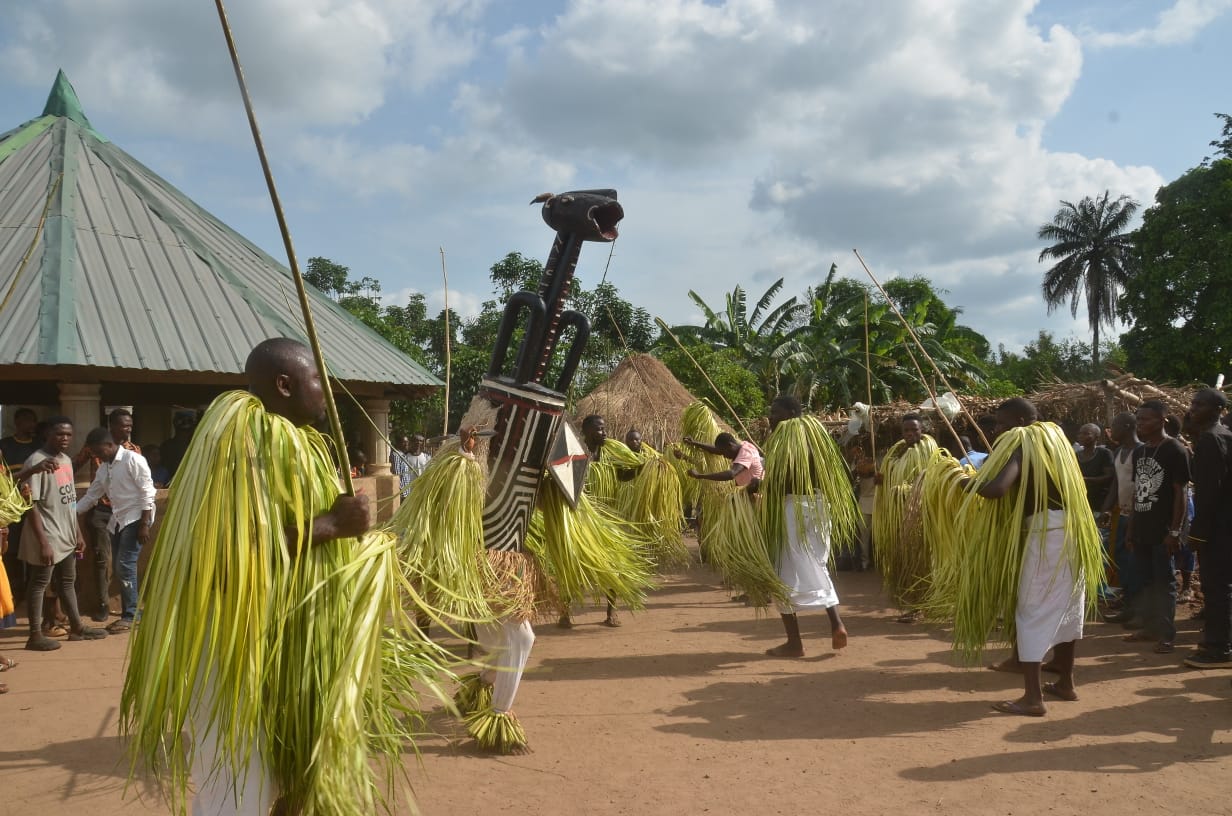

Whenever a king from the Ifu-Akpa Clan of Akweya District, Otukpo Local Government Area of Benue State, is to be buried or a new one coronated, one of the most significant traditional rites performed is the Aligbor.
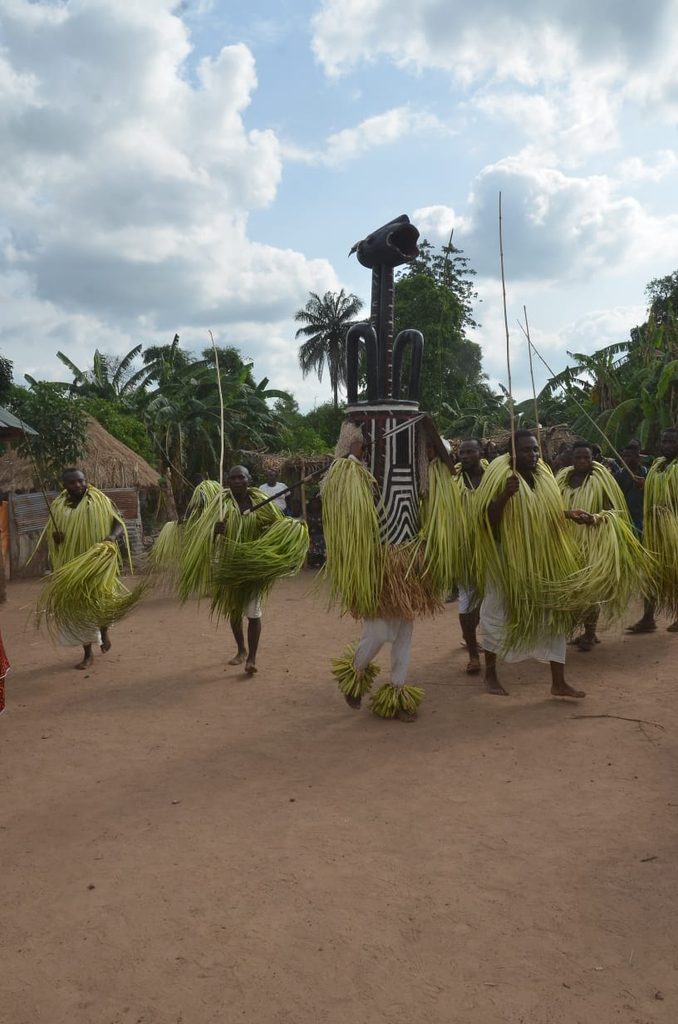
The Aligbor is a young royal maiden who performs a demanding seven-day ritual, running between a stream and the clan’s shrine completely naked, except for a string of colourful beads around her waist. Balancing a heavy clay water pot on her head, she must endure the exhausting journey under the watchful protection of Anagbogbo, an unmasked masquerade armed with long whips.
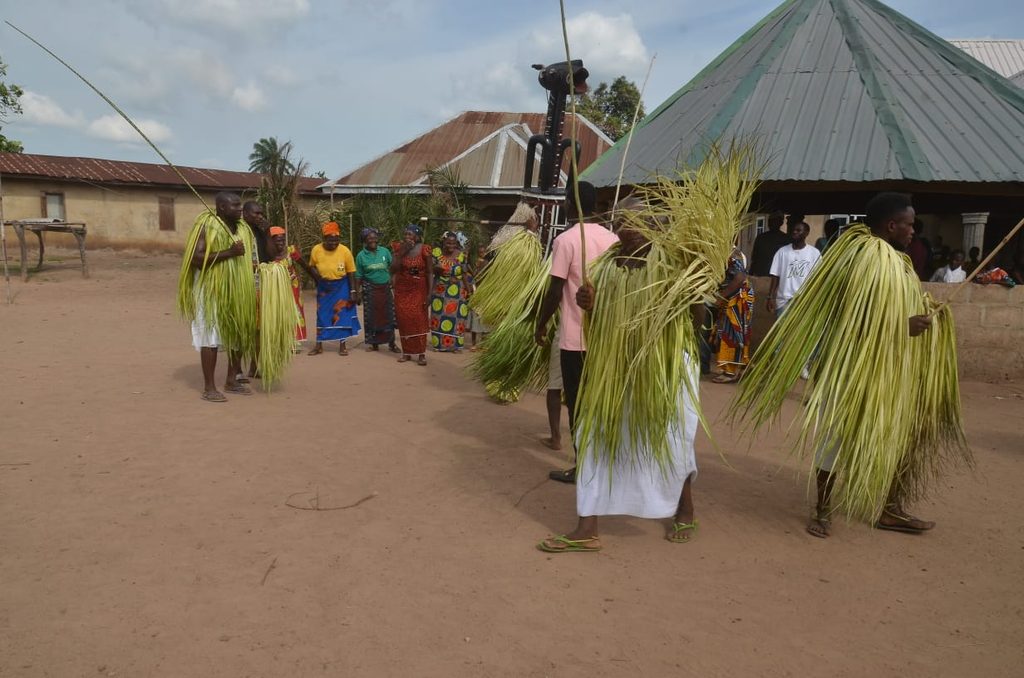
The Anagbogbo escorts her throughout the exercise, clearing the way and shielding her from the curious and prying eyes of onlookers.
As soon as the burial of a king or the coronation of a new one is announced, the search for an Aligbor begins. Young adolescent girls related to the royal family become potential candidates. Some reportedly flee the village to avoid being selected.
Young men assigned to search for eligible maidens pursue the task. Once a girl is found and selected, a black thread is tied around her wrist as a mark of her selection by the gods.
However, not all the maidens resist the call. Some willingly submit themselves to the ritual, regarding it as a rare privilege and a source of pride. For them, being chosen is an opportunity to represent the royal family and enjoy the same honour and reverence accorded to ancestral masquerades.
This difference in attitude is reflected in the facial expressions of Aligbor participants. While some perform the ritual with tears and visible apprehension, others display confidence and pride.
According to a publication by Adakole Ediba:
“She is the highest ranking royalty in her kingdom. For seven gruelling days, she will be treated with the exact same reverence, rights, and honour as the most sacred ancestral masquerades.”
Young women who successfully participate in the Aligbor ritual are subsequently conferred with the title of Ogana.
The Seven-Day Ordeal
The ritual requires the Aligbor to run to River Okpokwu, fetch water in her clay pot and return to empty it into a massive drum at the clan’s shrine. The exercise is performed three times daily in the morning, afternoon and evening for seven consecutive days.
The ritual is governed by strict traditional restrictions. It is considered a taboo and a punishable offence for anyone to be present at the stream while the Aligbor is fetching water.
When Tradition Meets Modern Reality
The challenges of sustaining this tradition became evident during the second burial rites of Dr Ojiji’s father.
When the time came for the Aligbor, the royal elders expected the adolescent granddaughters of the deceased to step forward. But none was willing. Every eligible teenage girl reportedly fled, unwilling to participate in a ritual that required public nudity in an age of changing social values.
With the eligible candidates unavailable, the traditional arrangement was thrown into disarray. To prevent what would have been regarded as a major historical disgrace for the royal family, Ojiji’s cousin, a woman approaching 40, was eventually compelled to perform the seven-day ritual originally meant for an adolescent maiden.
This incident illustrates the growing difficulty of maintaining a tradition whose survival depends on the willingness of young members of the royal family.
According to extensive research by cultural scholar Cornelius Adakole, C. Ediba, alongside traditional custodians Dr Ochinya Odaba Ojiji and Odoh Diego Okenyodo, the Aligbor originated not as a religious sacrifice but as a form of historical theatre.

Unlike several other traditional rites in Idomaland, the Aligbor, according to the researchers, has no direct spiritual affiliation. It involves no sacrifice to a river goddess, nor is any deity invoked. Rather, the ritual is associated with a transition in traditional leadership, particularly the death of a chief and the coronation and confinement of a new king.
A Tradition Under Threat
Despite its historical and cultural significance, the Aligbor tradition is facing growing threats from modern social realities.
- Aligbor: The Royal Maidens Who Must Run Naked to the Stream for Seven Days
- DEVELOPMENT INSIGHTS MORNING BRIEF 6 NOVEMBER, 2026
- Senate Proposes Jail Term For Doctors Over Delayed Emergency Care
- NSUK Remembers Francis Duru As An Icon And Father Figure
- Mairo Ibrahim Champions Inclusive Governance Through Tunani Initiative
One major challenge is technology, particularly the widespread use of smartphones and social media. In an era when photographs and videos can be uploaded and circulated across the world within seconds, the possibility of images of a naked Aligbor maiden finding their way onto the internet has become a major source of concern.
The fear of public exposure, ridicule and permanent online humiliation is reportedly discouraging young girls of royal descent from participating.
Another challenge is the influence of Pentecostal Christianity. Some pastors in the region preach against traditional religious and cultural practices, often portraying indigenous rites as evil or incompatible with Christian beliefs. Consequently, young converts may become reluctant to participate in traditions associated with their ancestral heritage, even where, as the researchers argue in the case of Aligbor, the practice is not a religious sacrifice.
Education and changing lifestyles have also complicated the situation. Many eligible royal daughters now spend most of their time away from their communities, attending boarding schools, colleges and universities. Their academic commitments and exposure to contemporary social values make it increasingly difficult to secure their participation in a demanding seven-day traditional rite.
The question, therefore, is not simply whether the Aligbor tradition should continue or disappear. It is also how a community can preserve an important aspect of its history and cultural identity while responding to the changing realities of modern society.
For the Ifu-Akpa Clan, the Aligbor remains a distinctive expression of royal heritage, history and traditional authority. But with fewer young women willing to take up the responsibility, the future of this unusual cultural institution appears increasingly uncertain.



