
By Nathan Yohanna
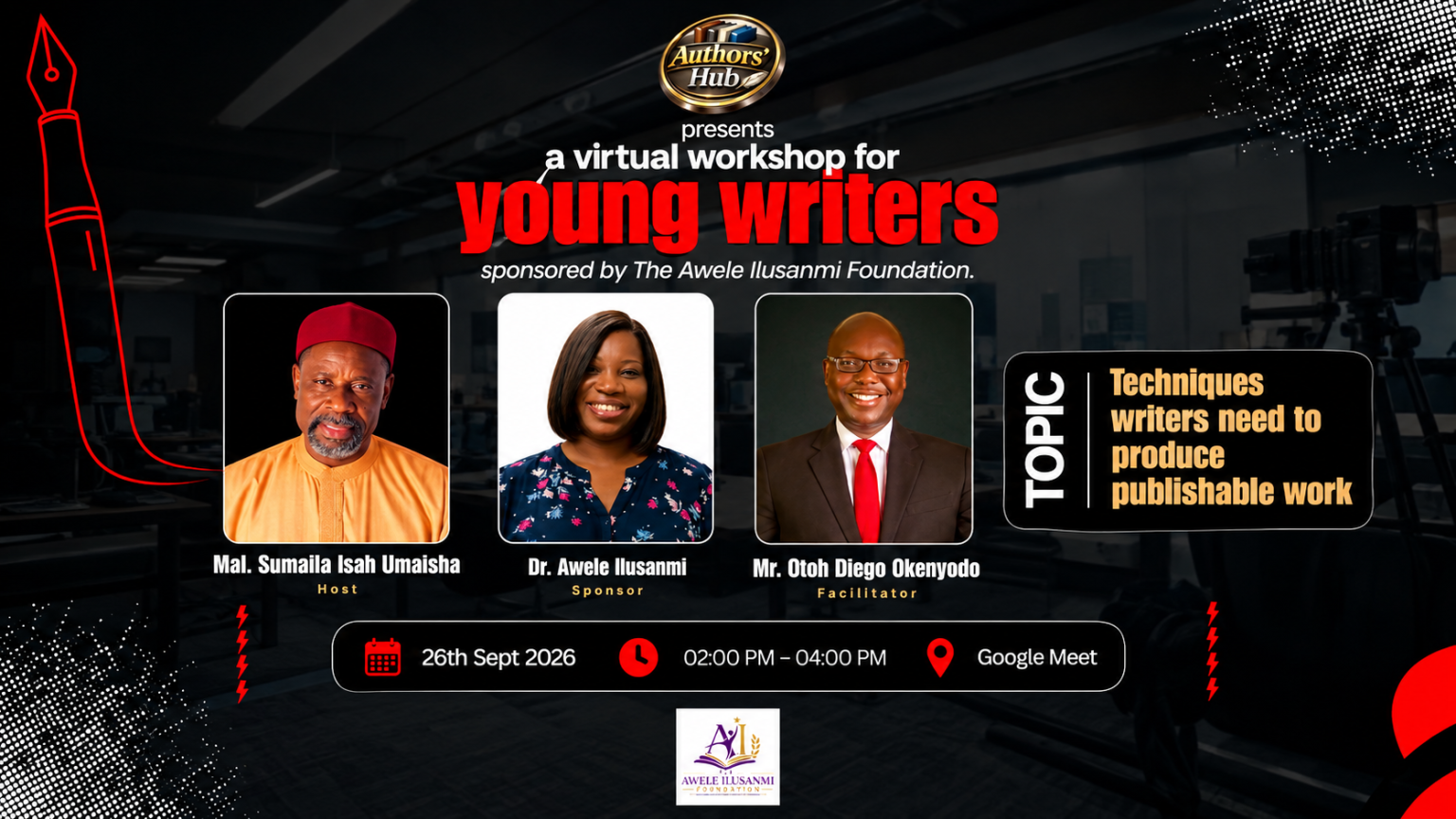
A cohort of emerging writers from across Nigeria gathered virtually on Saturday, September 26, 2026, for a capacity-building workshop organized by Authors’ Hub and sponsored by The Awele Ilusanmi Foundation. The event, themed “Techniques Writers Need to Produce Publishable Work,” focused on the practical realities of the modern writing industry, including the economics of ghostwriting and the ethical integration of Artificial Intelligence (AI).
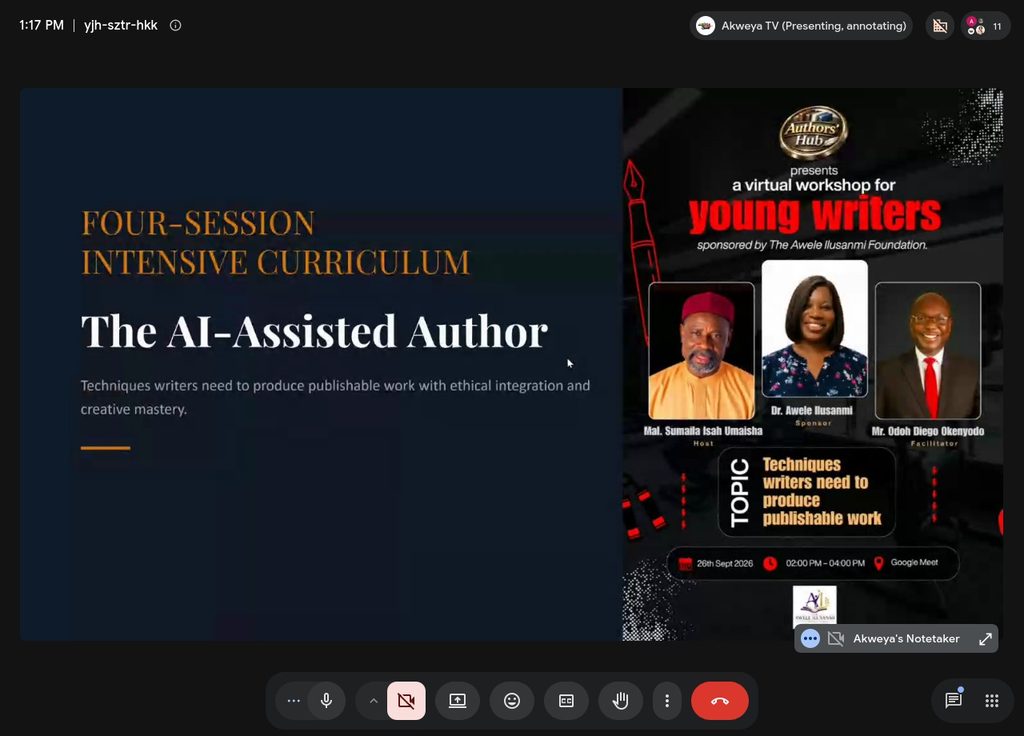
The workshop, held via Google Meet from 2:00 PM to 4:00 PM, was hosted by veteran journalist and author, Mal. Sumaila Isah Umaisha, with facilitation by Mr. Odoh Diego Okenyodo. It formed part of the activities marking the 50th birthday celebration of the sponsor, Dr. Awele Ilusanmi.
- Student Group Announces New Send-Forth Date, Sets October 10 for Elections
- Authors’ Hub Equips Writers with AI-Assisted Skills in Landmark Virtual Workshop
- Hope Rises as FG Moves to Revive Abandoned Homes
- ACI Africa Experts Tackle Airport Development Challenges
- AfDB-Funded Project Gears Up for Increased Visibility
In his opening remarks, Mr. Umaisha set a pragmatic tone, urging participants to look beyond the romanticised view of writing. He shared a personal anecdote from his time at news magazine, revealing that even prominent publishers’ columns are often written by staff members. He advised writers not to feel exploited by ghostwriting, describing it as a lucrative business that can fund their creative pursuits.
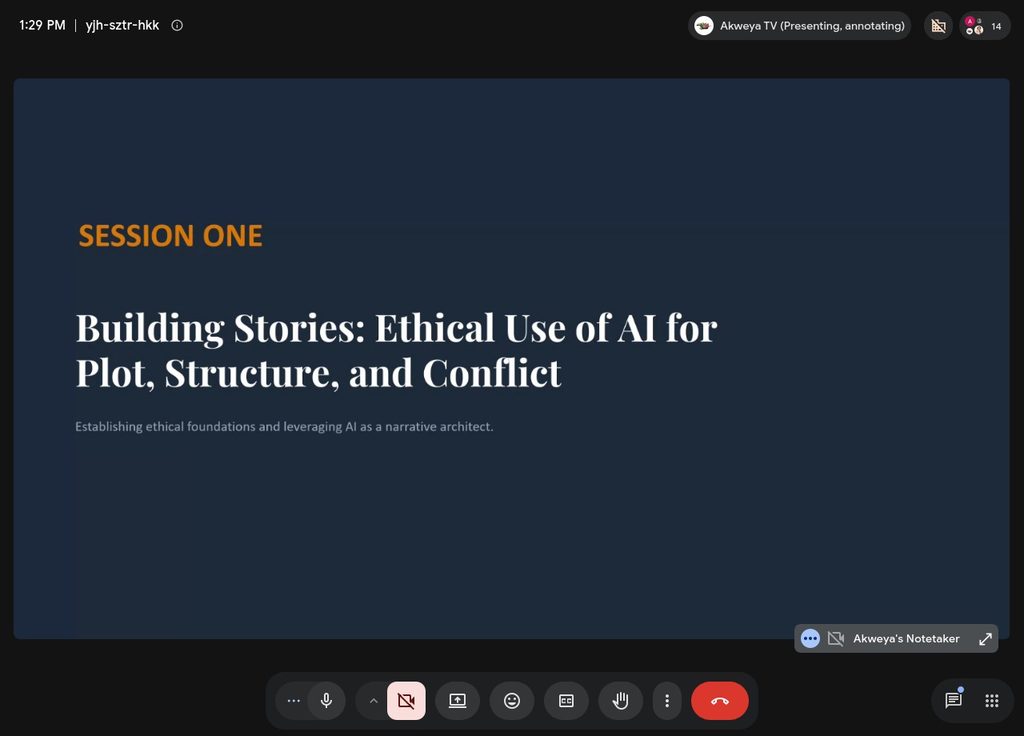
“You make a lot of money from it. If you do a good job, you get recommended to other high-profile clients. Use the money to pursue your creative work,” Umaisha advised.
Facilitator Odoh Diego Okenyodo expanded on this theme, emphasising that creative writing alone is rarely a sustainable financial path. He noted that professional writing, including reportage, policy briefs, and advocacy documents, is where the real income lies.
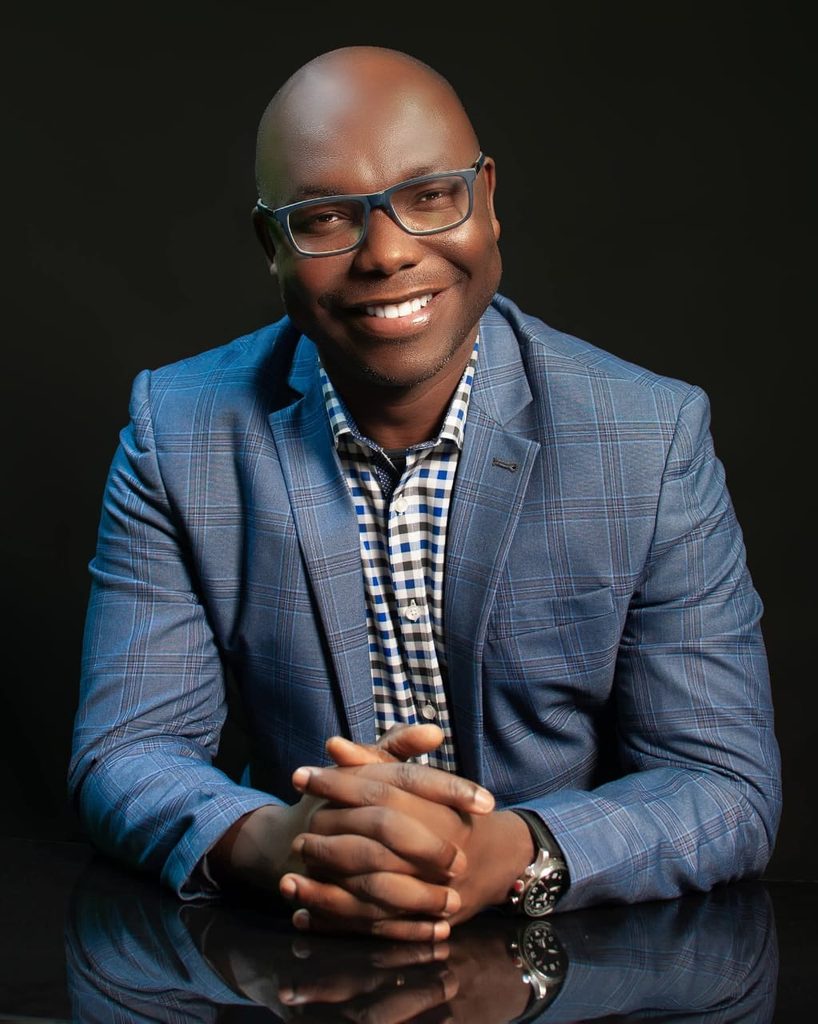
The session’s core focus was on leveraging AI not as a replacement for creativity, but as a professional tool. Okenyodo demonstrated how AI can assist with plot generation, editing, and—crucially—marketing. He argued that writers often fail because they stop engaging with the public after publication.
“Writers like Wole Soyinka and Chinua Achebe didn’t just write; they engaged in public discourse. We must write for platforms like The Guardian, Daily Trust, and ThisDay to build our brand and make readers eager for our books,” he stated.
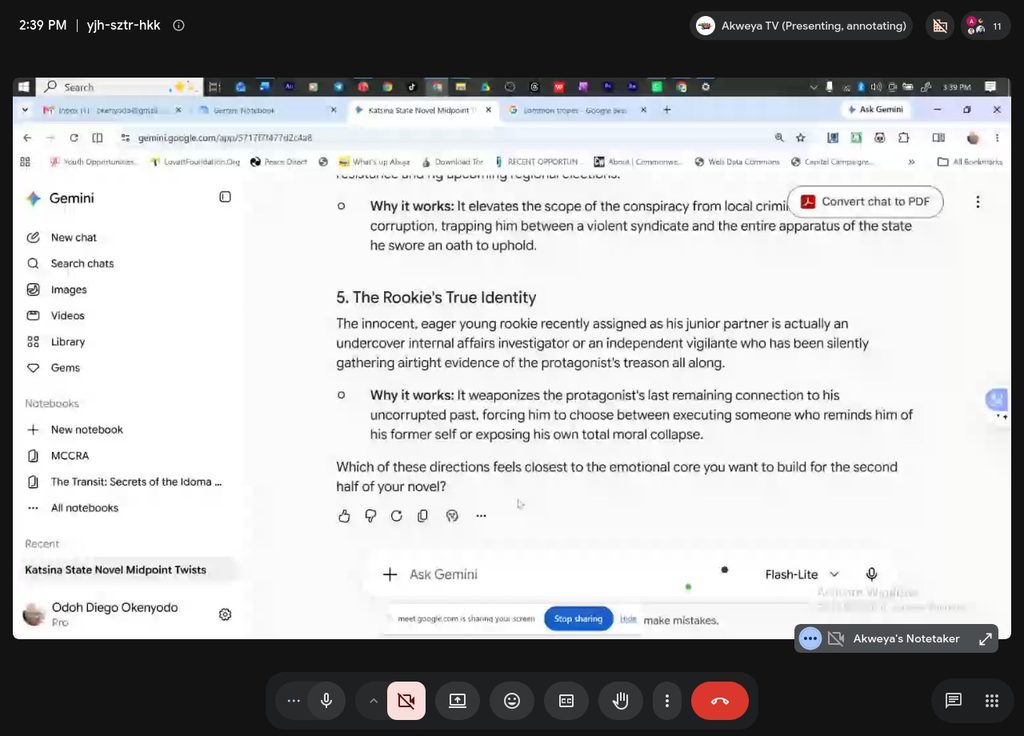
Participants, including lawyer-turned-writer Anthonia Bakare, baker and novelist Erumena Akpoghene-Adaiah, poet Zara Muhammad Kechella (The Purple Poet), and 400-level optometry student Celyn Ikechukwu, engaged in a robust Q&A session. The discussion also touched on the use of AI for factual verification. Umaisha shared an example where AI alerted him to a narrative flaw regarding the toxicity of raw cassava in a short story, potentially preventing harm to readers.
The workshop concluded with a vote of thanks to the sponsor, Dr. Awele Ilusanmi, and a commitment to share the presentation slides and AI prompts with participants. The event underscored Authors’ Hub’s dedication to equipping the next generation of Nigerian writers with the tools to survive and thrive in a rapidly evolving literary landscape.