An exciting buzz is sweeping through the Akweya online community, sparked by a timely conversation on the Akweya TV Contributors group. As the world remains captivated by the global spectacle, passion, and economic power of the FIFA World Cup, a crucial question has been posed to Akweya thinkers, professionals, and sports enthusiasts: “Should we set up a football academy in Akweya Land?”
The query was prompted by an eye-opening breakdown of international football economics, specifically how transfer fees, FIFA’s solidarity payments, and youth training compensations operate. In a multi-million dollar global industry where a single player transfer can command upwards of €100 million and channel millions back to grassroots developmental clubs, the potential for Akweya land is undeniable.

Building on Visionary Roots: The Coach Fabian Edaba Blueprint
While the current conversation is gaining fresh momentum, the vision of establishing a dedicated football pathway for Akweya youth is not entirely new. Years ago, during an appearance on Akweya TV, renowned Nigerian national team tactician Coach Fabian Edaba, who hails from Akweya land (Otukpo LGA, Benue State), boldly proposed the establishment of a local football academy.
As a National Institute for Sports (NIS) graduate, CAF C-licensed coach, and then coach of The Super Spartan Eagles of Nigeria, Edaba’s career reflects elite technical acumen. The brain behind Taraba FC’s historic promotion to the Premier League and former man on the touchline for Rovers FC Calabar, Coach Edaba recognised early on that raw grassroots talent needs structured mentorship to thrive on global stages like the World Cup and European leagues. His initial call to action planted the seeds for what is now maturing into a community-wide consensus.

Beyond the Millions, Youth Development First
Reflecting on the economic breakdown shared with the group, contributors agreed that while the financial rewards of global football transfers are vast, an academy’s core mission must remain focused on human development.
Elaigwu Elaigwu, an Abuja-based HR professional and entrepreneur, emphasised that an academy must be approached as a strategic long-term investment in people.

“Akweya Land should seriously consider setting up a football academy, but it should be approached as a youth development project first and a business opportunity second,” Elaigwu noted. “The real value of an academy is that it can discover and develop talented young players, keep youths engaged away from crime and drug abuse, and create pathways to scholarships and professional clubs.”
He cautioned against expecting overnight sensations: “It should not be built on the expectation of producing the next Victor Osimhen overnight. It should be built with patience, qualified coaches, proper facilities, and partnerships.”
Tapping into Raw Talent and FIFA Structure
For former players who know the local terrain, the talent in Akweya land is abundant; it simply requires the right platform. Echoing Coach Edaba’s long-standing sentiment, an ex-footballer on the panel shared:
“Akweya as a people have so many talented players, raw talent at that. As an ex-footballer, there’s nothing that will give me so much joy than seeing Akweya’s younger generation given these lifetime opportunities. I will be glad to contribute my quota.”
From a managerial and structural standpoint, Jeff Abine, a Lagos-based Facility Manager, highlighted the importance of formal registration to tap into FIFA’s economic model while keeping expectations grounded.
“Setting up a football academy in Akweya land is a high-potential venture, as long as it is formally registered to benefit from FIFA’s solidarity framework,” Abine explained.
“However, setting up strictly for profit is a risky approach. Driven by player development and community impact, whatever profit comes will simply be motivation to do more.”
Adding to the community enthusiasm, Willxon Emaikwu Orokpo stepped forward to offer administrative backing: “I think it is a welcome idea, I will apply as manager. Let’s take Akweya Destiny serious.”
Phased Approach Focused on Early Youth
Adding to the growing consensus, Stan Adei supported the proposal as a welcome development, urging a phased, step-by-step model focused on early youth. He suggested beginning with children aged 5 to 10 to keep initial operational costs minimal, using local talent and young coaches to nurture them before graduating them to older age brackets.
“Having an academy in Akweya is a welcome development,” Adei noted, emphasizing that proper planning is key to making the project sustainable. “I would like us to take it one step at a time… begin from age 5 to 10… groom them at that level first because, in terms of cost implication, what we’ll need to take care of those ones will be minimal.”
Adei also reinforced the panel’s emphasis on patience and long-term social impact over quick financial gains. Reminding contributors that the true rewards of grassroots sports development take years to mature, he highlighted how early athletic engagement builds positive character and protects youth from negative societal influences.
“It’s doable, but we will not reap the benefits until after like 3, 4, 5 years, if not more… the benefits will not be instant, but we can begin,” Adei explained. “The place of sports cannot be underestimated… if children get nurtured by this time, they build a very positive mind… it takes them away from a whole lot of negative vices, and in the long run, the community will be a great beneficiary.”
A World Cup-Sized Opportunity
As global tournaments like the FIFA World Cup demonstrate, football is far more than a 90-minute game but a powerful economic ecosystem and a unifying social force.
The conversation was sparked by a detailed breakdown of global football economics, highlighting how multi-million dollar player transfers create substantial revenue streams through FIFA’s structured distribution mechanisms. Using a hypothetical €100 million international transfer, which can ultimately cost a buying club over €170 to €230 million once agent fees, signing bonuses, and long-term salaries are factored in, the analysis illustrated that while the selling club claims the lion’s share (70–95%), dedicated provisions exist to reward a player’s developmental roots.
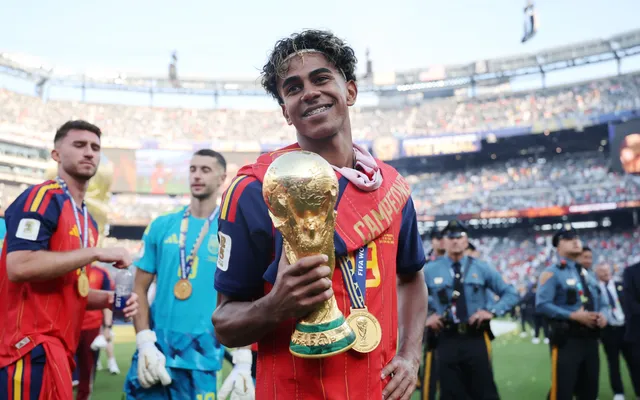
Specifically, FIFA’s solidarity framework and training compensation rules mandate that up to 5% of eligible transfer fees (up to €5 million in this scenario) are redistributed among the grassroots clubs and academies that nurtured the player between ages 12 and 23. This breakdown demonstrated to the community that a formally registered academy in Akweya Land could tap into a self-sustaining financial ecosystem, turning local youth development into a viable, long-term economic engine.
From the visionary proposals of national figures like Coach Fabian Edaba to the collective consensus of today’s AkweyaTV Contributors, the path forward is clear. If executed with patience, technical expertise, and community-first intent, an Akweya Football Academy could do far more than produce international stars, it could build a lasting legacy of hope, discipline, and prosperity for generations to come.
Want to be part of these conversations? Click here to join Akweya TV Contributors Group on WhatsApp.
*This story was updated on 24 July 2026 to include Mr Stan Adei’s position.