

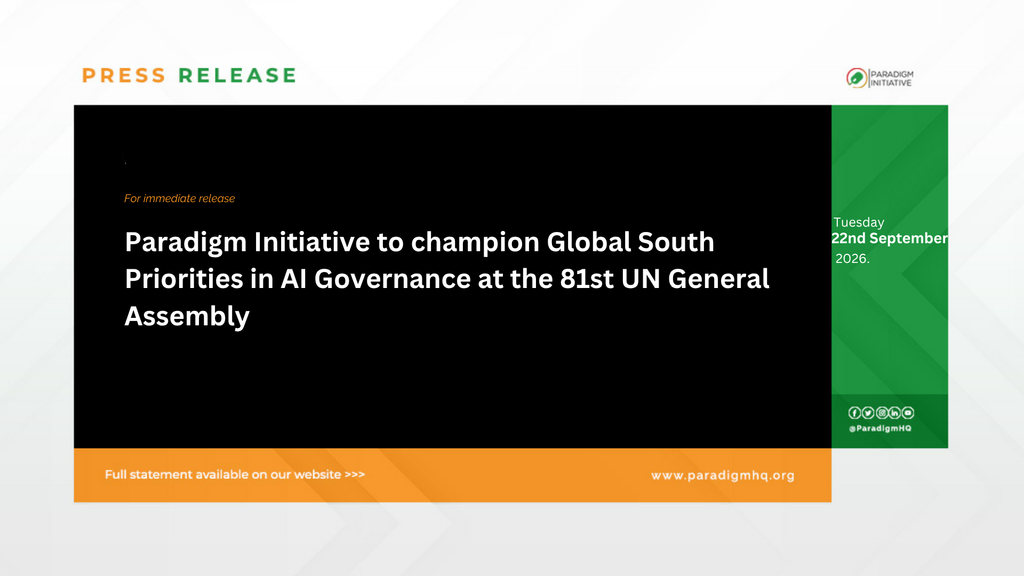
Paradigm Initiative (PIN) is set to champion the priorities and rights of underserved communities in the Global South as world leaders gather in New York for the 81st United Nations General Assembly (UNGA).
The organisation’s Executive Director, ‘Gbenga Sesan, will represent PIN during the UNGA week, where the organisation will advocate for technology governance that reflects the realities and needs of communities that are often left behind in technological development.
As part of the engagement, PIN will host a dinner on September 24, 2026, bringing together civil society partners, government representatives, private-sector actors and technical experts to discuss artificial intelligence (AI) and digital self-determination.
The organisation’s engagement is based on its recent publication, What’s the Whole Fuss About AI? A Global South Primer, which examines the social, legal and human rights implications of AI.
PIN noted that unequal access to the internet and automated systems could widen existing inequalities, particularly between people who already have access to technology and those who remain underserved.
“The gap between the connected and the unconnected (as well as the disconnected) may become much wider as those who already have access are equipped with tools that give them additional advantage,” Sesan said in the organisation’s AI primer.
The organisation is calling for rights-respecting AI deployment, data sovereignty, linguistic inclusion and safeguards against automated marginalisation.
- Akweya TV Celebrates Interns’ 12-Week Journey
- 6 Reasons Ibrahim Idris Administration Remains Notable
- David Ugolor Advancing Good Governance In Nigeria
- Paradigm Initiative Takes AI Priorities to UNGA 81
- DEVELOPMENT INSIGHTS MORNING BRIEF, 21 SEPTEMBER 2026
PIN also said stakeholders need to consider who benefits from AI technologies, who benefits first, who participated in setting technology standards and what redress is available when automated systems cause harm.
The organisation expressed hope that stronger collaboration among Global South stakeholders will help shape a more inclusive approach to AI governance and digital development.
PIN has worked across Africa on digital inclusion and digital rights, connecting underserved young people with digital opportunities while promoting the protection of their rights.