


“Addiction may begin with one person, but its effects are often spread across an entire family.”
Worried Father
Every evening, a father sat quietly on his veranda, waiting for his son to return home. He was not worried because his son was late. He was worried because he never knew what to expect.
Would he come home sober? Would he come home angry? Or would there be another phone call with bad news?
Over time, the atmosphere at home changed. Laughter became rare, conversations became tense, and hope slowly gave way to fear. Although only one person was struggling with addiction, the entire family was living with its consequences.
This is the reality for many families.
When we talk about addiction, we often focus on the individual using the substance. However, addiction affects far more than one person. It touches parents, spouses, siblings, children, and close friends. Trust is broken, relationships become strained, and families may experience anxiety, guilt, frustration, and emotional exhaustion.
Many families blame themselves, wondering whether they could have prevented the problem. Others become overwhelmed by repeated disappointments and begin to lose hope. Yet, addiction is not a burden that families are expected to carry alone.
Supporting a loved one with addiction does not mean accepting harmful behaviour or making excuses for poor choices. Healthy support means encouraging professional treatment, setting clear boundaries, and showing compassion while holding the person accountable for their recovery.
Many families blame themselves, wondering whether they could have prevented the problem. Others become overwhelmed by repeated disappointments and begin to lose hope.
Psychology Insight
Psychologists explain addiction using the biopsychosocial model, which recognises that biological, psychological, and social factors all contribute to the development and recovery of addiction. This is why effective treatment often includes not only the individual but also family support and psychological care.
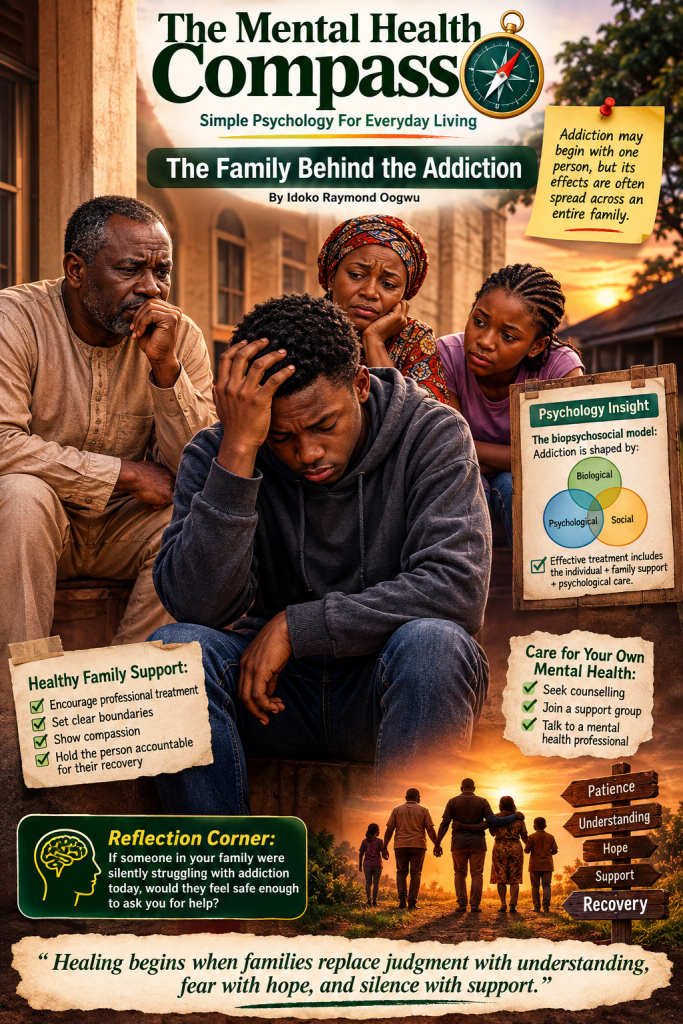
Families should also remember to care for their own mental health. Living with someone battling addiction can be emotionally draining. Seeking counselling, joining a support group, or talking to a mental health professional can help family members cope while continuing to provide healthy support.
Recovery is rarely a journey that anyone completes alone. Behind many success stories are families who chose patience over despair, professionals who offered guidance, and communities that believed change was possible.
Instead of asking, “How has addiction damaged this family?” perhaps we should ask, “How can this family become part of the healing process?”
Reflection Corner
If someone in your family were silently struggling with addiction today, would they feel safe enough to ask you for help?”
Healing begins when families replace judgment with understanding, fear with hope, and silence with support.”