
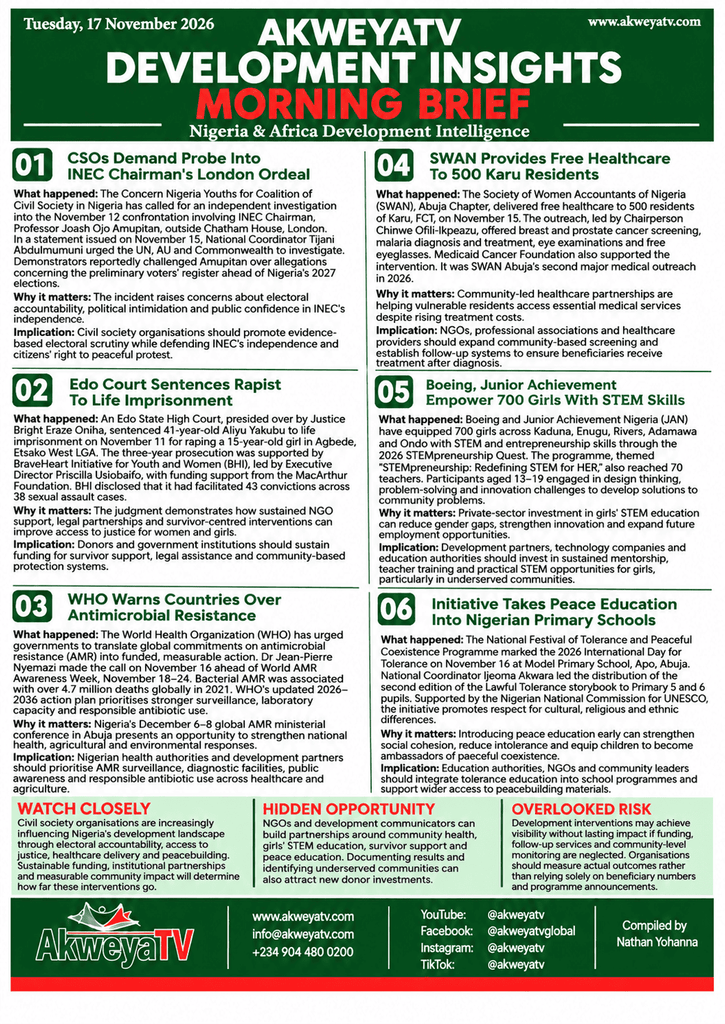
CSOs Demand Probe Into INEC Chairman’s London Ordeal
What happened: The Concern Nigeria Youths for Coalition of Civil Society in Nigeria has called for an independent investigation into the November 12 confrontation involving INEC Chairman, Professor Joash Ojo Amupitan, outside Chatham House, London. In a statement issued on November 15, National Coordinator Tijani Abdulmumuni urged the UN, AU and Commonwealth to investigate. Demonstrators reportedly challenged Amupitan over allegations concerning the preliminary voters’ register ahead of Nigeria’s 2027 elections.
- CSOs Demand Probe Into INEC Chairman’s London Ordeal
- Edo Court Sentences Rapist To Life Imprisonment
- WHO Warns Countries Over Antimicrobial Resistance
- SWAN Provides Free Healthcare To 500 Karu Residents
- Boeing, Junior Achievement Empower 700 Girls With STEM Skills
- Initiative Takes Peace Education Into Nigerian Primary Schools
Why it matters: The incident raises concerns about electoral accountability, political intimidation and public confidence in INEC’s independence.
Implication: Civil society organisations should promote evidence-based electoral scrutiny while defending INEC’s independence and citizens’ right to peaceful protest.
Edo Court Sentences Rapist To Life Imprisonment
What happened: An Edo State High Court, presided over by Justice Bright Eraze Oniha, sentenced 41-year-old Aliyu Yakubu to life imprisonment on November 11 for raping a 15-year-old girl in Agbede, Etsako West LGA. The three-year prosecution was supported by BraveHeart Initiative for Youth and Women (BHI), led by Executive Director Priscilla Usiobaifo, with funding support from the MacArthur Foundation. BHI disclosed that it had facilitated 43 convictions across 38 sexual assault cases.
Why it matters: The judgment demonstrates how sustained NGO support, legal partnerships and survivor-centred interventions can improve access to justice for women and girls.
Implication: Donors and government institutions should sustain funding for survivor support, legal assistance and community-based protection systems.
WHO Warns Countries Over Antimicrobial Resistance
What happened: The World Health Organization (WHO) has urged governments to translate global commitments on antimicrobial resistance (AMR) into funded, measurable action. Dr Jean-Pierre Nyemazi made the call on November 16 ahead of World AMR Awareness Week, November 18–24. Bacterial AMR was associated with over 4.7 million deaths globally in 2021. WHO’s updated 2026–2036 action plan prioritises stronger surveillance, laboratory capacity and responsible antibiotic use.
Why it matters: Nigeria’s December 6–8 global AMR ministerial conference in Abuja presents an opportunity to strengthen national health, agricultural and environmental responses.
Implication: Nigerian health authorities and development partners should prioritise AMR surveillance, diagnostic facilities, public awareness and responsible antibiotic use across healthcare and agriculture.
- Jonathan Urges Safeguards Ahead of 2027 Elections
- Are African Footballers Now Hiding Their Wealth From Their Wives?
- Church Rejects Pastor Jimmy Odukoya’s Removal
- Group Gives Nigerian Children Hope For Peace
- Edetaen Ojo: Championing Media Freedom And The Right To Information In Africa
SWAN Provides Free Healthcare To 500 Karu Residents
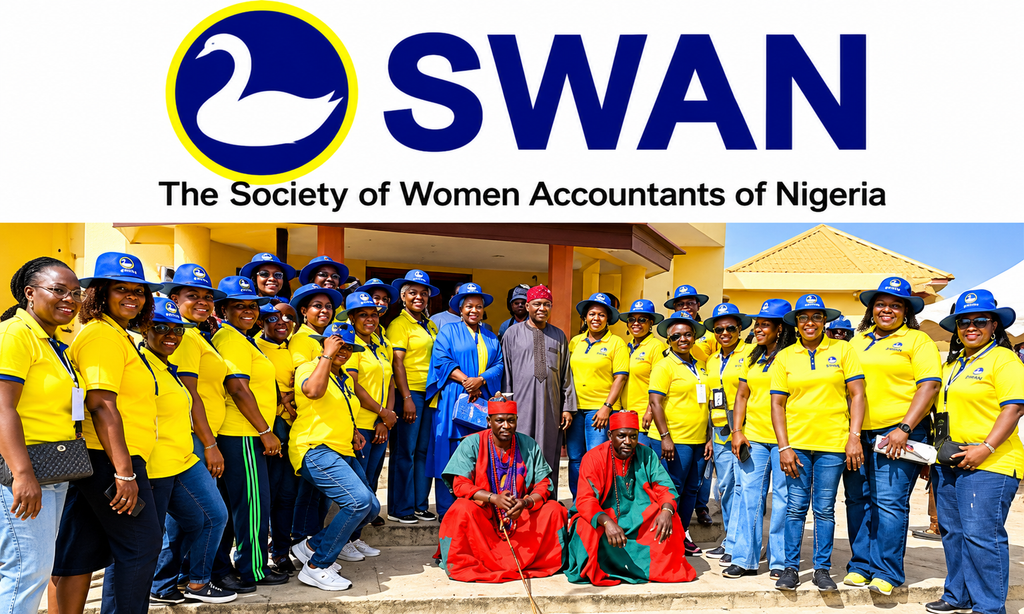
What happened: The Society of Women Accountants of Nigeria (SWAN), Abuja Chapter, delivered free healthcare to 500 residents of Karu, FCT, on November 15. The outreach, led by Chairperson Chinwe Ofili-Ikpeazu, offered breast and prostate cancer screening, malaria diagnosis and treatment, eye examinations and free eyeglasses. Medicaid Cancer Foundation also supported the intervention. It was SWAN Abuja’s second major medical outreach in 2026.
Why it matters: Community-led healthcare partnerships are helping vulnerable residents access essential medical services despite rising treatment costs.
Implication: NGOs, professional associations and healthcare providers should expand community-based screening and establish follow-up systems to ensure beneficiaries receive treatment after diagnosis.
Boeing, Junior Achievement Empower 700 Girls With STEM Skills
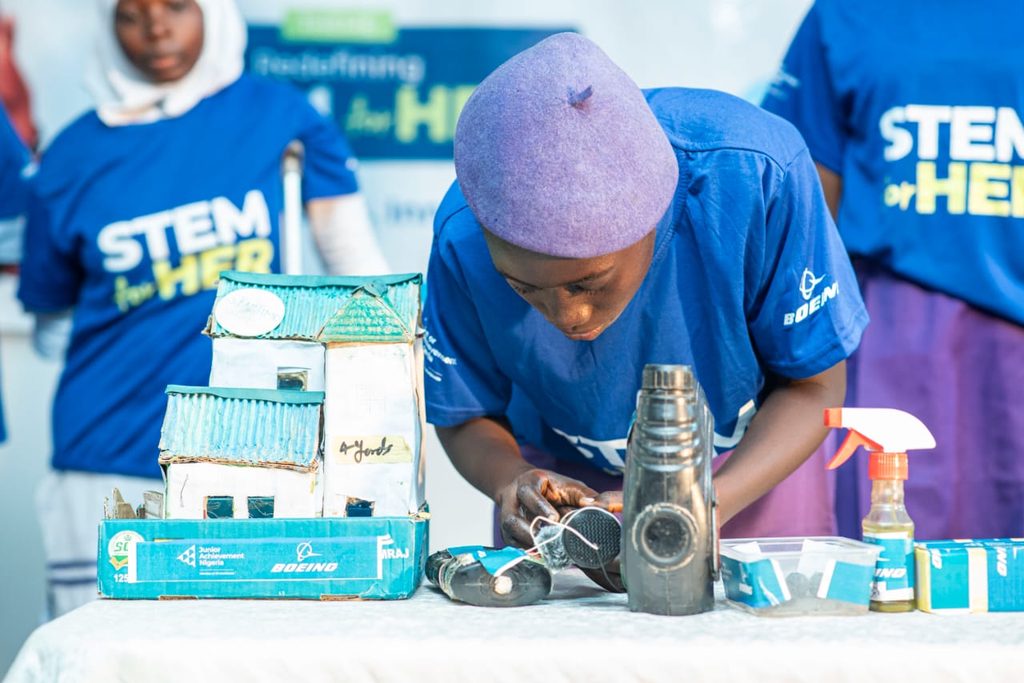
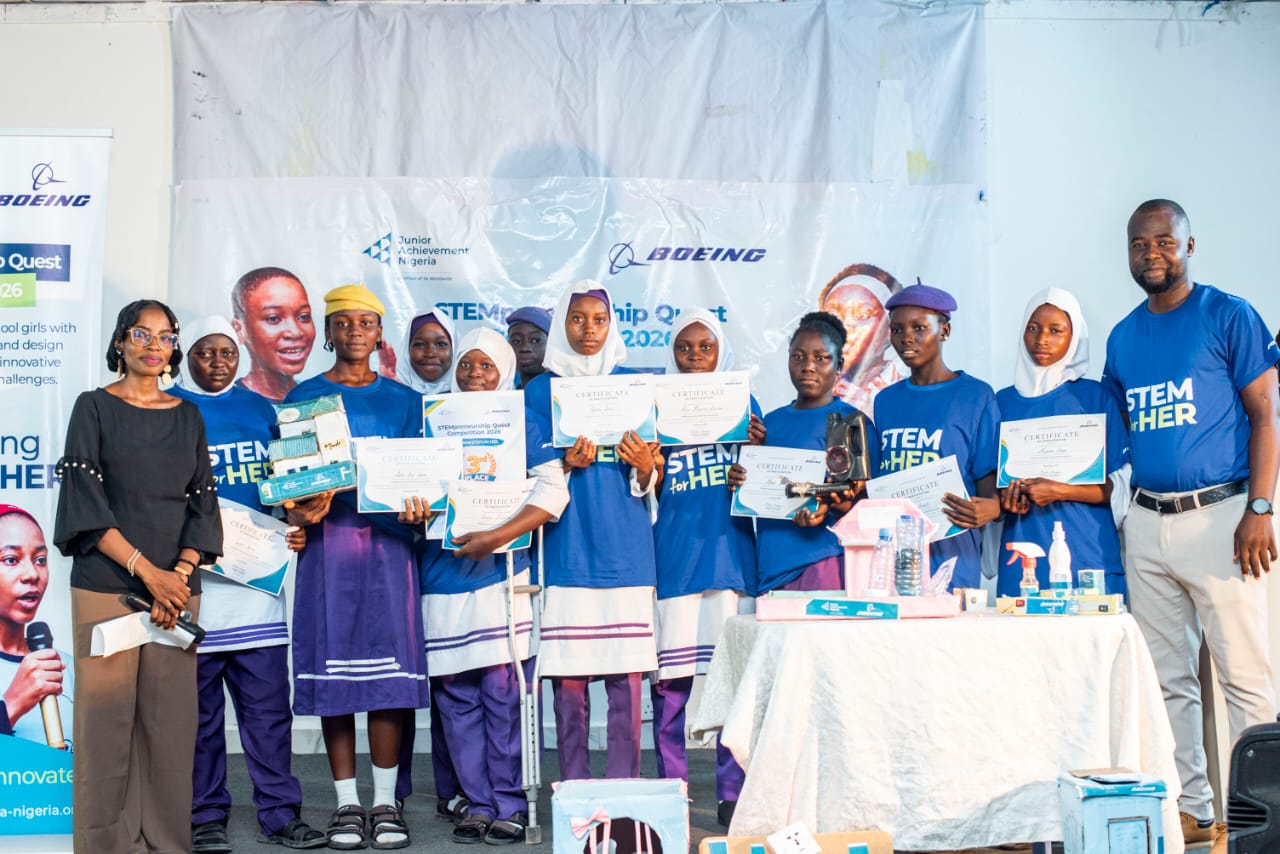
What happened: Boeing and Junior Achievement Nigeria (JAN) have equipped 700 girls across Kaduna, Enugu, Rivers, Adamawa and Ondo with STEM and entrepreneurship skills through the 2026 STEMpreneurship Quest. The programme, themed “STEMpreneurship: Redefining STEM for HER,” also reached 70 teachers. Participants aged 13–19 engaged in design thinking, problem-solving and innovation challenges to develop solutions to community problems.
Why it matters: Private-sector investment in girls’ STEM education can reduce gender gaps, strengthen innovation and expand future employment opportunities.
Implication: Development partners, technology companies and education authorities should invest in sustained mentorship, teacher training and practical STEM opportunities for girls, particularly in underserved communities.
Initiative Takes Peace Education Into Nigerian Primary Schools
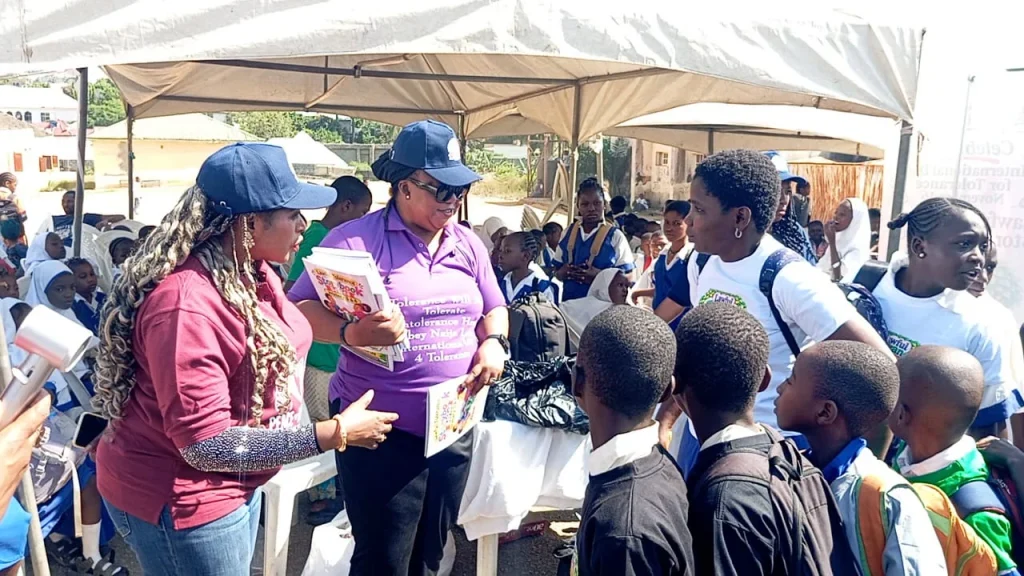
What happened: The National Festival of Tolerance and Peaceful Coexistence Programme marked the 2026 International Day for Tolerance on November 16 at Model Primary School, Apo, Abuja. National Coordinator Ijeoma Akwara led the distribution of the second edition of the Lawful Tolerance storybook to Primary 5 and 6 pupils. Supported by the Nigerian National Commission for UNESCO, the initiative promotes respect for cultural, religious and ethnic differences.
Why it matters: Introducing peace education early can strengthen social cohesion, reduce intolerance and equip children to become ambassadors of peaceful coexistence.
Implication: Education authorities, NGOs and community leaders should integrate tolerance education into school programmes and support wider access to peacebuilding materials.
WATCH CLOSELY
Civil society organisations are increasingly influencing Nigeria’s development landscape through electoral accountability, access to justice, healthcare delivery and peacebuilding. Sustainable funding, institutional partnerships and measurable community impact will determine how far these interventions go.
HIDDEN OPPORTUNITY
NGOs and development communicators can build partnerships around community health, girls’ STEM education, survivor support and peace education. Documenting results and identifying underserved communities can also attract new donor investments.
OVERLOOKED RISK
Development interventions may achieve visibility without lasting impact if funding, follow-up services and community-level monitoring are neglected. Organisations should measure actual outcomes rather than relying solely on beneficiary numbers and programme announcements.
Compiled by Nathan Yohanna
YouTube: @akweyatv
Facebook: @akweyatvglobal
Instagram: @akweyatv
TikTok: @akweyatv