

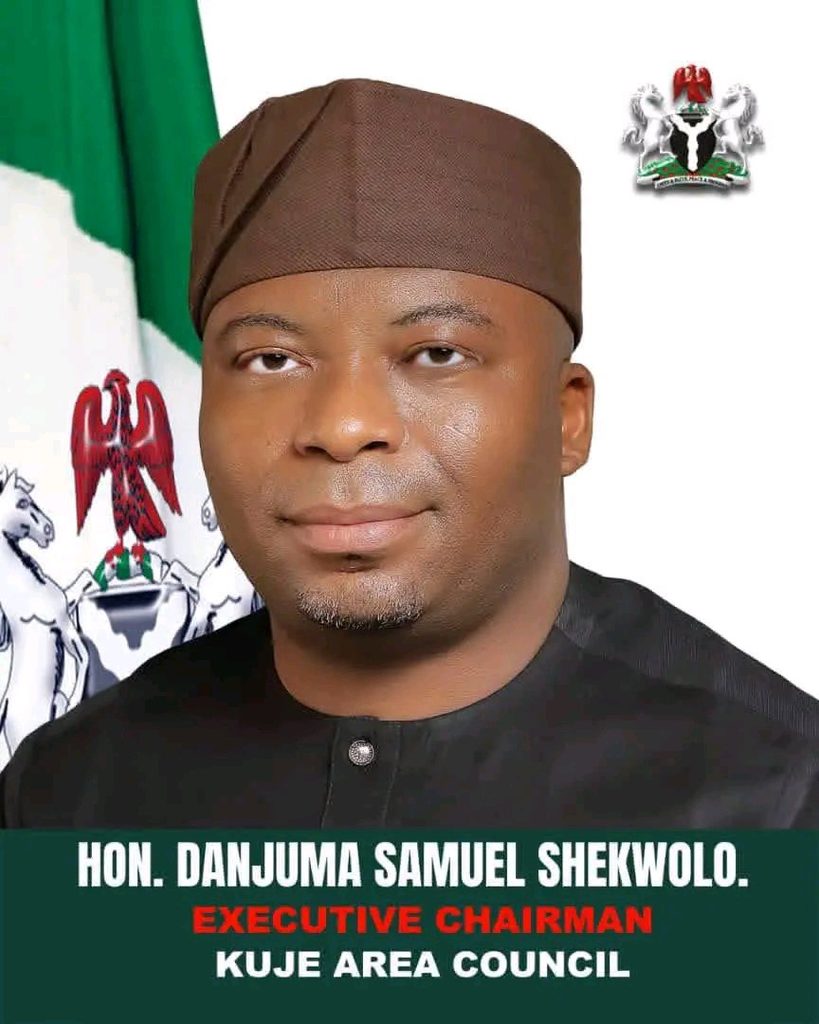
The Resource Centre for Human Rights and Civic Education (CHRICED) has called on Nigerian authorities to urgently investigate a reported statement by the Chairman of Kuje Area Council, Hon. Samuel Danjuma Shekwolo, allegedly directing residents who do not support the All Progressives Congress (APC) to leave the council.
CHRICED made the call in a statement issued on Friday, 28 August 2026, describing the reported comments as a serious threat to democratic participation, citizens’ rights and peaceful coexistence, particularly as Nigeria moves closer to the 2027 general elections.
The controversy followed a publicly circulating video in which Shekwolo is heard saying, “It’s either you are doing APC or leave the Area Council,” while also warning that he would not tolerate residents who “work against” the party.
CHRICED said the statement was reckless and dangerous because the chairman, as an elected public official, has a constitutional responsibility to serve every resident of Kuje regardless of political affiliation.

The organisation’s Executive Director, Comrade Ibrahim M. Zikirullahi, said Kuje Area Council could not be treated as the property of a political party, stressing that Nigerians must be free to support political parties of their choice without fear of losing their right to live in their communities.
“As an elected official, the Chairman is constitutionally obligated to serve all residents of Kuje—regardless of their political affiliation,” CHRICED said.
The group further argued that no Nigerian should be forced to choose between political loyalty and the basic right to live peacefully in a community.
CHRICED pointed to Sections 40, 41 and 42 of the 1999 Constitution, which it said protect freedom of association, the right of citizens to move and reside freely across Nigeria, and protection from discrimination on grounds including political opinion.
It also cited Section 97 of the Electoral Act 2026, which it said criminalises threats, intimidation or the use of force to compel political support, with violations attracting fines or imprisonment.
According to the organisation, the reported Kuje statement therefore raises questions that should be determined through an immediate investigation by the appropriate authorities rather than being dismissed as ordinary political rhetoric.
CHRICED also expressed concern that the Kuje incident was part of what it described as a wider and disturbing pattern of inflammatory political statements by political leaders.
The organisation referenced reported remarks involving Edo State Governor Okpebholo, the Governor of Benue State, Minister Nyesom Wike and Senator Francis Fadahunsi in Osun State.
It criticised the perceived silence of the APC leadership over such incidents, warning that failure to condemn inflammatory rhetoric could create the impression that political intimidation is being tolerated.
For CHRICED, the danger is particularly serious because political rhetoric can quickly move beyond words and contribute to violence.
The organisation noted that ahead of the August 15 governorship election in Osun State, 29 Nigerians were reportedly killed in 73 election-related violent incidents. It warned that such a climate makes responsible political speech and early intervention by authorities more important.
“When politicians make inflammatory statements, deny them later, and face no meaningful accountability, it breeds impunity,” CHRICED warned.
The organisation said the Kuje incident should therefore not be treated as “mere political talk”, arguing that a public official telling residents to support a political party or leave their community represents a direct challenge to peaceful coexistence and democratic participation.
CHRICED also raised concerns about the effectiveness of political peace accords, saying such agreements risk becoming ceremonial exercises if political leaders and party supporters can continue making threats without consequences.
The organisation urged candidates and party leaders to take responsibility for the conduct of their political structures and to immediately condemn inflammatory statements.
With the country entering the political buildup to the 2027 elections, CHRICED called for immediate action from the Nigeria Police Force, Department of State Services, Independent National Electoral Commission and other relevant authorities.
It urged the agencies to investigate the Kuje chairman’s reported statement and determine whether it violates the Constitution, the Electoral Act or any other applicable law.
CHRICED also reminded the authorities that local government chairmen do not enjoy constitutional immunity and should be held accountable where wrongdoing is established.
The organisation called on President Bola Ahmed Tinubu and the national leadership of the APC to publicly condemn the reported statement and make clear that support for the APC is not a condition for residence, access to public services or peaceful existence anywhere in Nigeria.
It further asked Shekwolo to withdraw the statement, apologise to Kuje residents and reaffirm their right to support any political party of their choice.
CHRICED also urged INEC, security agencies, the National Peace Committee and political parties to strengthen mechanisms for monitoring inflammatory political speech and ensure that violations of political peace commitments attract consequences.
- Dangote Refinery IPO Attracts Fourfold Subscriptions
- Alex Mascot Rebuilds Constitution Crescent Primary School
- Education Investment Could Transform Nigeria’s Girls
- Amnesty Demands Answers Over Maitama Land Allocation
- School or Marriage: The Choice No Girl Should Face
Zikirullahi said Nigerians must be able to participate in politics without fear of eviction, intimidation or violence.
“Political competition should be about ideas, policies and votes—not threats, exclusion or coercion,” he said.
The organisation warned that failure to investigate the Kuje incident and take appropriate action could send a dangerous signal ahead of 2027 that political officials can intimidate citizens without consequences.
CHRICED therefore urged authorities to act before inflammatory rhetoric develops into violence, stressing that preventing electoral violence requires intervention before citizens are attacked, rather than waiting until after lives have been lost.