
By Idoko Raymond Oogwu
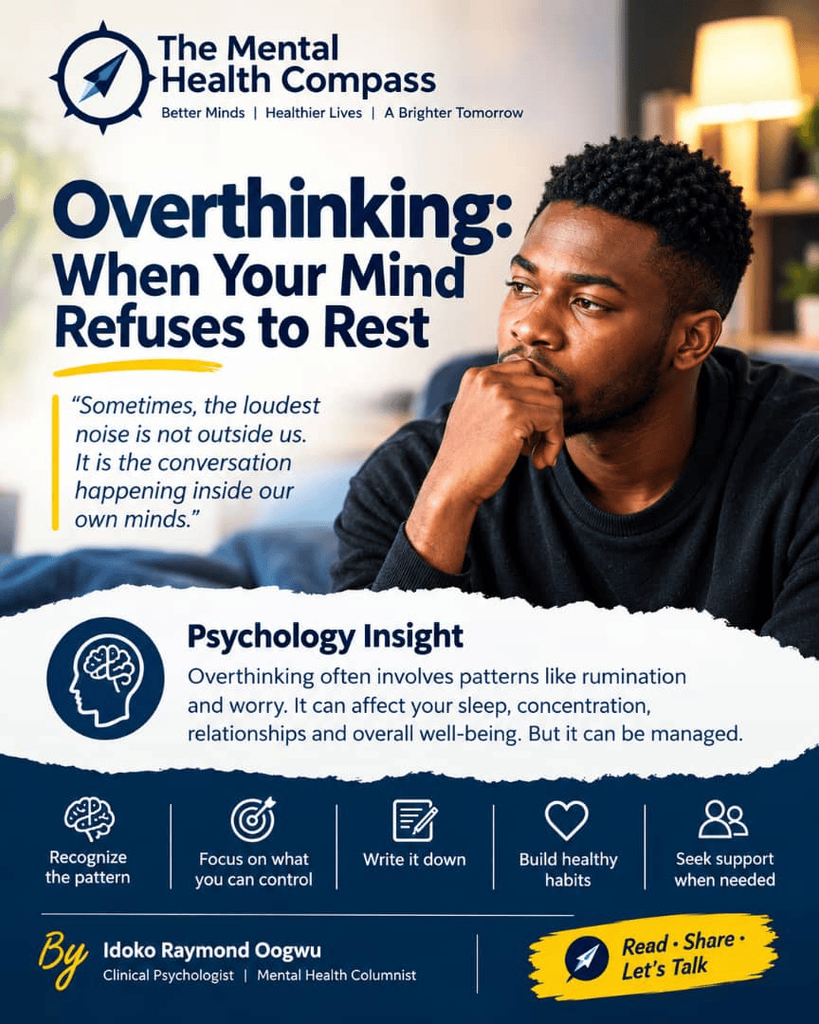
“Sometimes, the loudest noise is not outside us. It is the conversation happening inside our own minds.”
It is 2 a.m. You are lying in bed, staring at the ceiling. You remember something you said earlier that day.
“Did I say the wrong thing?”
Then another thought comes: “What if they misunderstood me?” Before you know it, your mind has travelled from a simple conversation to ten possible outcomes, most of them negative.
You finally fall asleep, only to wake up still thinking about the same thing.
This is what overthinking can feel like.
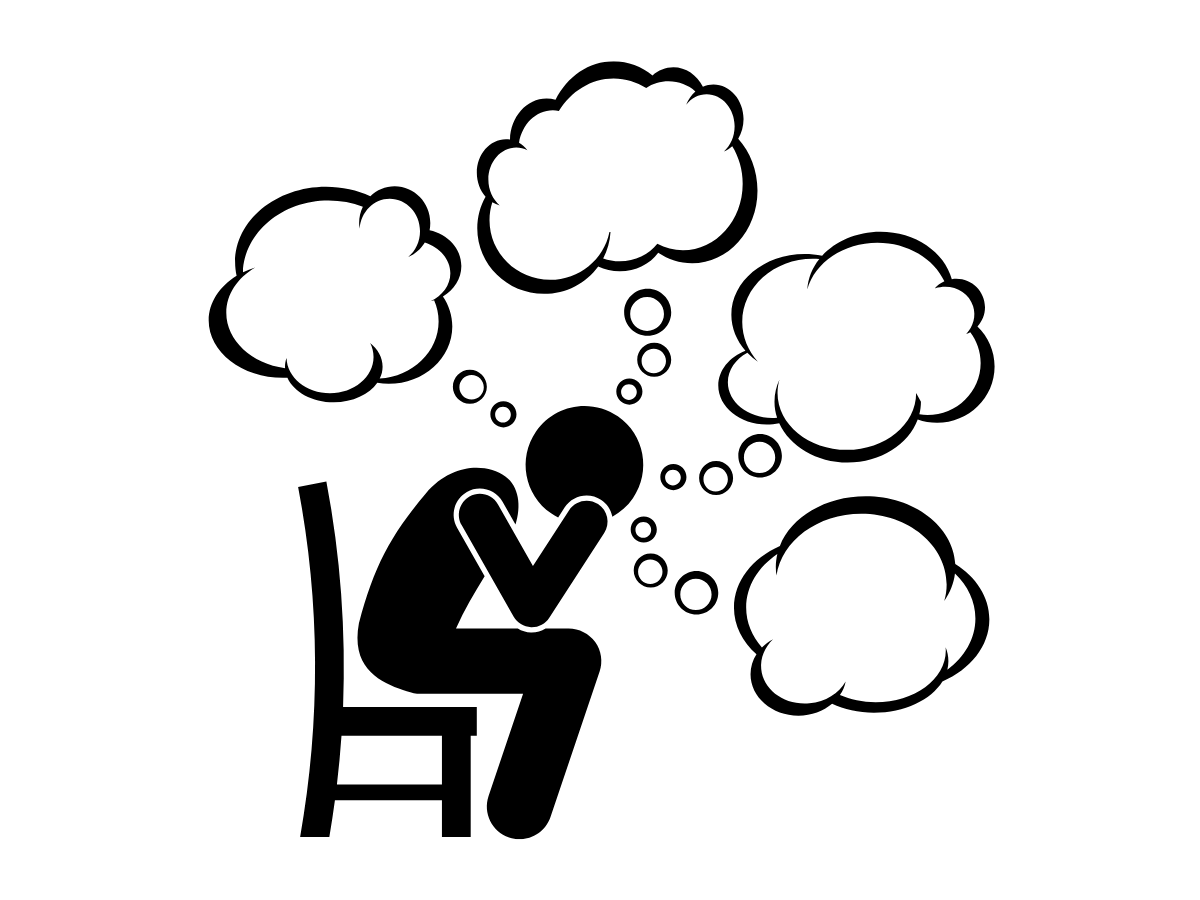
Thinking is a normal part of life. We think when making decisions, solving problems, planning for the future, or learning from our experiences. But sometimes, thinking becomes excessive and repetitive. Instead of helping us find solutions, our thoughts keep going around in circles.
We replay past conversations. We worry about things that have not happened. We imagine the worst possible outcome. We question decisions we have already made.
And the more we think, the more anxious we may become.
Overthinking can also affect sleep, concentration, relationships, and productivity. A person may spend hours worrying about a problem without taking any meaningful step toward solving it.
Psychology Insight

Psychologically, repetitive negative thinking can involve patterns such as rumination and worry. Rumination often keeps the mind focused on past experiences and their meaning, while worry tends to focus on possible future threats. Both can become unhelpful when they are persistent and difficult to control.
So, how can we manage overthinking?
First, recognize the thought pattern. When you notice yourself going around the same issue repeatedly, pause and ask: “Am I solving a problem, or am I simply repeating the same thoughts?”
Second, separate what you can control from what you cannot. If there is something you can do, identify one small action and take it. If there is nothing you can change at that moment, give yourself permission to step away from the thought.
Writing your thoughts down can also help. Sometimes, putting what is happening in your mind on paper makes it easier to distinguish facts from assumptions.
It is also important to create healthy routines around sleep, physical activity, relaxation, and meaningful social connection.
- Transport Fares Rise by 30% in Abuja, Neighbouring States
- Nigeria’s Young Tech Stars Get Rewarded
- 1,130 Children Receive Life-Changing Support
- Foreign Aid Investigation Sparks Debate Over NGO Accountability
- DEVELOPMENT INSIGHTS MORNING BRIEF, 15 SEPTEMBER 2026
And if overthinking becomes persistent, severely affects your daily life, or is accompanied by significant anxiety or low mood, speaking with a mental health professional can be helpful.
You do not have to believe every thought that enters your mind.
A thought is a mental event not always a fact.
Reflection Corner
What is one thought you have been carrying repeatedly that you could choose to let go of today?
“You cannot always stop a thought from entering your mind, but you can learn not to let every thought control your peace.